







Copy in clipboard...
Iran ranks second globally in cord blood stem-cell banking
Morteza Zarrabi told a press briefing in the northwestern city of Qazvin that the Royan cord-blood bank had boosted its global standing based on the volume of stored samples and the scope of its international commercial activities, an achievement made “in the face of severe sanctions” against Iran, IRNA reported.
He said Iran was among the three leading Middle Eastern countries in the field, alongside the UAE and Saudi Arabia, adding that the country “had the upper hand” on many indicators.
Zarrabi highlighted key infrastructure gains, including the domestic manufacture of six liquid-nitrogen storage tanks, which ensured national self-sufficiency in preserving stem cells.
He added that the strategic solution “steal starch” used for stem-cell separation had also been localized with the help of knowledge-based firms, eliminating dependence on imports.
“Over the past decade, Iran has chalked up 20 major advances in regenerative medicine, including establishing stem-cell banks, storing umbilical cord tissue, dental pulp and amniotic membrane, performing therapeutic transplants, conducting trials for autism, arthritis and MS, and launching the country’s first birth-product refinery,” he said.
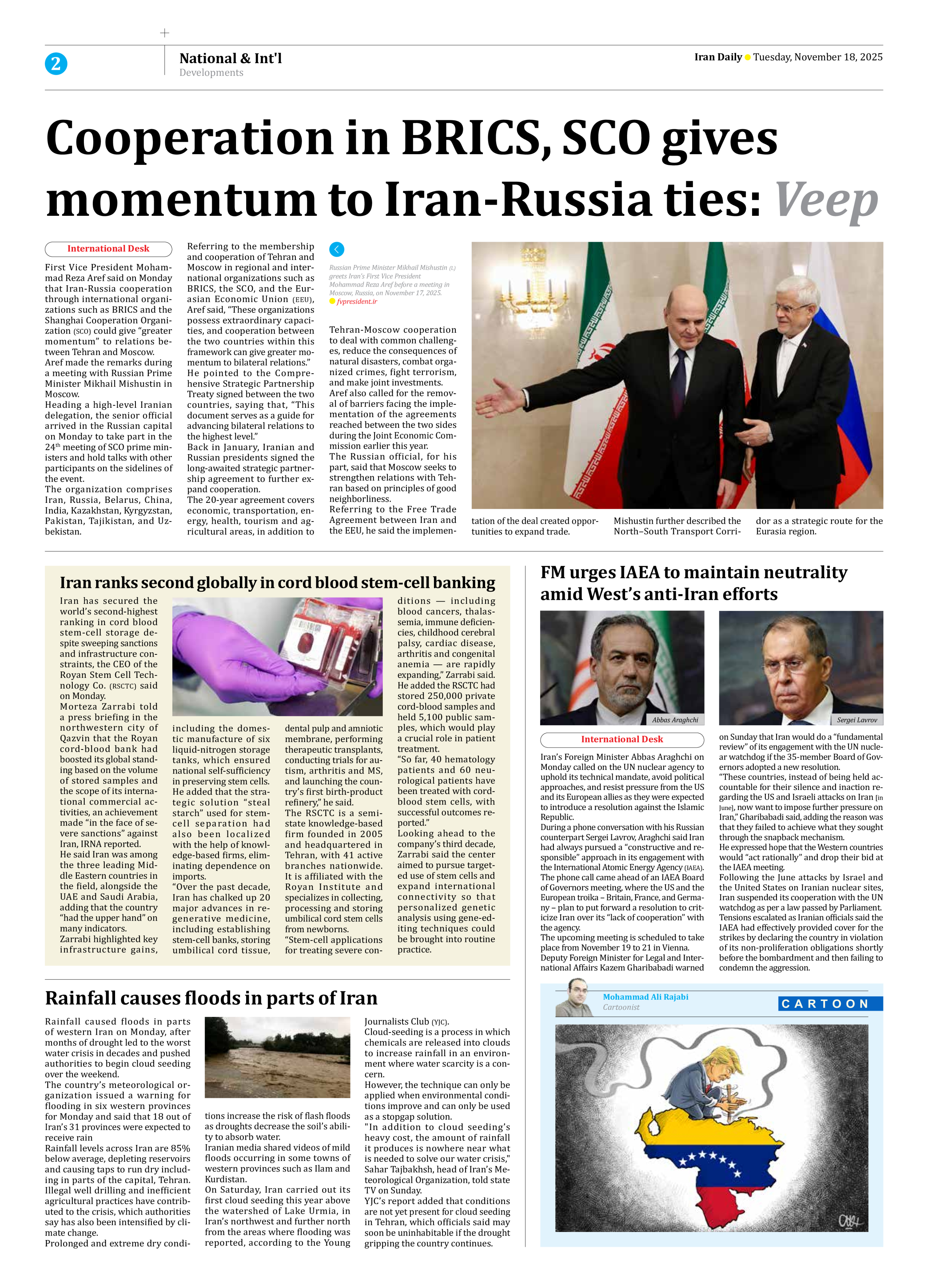
The RSCTC is a semi-state knowledge-based firm founded in 2005 and headquartered in Tehran, with 41 active branches nationwide. It is affiliated with the Royan Institute and specializes in collecting, processing and storing umbilical cord stem cells from newborns.
“Stem-cell applications for treating severe conditions — including blood cancers, thalassemia, immune deficiencies, childhood cerebral palsy, cardiac disease, arthritis and congenital anemia — are rapidly expanding,” Zarrabi said.
He added the RSCTC had stored 250,000 private cord-blood samples and held 5,100 public samples, which would play a crucial role in patient treatment.
“So far, 40 hematology patients and 60 neurological patients have been treated with cord-blood stem cells, with successful outcomes reported.”
Looking ahead to the company’s third decade, Zarrabi said the center aimed to pursue targeted use of stem cells and expand international connectivity so that personalized genetic analysis using gene-editing techniques could be brought into routine practice.