







Transforming Kandolus Museum into cultural hub
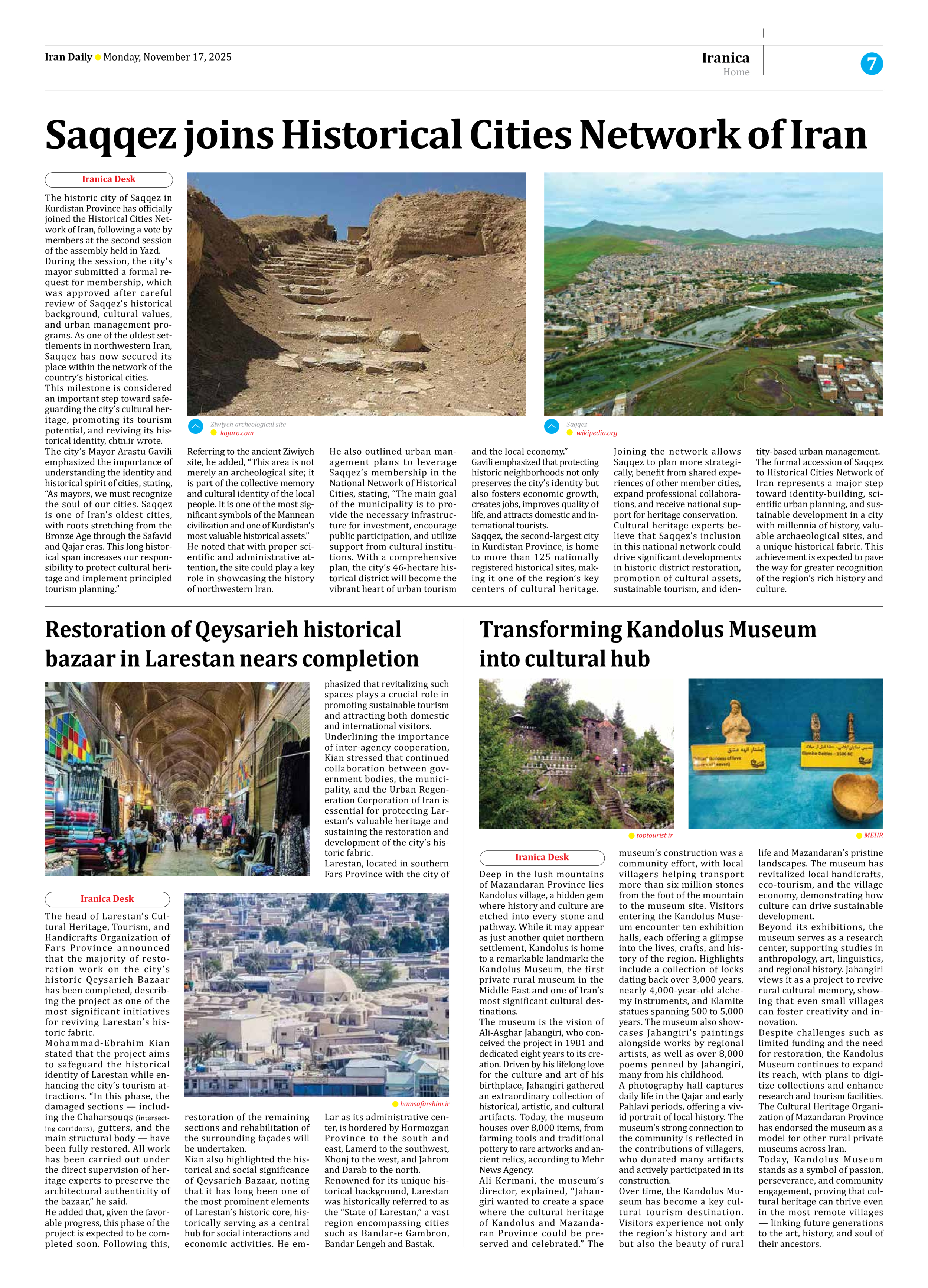
Deep in the lush mountains of Mazandaran Province lies Kandolus village, a hidden gem where history and culture are etched into every stone and pathway. While it may appear as just another quiet northern settlement, Kandolus is home to a remarkable landmark: the Kandolus Museum, the first private rural museum in the Middle East and one of Iran’s most significant cultural destinations.
The museum is the vision of Ali-Asghar Jahangiri, who conceived the project in 1981 and dedicated eight years to its creation. Driven by his lifelong love for the culture and art of his birthplace, Jahangiri gathered an extraordinary collection of historical, artistic, and cultural artifacts. Today, the museum houses over 8,000 items, from farming tools and traditional pottery to rare artworks and ancient relics, according to Mehr News Agency.
Ali Kermani, the museum’s director, explained, “Jahangiri wanted to create a space where the cultural heritage of Kandolus and Mazandaran Province could be preserved and celebrated.” The museum’s construction was a community effort, with local villagers helping transport more than six million stones from the foot of the mountain to the museum site. Visitors entering the Kandolus Museum encounter ten exhibition halls, each offering a glimpse into the lives, crafts, and history of the region. Highlights include a collection of locks dating back over 3,000 years, nearly 4,000-year-old alchemy instruments, and Elamite statues spanning 500 to 5,000 years. The museum also showcases Jahangiri’s paintings alongside works by regional artists, as well as over 8,000 poems penned by Jahangiri, many from his childhood.
A photography hall captures daily life in the Qajar and early Pahlavi periods, offering a vivid portrait of local history. The museum’s strong connection to the community is reflected in the contributions of villagers, who donated many artifacts and actively participated in its construction.
Over time, the Kandolus Museum has become a key cultural tourism destination. Visitors experience not only the region’s history and art but also the beauty of rural life and Mazandaran’s pristine landscapes. The museum has revitalized local handicrafts, eco-tourism, and the village economy, demonstrating how culture can drive sustainable development.
Beyond its exhibitions, the museum serves as a research center, supporting studies in anthropology, art, linguistics, and regional history. Jahangiri views it as a project to revive rural cultural memory, showing that even small villages can foster creativity and innovation.
Despite challenges such as limited funding and the need for restoration, the Kandolus Museum continues to expand its reach, with plans to digitize collections and enhance research and tourism facilities. The Cultural Heritage Organization of Mazandaran Province has endorsed the museum as a model for other rural private museums across Iran.
Today, Kandolus Museum stands as a symbol of passion, perseverance, and community engagement, proving that cultural heritage can thrive even in the most remote villages — linking future generations to the art, history, and soul of their ancestors.