







Copy in clipboard...
Iran confirms IAEA inspections of nuclear sites last week
Inspectors from the International Atomic Energy Agency (IAEA) visited several nuclear facilities in Iran last week, including the Tehran Research Reactor, the Foreign Ministry said on Monday.
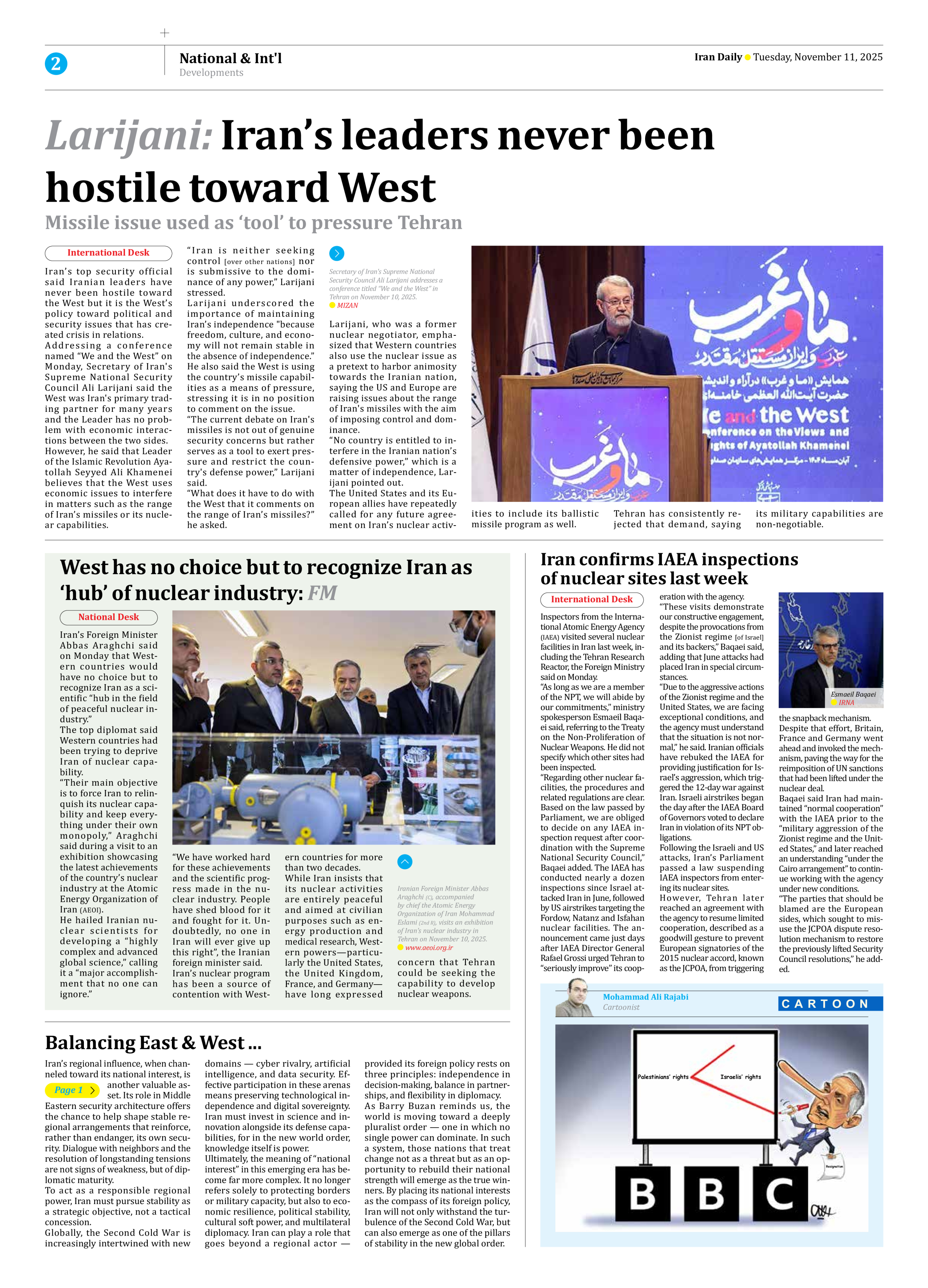
“As long as we are a member of the NPT, we will abide by our commitments,” ministry spokesperson Esmaeil Baqaei said, referring to the Treaty on the Non-Proliferation of Nuclear Weapons. He did not specify which other sites had been inspected.
“Regarding other nuclear facilities, the procedures and related regulations are clear. Based on the law passed by Parliament, we are obliged to decide on any IAEA inspection request after coordination with the Supreme National Security Council,” Baqaei added. The IAEA has conducted nearly a dozen inspections since Israel attacked Iran in June, followed by US airstrikes targeting the Fordow, Natanz and Isfahan nuclear facilities. The announcement came just days after IAEA Director General Rafael Grossi urged Tehran to “seriously improve” its cooperation with the agency.
“These visits demonstrate our constructive engagement, despite the provocations from the Zionist regime [of Israel] and its backers,” Baqaei said, adding that June attacks had placed Iran in special circumstances.
“Due to the aggressive actions of the Zionist regime and the United States, we are facing exceptional conditions, and the agency must understand that the situation is not normal,” he said. Iranian officials have rebuked the IAEA for providing justification for Israel’s aggression, which triggered the 12-day war against Iran. Israeli airstrikes began the day after the IAEA Board of Governors voted to declare Iran in violation of its NPT obligations.
Following the Israeli and US attacks, Iran’s Parliament passed a law suspending IAEA inspectors from entering its nuclear sites.
However, Tehran later reached an agreement with the agency to resume limited cooperation, described as a goodwill gesture to prevent European signatories of the 2015 nuclear accord, known as the JCPOA, from triggering the snapback mechanism.
Despite that effort, Britain, France and Germany went ahead and invoked the mechanism, paving the way for the reimposition of UN sanctions that had been lifted under the nuclear deal.
Baqaei said Iran had maintained “normal cooperation” with the IAEA prior to the “military aggression of the Zionist regime and the United States,” and later reached an understanding “under the Cairo arrangement” to continue working with the agency under new conditions.
“The parties that should be blamed are the European sides, which sought to misuse the JCPOA dispute resolution mechanism to restore the previously lifted Security Council resolutions,” he added.