







Iran’s tourism diplomacy in Riyadh
Tehran, Baghdad set target of 5m cross-border visitors in new tourism accord
Iran and Iraq agreed on Sunday to raise mutual tourist travel to five million visitors a year, in what officials described as a new stage in cultural and pilgrimage cooperation between the two neighbors.
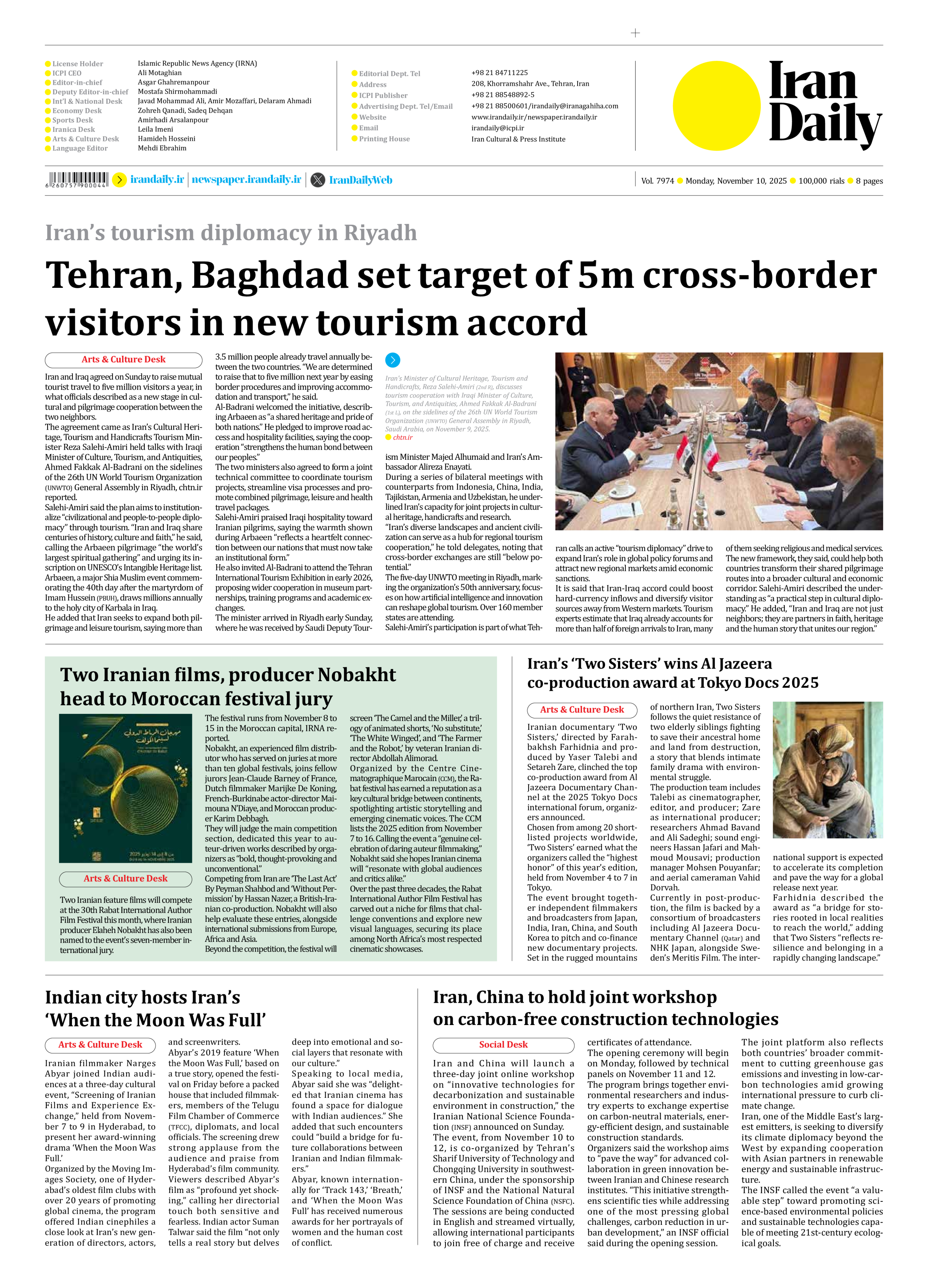
The agreement came as Iran’s Cultural Heritage, Tourism and Handicrafts Tourism Minister Reza Salehi-Amiri held talks with Iraqi Minister of Culture, Tourism, and Antiquities, Ahmed Fakkak Al-Badrani on the sidelines of the 26th UN World Tourism Organization (UNWTO) General Assembly in Riyadh, chtn.ir reported.
Salehi-Amiri said the plan aims to institutionalize “civilizational and people-to-people diplomacy” through tourism. “Iran and Iraq share centuries of history, culture and faith,” he said, calling the Arbaeen pilgrimage “the world’s largest spiritual gathering” and urging its inscription on UNESCO’s Intangible Heritage list.
Arbaeen, a major Shia Muslim event commemorating the 40th day after the martyrdom of Imam Hussein (PBUH), draws millions annually to the holy city of Karbala in Iraq.
He added that Iran seeks to expand both pilgrimage and leisure tourism, saying more than 3.5 million people already travel annually between the two countries. “We are determined to raise that to five million next year by easing border procedures and improving accommodation and transport,” he said.
Al-Badrani welcomed the initiative, describing Arbaeen as “a shared heritage and pride of both nations.” He pledged to improve road access and hospitality facilities, saying the cooperation “strengthens the human bond between our peoples.”
The two ministers also agreed to form a joint technical committee to coordinate tourism projects, streamline visa processes and promote combined pilgrimage, leisure and health travel packages.
Salehi-Amiri praised Iraqi hospitality toward Iranian pilgrims, saying the warmth shown during Arbaeen “reflects a heartfelt connection between our nations that must now take an institutional form.”
He also invited Al-Badrani to attend the Tehran International Tourism Exhibition in early 2026, proposing wider cooperation in museum partnerships, training programs and academic exchanges.
The minister arrived in Riyadh early Sunday, where he was received by Saudi Deputy Tourism Minister Majed Alhumaid and Iran’s Ambassador Alireza Enayati.
During a series of bilateral meetings with counterparts from Indonesia, China, India, Tajikistan, Armenia and Uzbekistan, he underlined Iran’s capacity for joint projects in cultural heritage, handicrafts and research.
“Iran’s diverse landscapes and ancient civilization can serve as a hub for regional tourism cooperation,” he told delegates, noting that cross-border exchanges are still “below potential.”
The five-day UNWTO meeting in Riyadh, marking the organization’s 50th anniversary, focuses on how artificial intelligence and innovation can reshape global tourism. Over 160 member states are attending.
Salehi-Amiri’s participation is part of what Tehran calls an active “tourism diplomacy” drive to expand Iran’s role in global policy forums and attract new regional markets amid economic sanctions.
It is said that Iran-Iraq accord could boost hard-currency inflows and diversify visitor sources away from Western markets. Tourism experts estimate that Iraq already accounts for more than half of foreign arrivals to Iran, many of them seeking religious and medical services. The new framework, they said, could help both countries transform their shared pilgrimage routes into a broader cultural and economic corridor. Salehi-Amiri described the understanding as “a practical step in cultural diplomacy.” He added, “Iran and Iraq are not just neighbors; they are partners in faith, heritage and the human story that unites our region.”