







Copy in clipboard...
Iraq’s forces, displaced vote early ahead of parliamentary elections
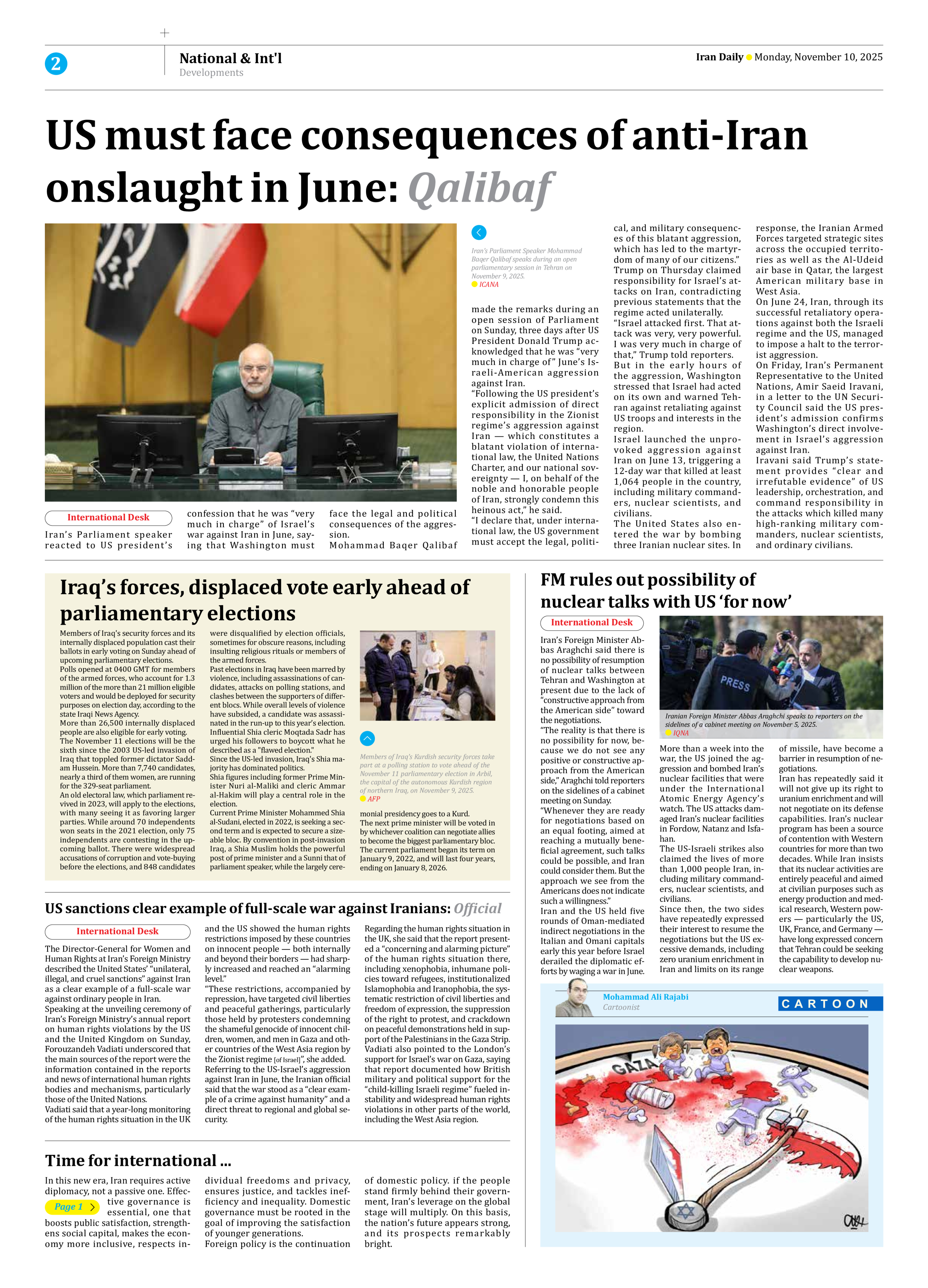
Polls opened at 0400 GMT for members of the armed forces, who account for 1.3 million of the more than 21 million eligible voters and would be deployed for security purposes on election day, according to the state Iraqi News Agency.
More than 26,500 internally displaced people are also eligible for early voting.
The November 11 elections will be the sixth since the 2003 US-led invasion of Iraq that toppled former dictator Saddam Hussein. More than 7,740 candidates, nearly a third of them women, are running for the 329-seat parliament.
An old electoral law, which parliament revived in 2023, will apply to the elections, with many seeing it as favoring larger parties. While around 70 independents won seats in the 2021 election, only 75 independents are contesting in the upcoming ballot. There were widespread accusations of corruption and vote-buying before the elections, and 848 candidates were disqualified by election officials, sometimes for obscure reasons, including insulting religious rituals or members of the armed forces.
Past elections in Iraq have been marred by violence, including assassinations of candidates, attacks on polling stations, and clashes between the supporters of different blocs. While overall levels of violence have subsided, a candidate was assassinated in the run-up to this year’s election.
Influential Shia cleric Moqtada Sadr has urged his followers to boycott what he described as a "flawed election."
Since the US-led invasion, Iraq's Shia majority has dominated politics.
Shia figures including former Prime Minister Nuri al-Maliki and cleric Ammar al-Hakim will play a central role in the election.
Current Prime Minister Mohammed Shia al-Sudani, elected in 2022, is seeking a second term and is expected to secure a sizeable bloc. By convention in post-invasion Iraq, a Shia Muslim holds the powerful post of prime minister and a Sunni that of parliament speaker, while the largely ceremonial presidency goes to a Kurd.
The next prime minister will be voted in by whichever coalition can negotiate allies to become the biggest parliamentary bloc.
The current parliament began its term on January 9, 2022, and will last four years, ending on January 8, 2026.