







Copy in clipboard...
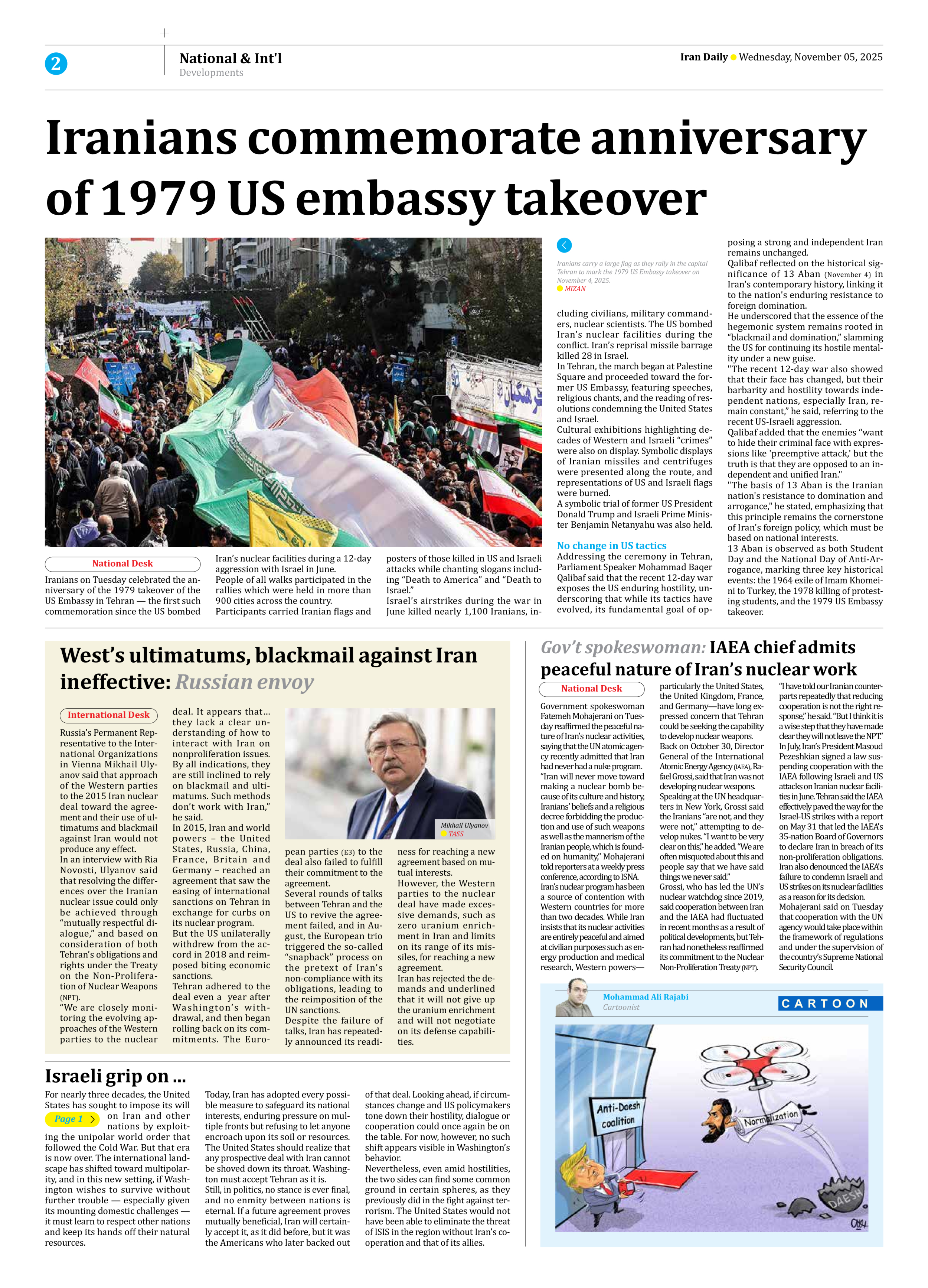
West’s ultimatums, blackmail against Iran ineffective: Russian envoy
In an interview with Ria Novosti, Ulyanov said that resolving the differences over the Iranian nuclear issue could only be achieved through “mutually respectful dialogue,” and based on consideration of both Tehran’s obligations and rights under the Treaty on the Non-Proliferation of Nuclear Weapons (NPT).
“We are closely monitoring the evolving approaches of the Western parties to the nuclear deal. It appears that… they lack a clear understanding of how to interact with Iran on nonproliferation issues. By all indications, they are still inclined to rely on blackmail and ultimatums. Such methods don’t work with Iran,” he said.
In 2015, Iran and world powers – the United States, Russia, China, France, Britain and Germany – reached an agreement that saw the easing of international sanctions on Tehran in exchange for curbs on its nuclear program.
But the US unilaterally withdrew from the accord in 2018 and reimposed biting economic sanctions.
Tehran adhered to the deal even a year after Washington’s withdrawal, and then began rolling back on its commitments. The European parties (E3) to the deal also failed to fulfill their commitment to the agreement.
Several rounds of talks between Tehran and the US to revive the agreement failed, and in August, the European trio triggered the so-called “snapback” process on the pretext of Iran’s non-compliance with its obligations, leading to the reimposition of the UN sanctions.
Despite the failure of talks, Iran has repeatedly announced its readiness for reaching a new agreement based on mutual interests.
However, the Western parties to the nuclear deal have made excessive demands, such as zero uranium enrichment in Iran and limits on its range of its missiles, for reaching a new agreement.
Iran has rejected the demands and underlined that it will not give up the uranium enrichment and will not negotiate on its defense capabilities.