







Ministry unveils major customs overhaul, targets smart systems
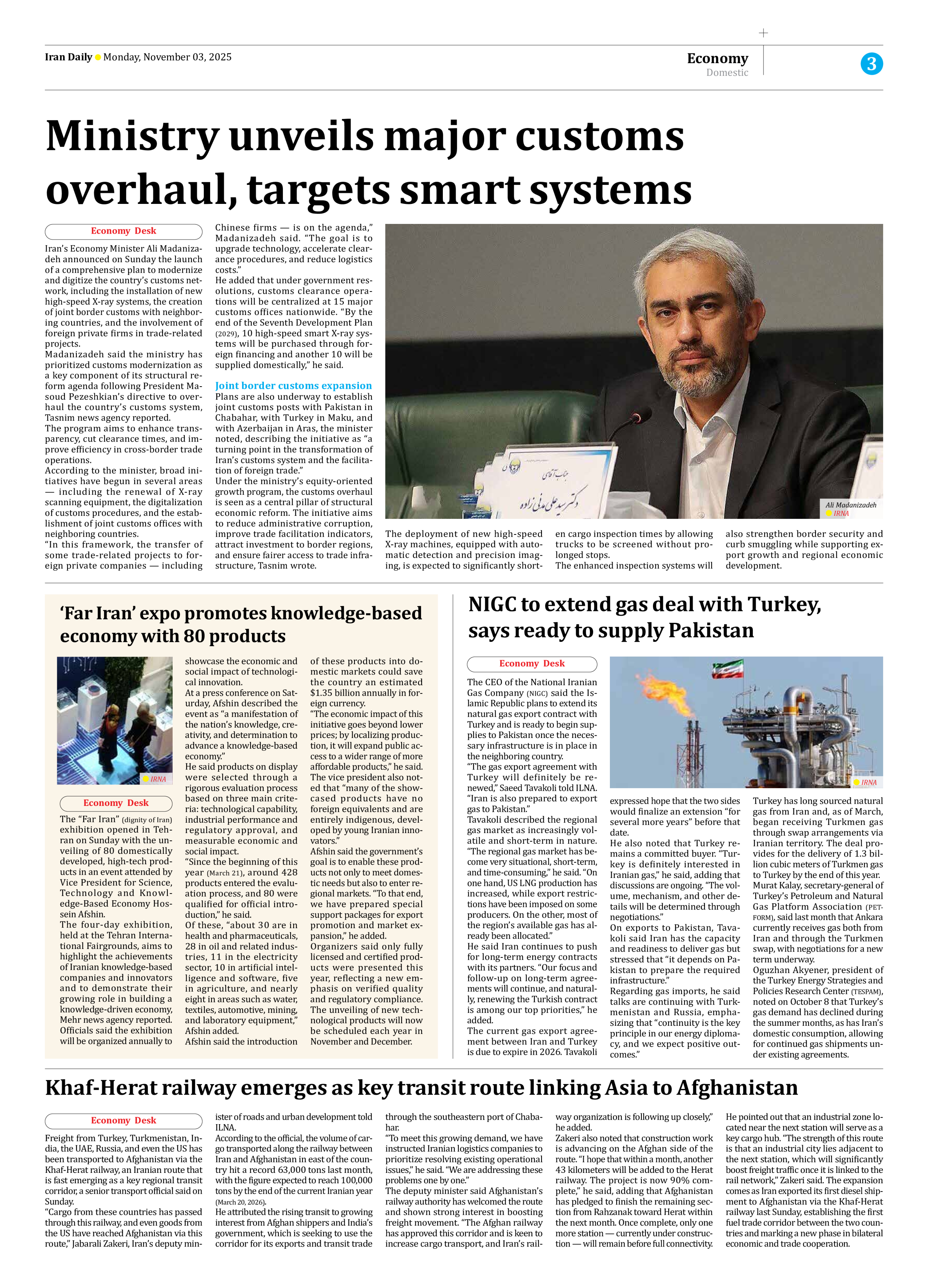
Iran’s Economy Minister Ali Madanizadeh announced on Sunday the launch of a comprehensive plan to modernize and digitize the country’s customs network, including the installation of new high-speed X-ray systems, the creation of joint border customs with neighboring countries, and the involvement of foreign private firms in trade-related projects.
Madanizadeh said the ministry has prioritized customs modernization as a key component of its structural reform agenda following President Masoud Pezeshkian’s directive to overhaul the country’s customs system, Tasnim news agency reported.
The program aims to enhance transparency, cut clearance times, and improve efficiency in cross-border trade operations.
According to the minister, broad initiatives have begun in several areas — including the renewal of X-ray scanning equipment, the digitalization of customs procedures, and the establishment of joint customs offices with neighboring countries.
“In this framework, the transfer of some trade-related projects to foreign private companies — including Chinese firms — is on the agenda,” Madanizadeh said. “The goal is to upgrade technology, accelerate clearance procedures, and reduce logistics costs.”
He added that under government resolutions, customs clearance operations will be centralized at 15 major customs offices nationwide. “By the end of the Seventh Development Plan (2029), 10 high-speed smart X-ray systems will be purchased through foreign financing and another 10 will be supplied domestically,” he said.
Joint border customs expansion
Plans are also underway to establish joint customs posts with Pakistan in Chabahar, with Turkey in Maku, and with Azerbaijan in Aras, the minister noted, describing the initiative as “a turning point in the transformation of Iran’s customs system and the facilitation of foreign trade.”
Under the ministry’s equity-oriented growth program, the customs overhaul is seen as a central pillar of structural economic reform. The initiative aims to reduce administrative corruption, improve trade facilitation indicators, attract investment to border regions, and ensure fairer access to trade infrastructure, Tasnim wrote.
The deployment of new high-speed X-ray machines, equipped with automatic detection and precision imaging, is expected to significantly shorten cargo inspection times by allowing trucks to be screened without prolonged stops.
The enhanced inspection systems will also strengthen border security and curb smuggling while supporting export growth and regional economic development.