







Iran, China set up joint agricultural research center under 25-year pact
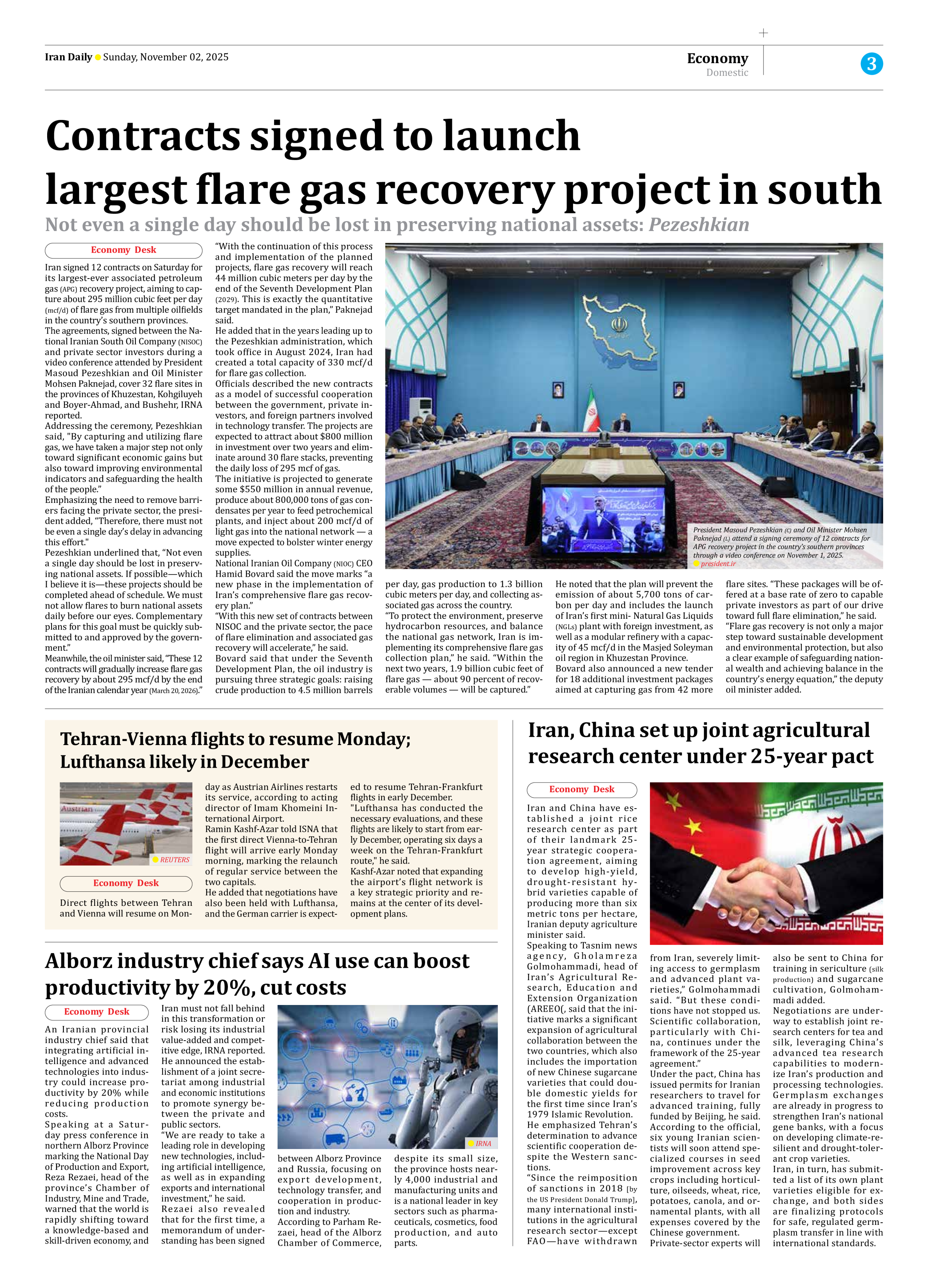
Iran and China have established a joint rice research center as part of their landmark 25-year strategic cooperation agreement, aiming to develop high-yield, drought-resistant hybrid varieties capable of producing more than six metric tons per hectare, Iranian deputy agriculture minister said.
Speaking to Tasnim news agency, Gholamreza Golmohammadi, head of Iran’s Agricultural Research, Education and Extension Organization (AREEO(, said that the initiative marks a significant expansion of agricultural collaboration between the two countries, which also includes the importation of new Chinese sugarcane varieties that could double domestic yields for the first time since Iran’s 1979 Islamic Revolution.
He emphasized Tehran’s determination to advance scientific cooperation despite the Western sanctions.
“Since the reimposition of sanctions in 2018 [by the US President Donald Trump], many international institutions in the agricultural research sector—except FAO—have withdrawn from Iran, severely limiting access to germplasm and advanced plant varieties,” Golmohammadi said. “But these conditions have not stopped us. Scientific collaboration, particularly with China, continues under the framework of the 25-year agreement.”
Under the pact, China has issued permits for Iranian researchers to travel for advanced training, fully funded by Beijing, he said.
According to the official, six young Iranian scientists will soon attend specialized courses in seed improvement across key crops including horticulture, oilseeds, wheat, rice, potatoes, canola, and ornamental plants, with all expenses covered by the Chinese government.
Private-sector experts will also be sent to China for training in sericulture (silk production) and sugarcane cultivation, Golmohammadi added.
Negotiations are underway to establish joint research centers for tea and silk, leveraging China’s advanced tea research capabilities to modernize Iran’s production and processing technologies. Germplasm exchanges are already in progress to strengthen Iran’s national gene banks, with a focus on developing climate-resilient and drought-tolerant crop varieties.
Iran, in turn, has submitted a list of its own plant varieties eligible for exchange, and both sides are finalizing protocols for safe, regulated germplasm transfer in line with international standards.