







Copy in clipboard...
Semnan hosts first Silk Road tourism conference
Historic corridor hailed as gateway to Semnan’s int’l tourism future, official says
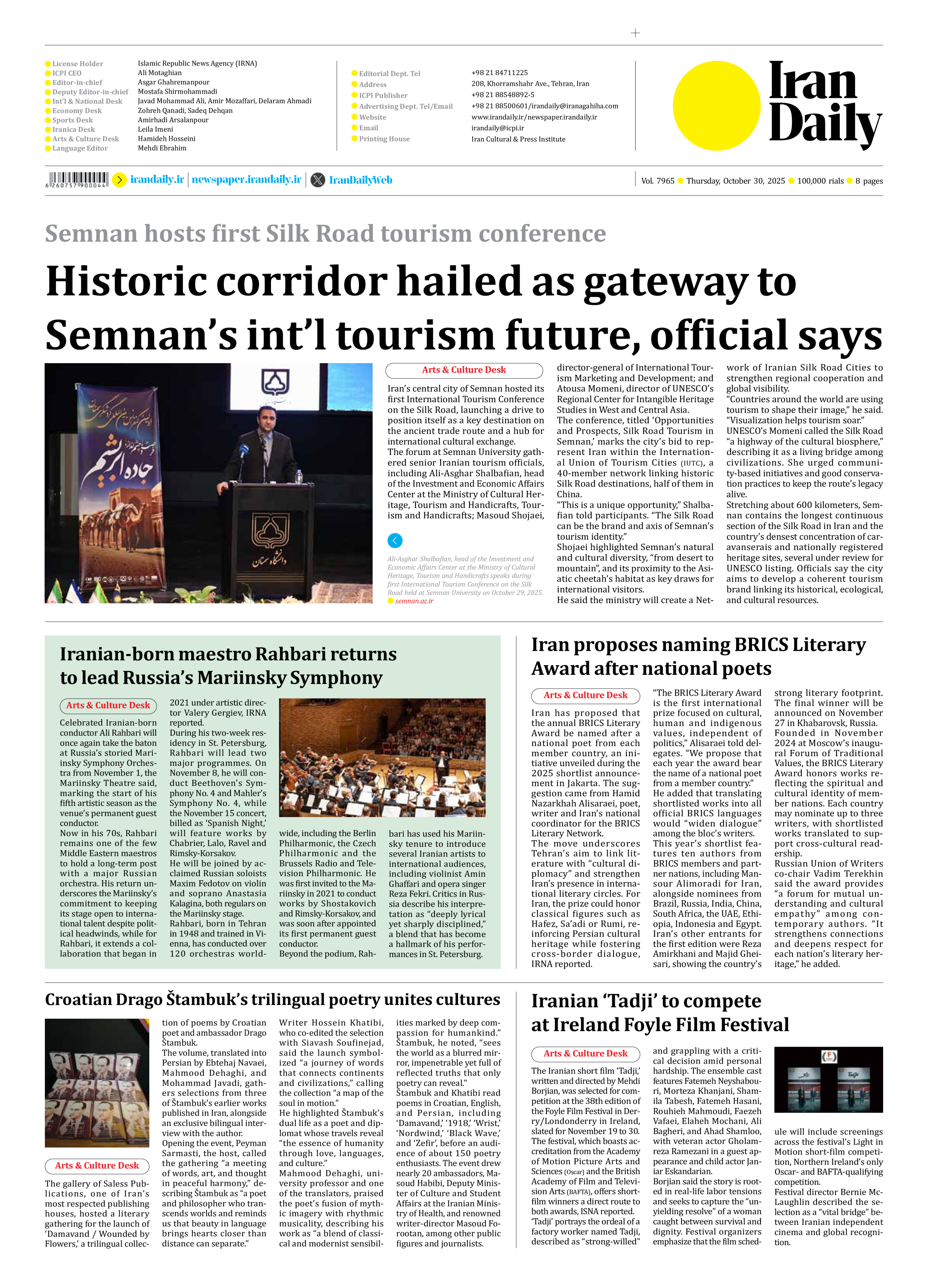
The forum at Semnan University gathered senior Iranian tourism officials, including Ali-Asghar Shalbafian, head of the Investment and Economic Affairs Center at the Ministry of Cultural Heritage, Tourism and Handicrafts, Tourism and Handicrafts; Masoud Shojaei, director-general of International Tourism Marketing and Development; and Atousa Momeni, director of UNESCO’s Regional Center for Intangible Heritage Studies in West and Central Asia.
The conference, titled ‘Opportunities and Prospects, Silk Road Tourism in Semnan,’ marks the city’s bid to represent Iran within the International Union of Tourism Cities (IUTC), a 40-member network linking historic Silk Road destinations, half of them in China.
“This is a unique opportunity,” Shalbafian told participants. “The Silk Road can be the brand and axis of Semnan’s tourism identity.”
Shojaei highlighted Semnan’s natural and cultural diversity, “from desert to mountain”, and its proximity to the Asiatic cheetah’s habitat as key draws for international visitors.
He said the ministry will create a Network of Iranian Silk Road Cities to strengthen regional cooperation and global visibility.
“Countries around the world are using tourism to shape their image,” he said. “Visualization helps tourism soar.”
UNESCO’s Momeni called the Silk Road “a highway of the cultural biosphere,” describing it as a living bridge among civilizations. She urged community-based initiatives and good conservation practices to keep the route’s legacy alive.
Stretching about 600 kilometers, Semnan contains the longest continuous section of the Silk Road in Iran and the country’s densest concentration of caravanserais and nationally registered heritage sites, several under review for UNESCO listing. Officials say the city aims to develop a coherent tourism brand linking its historical, ecological, and cultural resources.