







Silent treasures on Iran’s path to cultural, tourism development
By Ehsan Farahani
Expert on cultural and artistic affairs
In recent years, we have repeatedly seen countries leverage their natural and cultural symbols with savvy, enabling them to make significant strides both in public diplomacy and in the fields of tourism and cultural economy. Meanwhile, in Iran, many of our unique environmental assets have either been left overlooked or, at best, have been paid just lip service.
Today, the Asiatic cheetah, as an endangered species, only makes sporadic appearances on the Iranian football team’s jerseys. A majestic bird like the “Homa,” which could have stood as a symbol of peace and resilience, remains unknown to many Iranians. The Iranian onager, the cypress tree of Abarkuh, the brown bear of Mazandaran Province, and the Caspian tiger (now living only in memories) are all parts of our biological heritage that have so far failed to make a mark in shaping the contemporary image of Iran.
On the other hand, many countries have not only pulled out all the stops to protect their native species but have also turned them into iconic assets. Just look at Australia, where kangaroos and koalas have become national brands, or China, which has spread its soft power through the giant panda all the way to the heart of Europe and America. Even the United Arab Emirates, which modernized at lightning speed, never lost sight of showcasing and preserving symbols like the falcon, the Arabian gazelle, or the Ghaf tree, framing them within their national heritage and identity.
But the key question is: What game plan do we have to tap into these symbols for cultural development and ecotourism?
Environmental symbols can bridge culture, education, tourism, and a sustainable economy. With proper planning, these symbols can take center stage as characters in children’s books, subjects in cinema and television, logos on product packaging, and attractions on nature trails. This means building an emotional bond between the people and their ecosystem.
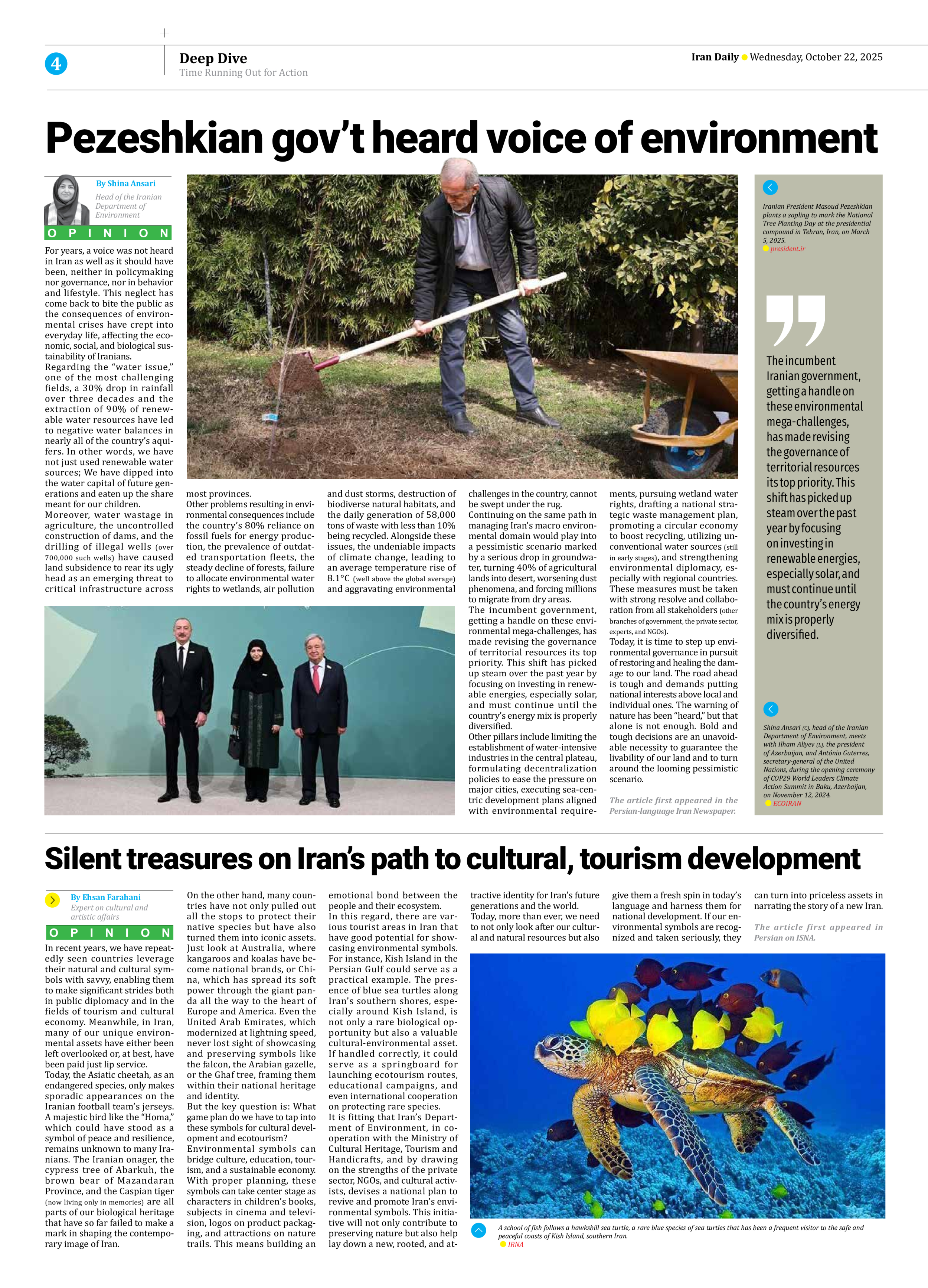
In this regard, there are various tourist areas in Iran that have good potential for showcasing environmental symbols. For instance, Kish Island in the Persian Gulf could serve as a practical example. The presence of blue sea turtles along Iran’s southern shores, especially around Kish Island, is not only a rare biological opportunity but also a valuable cultural-environmental asset. If handled correctly, it could serve as a springboard for launching ecotourism routes, educational campaigns, and even international cooperation on protecting rare species.
It is fitting that Iran’s Department of Environment, in cooperation with the Ministry of Cultural Heritage, Tourism and Handicrafts, and by drawing on the strengths of the private sector, NGOs, and cultural activists, devises a national plan to revive and promote Iran’s environmental symbols. This initiative will not only contribute to preserving nature but also help lay down a new, rooted, and attractive identity for Iran’s future generations and the world.
Today, more than ever, we need to not only look after our cultural and natural resources but also give them a fresh spin in today’s language and harness them for national development. If our environmental symbols are recognized and taken seriously, they can turn into priceless assets in narrating the story of a new Iran.
The article first appeared in
Persian on ISNA.