







India’s tactic against Trump; oil pivot from Russia to Iran
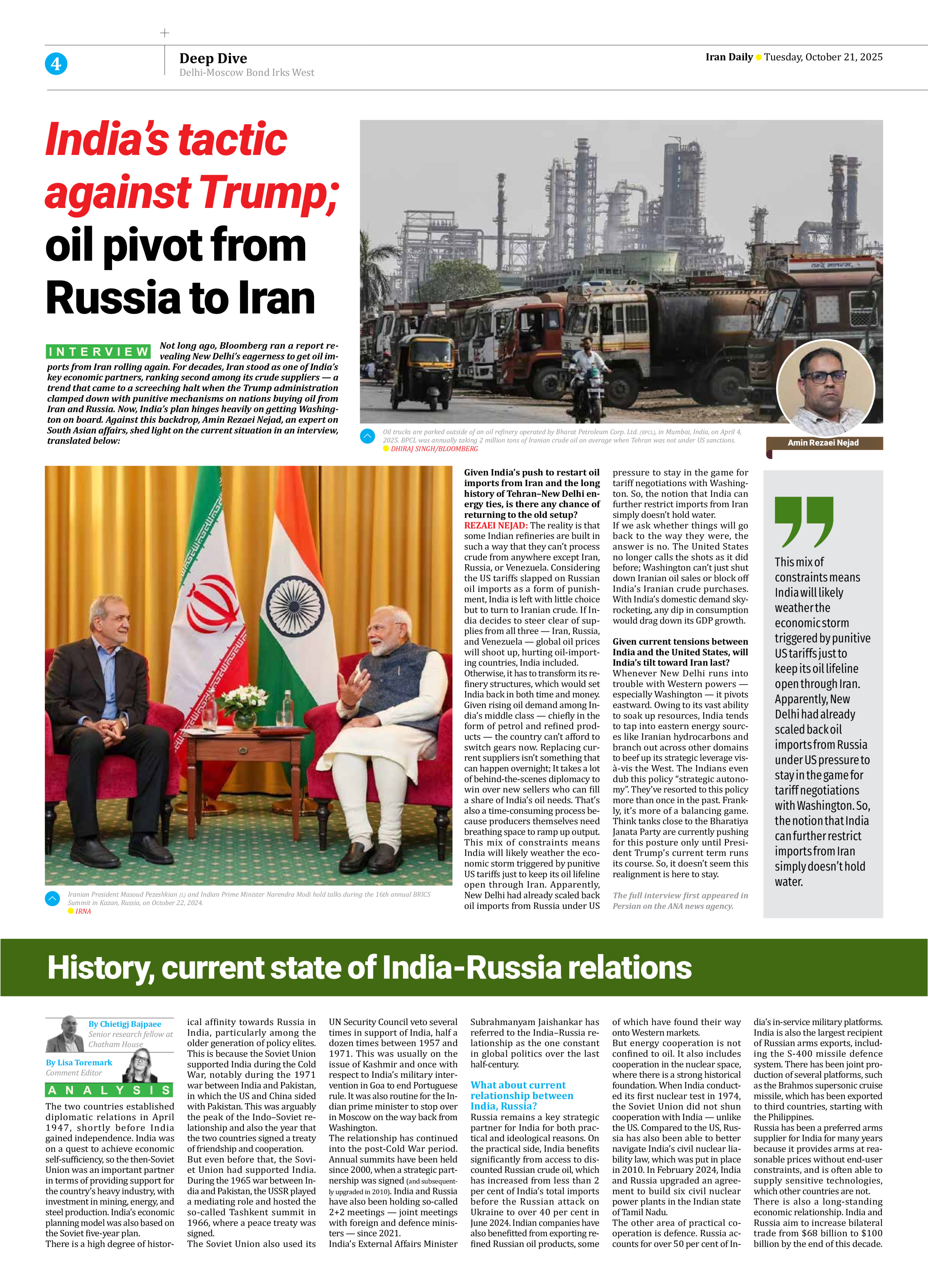
Not long ago, Bloomberg ran a report revealing New Delhi’s eagerness to get oil imports from Iran rolling again. For decades, Iran stood as one of India’s key economic partners, ranking second among its crude suppliers — a trend that came to a screeching halt when the Trump administration clamped down with punitive mechanisms on nations buying oil from Iran and Russia. Now, India’s plan hinges heavily on getting Washington on board. Against this backdrop, Amin Rezaei Nejad, an expert on South Asian affairs, shed light on the current situation in an interview, translated below:
Given India’s push to restart oil imports from Iran and the long history of Tehran–New Delhi energy ties, is there any chance of returning to the old setup?
REZAEI NEJAD: The reality is that some Indian refineries are built in such a way that they can’t process crude from anywhere except Iran, Russia, or Venezuela. Considering the US tariffs slapped on Russian oil imports as a form of punishment, India is left with little choice but to turn to Iranian crude. If India decides to steer clear of supplies from all three — Iran, Russia, and Venezuela — global oil prices will shoot up, hurting oil-importing countries, India included.
Otherwise, it has to transform its refinery structures, which would set India back in both time and money. Given rising oil demand among India’s middle class — chiefly in the form of petrol and refined products — the country can’t afford to switch gears now. Replacing current suppliers isn’t something that can happen overnight; It takes a lot of behind-the-scenes diplomacy to win over new sellers who can fill a share of India’s oil needs. That’s also a time-consuming process because producers themselves need breathing space to ramp up output.
This mix of constraints means India will likely weather the economic storm triggered by punitive US tariffs just to keep its oil lifeline open through Iran. Apparently, New Delhi had already scaled back oil imports from Russia under US pressure to stay in the game for tariff negotiations with Washington. So, the notion that India can further restrict imports from Iran simply doesn’t hold water.
If we ask whether things will go back to the way they were, the answer is no. The United States no longer calls the shots as it did before; Washington can’t just shut down Iranian oil sales or block off India’s Iranian crude purchases. With India’s domestic demand skyrocketing, any dip in consumption would drag down its GDP growth.
Given current tensions between India and the United States, will India’s tilt toward Iran last?
Whenever New Delhi runs into trouble with Western powers — especially Washington — it pivots eastward. Owing to its vast ability to soak up resources, India tends to tap into eastern energy sources like Iranian hydrocarbons and branch out across other domains to beef up its strategic leverage vis-à-vis the West. The Indians even dub this policy “strategic autonomy”. They’ve resorted to this policy more than once in the past. Frankly, it’s more of a balancing game. Think tanks close to the Bharatiya Janata Party are currently pushing for this posture only until President Trump’s current term runs its course. So, it doesn’t seem this realignment is here to stay.
The full interview first appeared in Persian on the ANA news agency.