







Over 80% of Iran-Russia trade now settled in local currencies, says Russian official
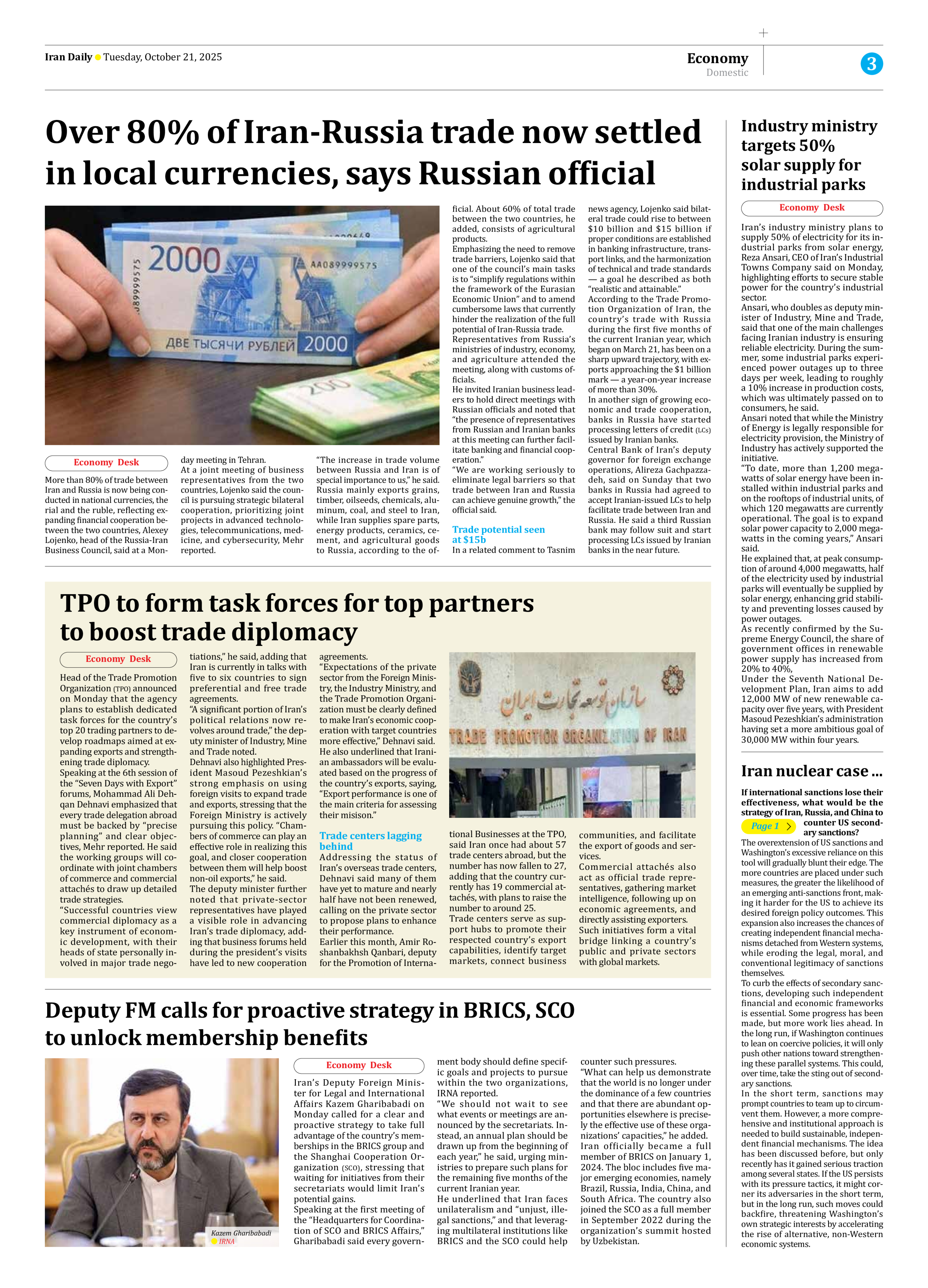
More than 80% of trade between Iran and Russia is now being conducted in national currencies, the rial and the ruble, reflecting expanding financial cooperation between the two countries, Alexey Lojenko, head of the Russia-Iran Business Council, said at a Monday meeting in Tehran.
At a joint meeting of business representatives from the two countries, Lojenko said the council is pursuing strategic bilateral cooperation, prioritizing joint projects in advanced technologies, telecommunications, medicine, and cybersecurity, Mehr reported.
“The increase in trade volume between Russia and Iran is of special importance to us,” he said.
Russia mainly exports grains, timber, oilseeds, chemicals, aluminum, coal, and steel to Iran, while Iran supplies spare parts, energy products, ceramics, cement, and agricultural goods to Russia, according to the official. About 60% of total trade between the two countries, he added, consists of agricultural products.
Emphasizing the need to remove trade barriers, Lojenko said that one of the council’s main tasks is to “simplify regulations within the framework of the Eurasian Economic Union” and to amend cumbersome laws that currently hinder the realization of the full potential of Iran-Russia trade.
Representatives from Russia’s ministries of industry, economy, and agriculture attended the meeting, along with customs officials.
He invited Iranian business leaders to hold direct meetings with Russian officials and noted that “the presence of representatives from Russian and Iranian banks at this meeting can further facilitate banking and financial cooperation.”
“We are working seriously to eliminate legal barriers so that trade between Iran and Russia can achieve genuine growth,” the official said.
Trade potential seen
at $15b
In a related comment to Tasnim news agency, Lojenko said bilateral trade could rise to between $10 billion and $15 billion if proper conditions are established in banking infrastructure, transport links, and the harmonization of technical and trade standards — a goal he described as both “realistic and attainable.”
According to the Trade Promotion Organization of Iran, the country’s trade with Russia during the first five months of the current Iranian year, which began on March 21, has been on a sharp upward trajectory, with exports approaching the $1 billion mark — a year-on-year increase of more than 30%.
In another sign of growing economic and trade cooperation, banks in Russia have started processing letters of credit (LCs) issued by Iranian banks.
Central Bank of Iran’s deputy governor for foreign exchange operations, Alireza Gachpazzadeh, said on Sunday that two banks in Russia had agreed to accept Iranian-issued LCs to help facilitate trade between Iran and Russia. He said a third Russian bank may follow suit and start processing LCs issued by Iranian banks in the near future.