







Copy in clipboard...
Experience echoes of history at Naseri Castle in Iranshahr
During the later years of the Qajar period, Naseri Castle became known as the Dost Mohammad Khan Castle and was once again used as a government office, visitiran.ir wrote.
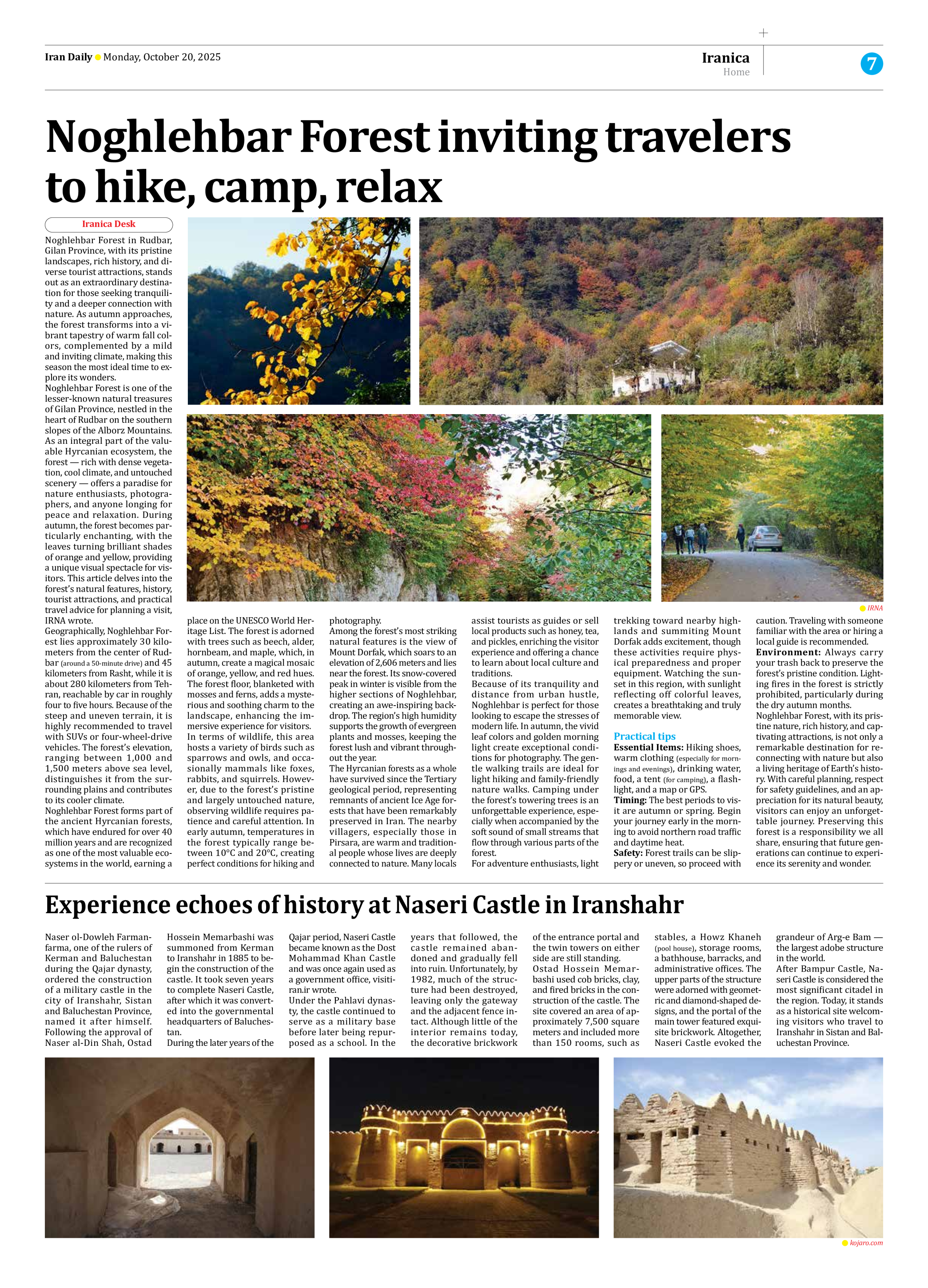
Under the Pahlavi dynasty, the castle continued to serve as a military base before later being repurposed as a school. In the years that followed, the castle remained abandoned and gradually fell into ruin. Unfortunately, by 1982, much of the structure had been destroyed, leaving only the gateway and the adjacent fence intact. Although little of the interior remains today, the decorative brickwork of the entrance portal and the twin towers on either side are still standing.
Ostad Hossein Memarbashi used cob bricks, clay, and fired bricks in the construction of the castle. The site covered an area of approximately 7,500 square meters and included more than 150 rooms, such as stables, a Howz Khaneh (pool house), storage rooms, a bathhouse, barracks, and administrative offices. The upper parts of the structure were adorned with geometric and diamond-shaped designs, and the portal of the main tower featured exquisite brickwork. Altogether, Naseri Castle evoked the grandeur of Arg-e Bam — the largest adobe structure in the world.
After Bampur Castle, Naseri Castle is considered the most significant citadel in the region. Today, it stands as a historical site welcoming visitors who travel to Iranshahr in Sistan and Baluchestan Province.