







Communities struggle as wetlands dry in Iran
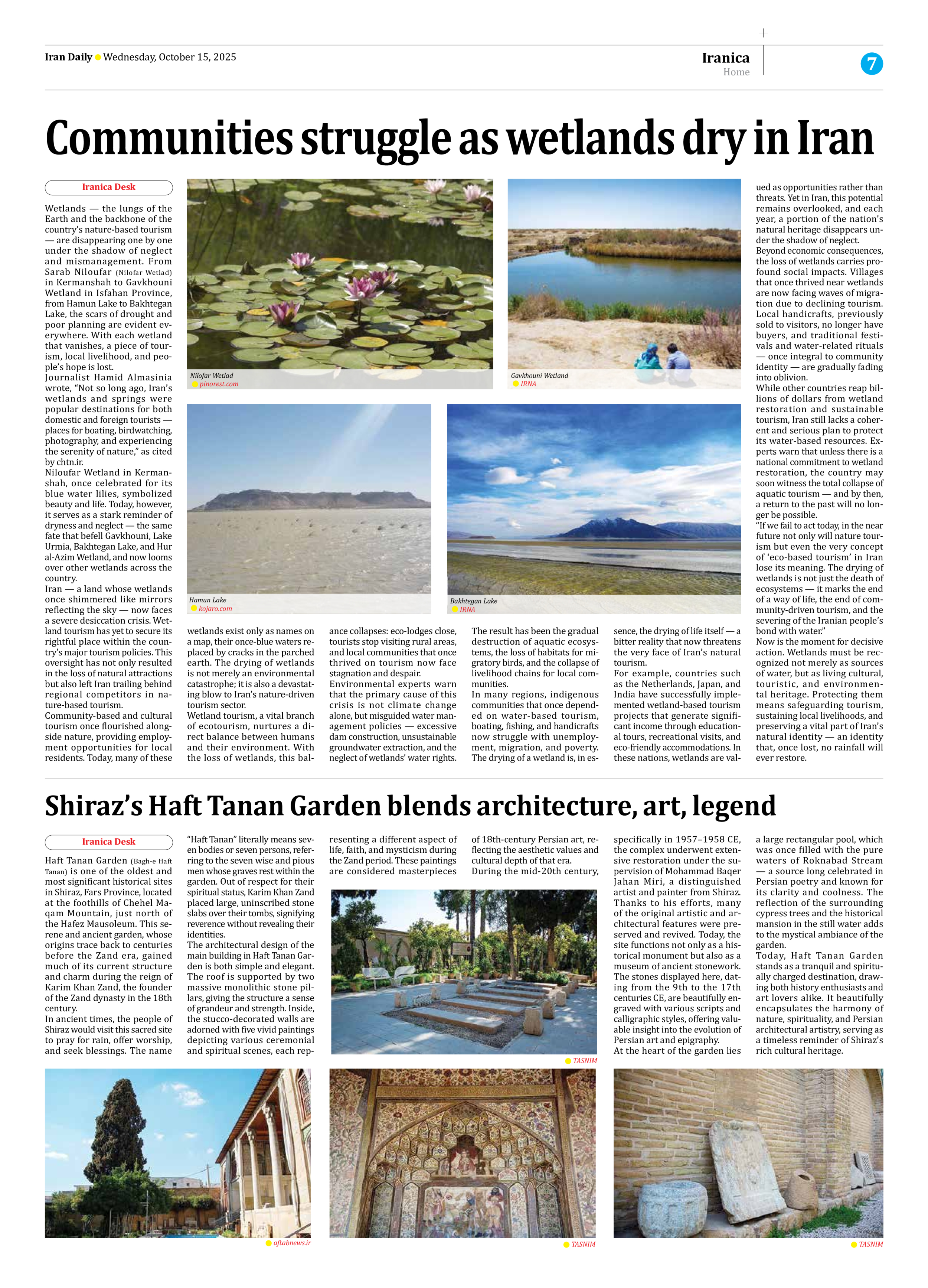
Wetlands — the lungs of the Earth and the backbone of the country’s nature-based tourism — are disappearing one by one under the shadow of neglect and mismanagement. From Sarab Niloufar (Nilofar Wetlad) in Kermanshah to Gavkhouni Wetland in Isfahan Province, from Hamun Lake to Bakhtegan Lake, the scars of drought and poor planning are evident everywhere. With each wetland that vanishes, a piece of tourism, local livelihood, and people’s hope is lost.
Journalist Hamid Almasinia wrote, “Not so long ago, Iran’s wetlands and springs were popular destinations for both domestic and foreign tourists — places for boating, birdwatching, photography, and experiencing the serenity of nature,” as cited by chtn.ir.
Niloufar Wetland in Kermanshah, once celebrated for its blue water lilies, symbolized beauty and life. Today, however, it serves as a stark reminder of dryness and neglect — the same fate that befell Gavkhouni, Lake Urmia, Bakhtegan Lake, and Hur al-Azim Wetland, and now looms over other wetlands across the country.
Iran — a land whose wetlands once shimmered like mirrors reflecting the sky — now faces a severe desiccation crisis. Wetland tourism has yet to secure its rightful place within the country’s major tourism policies. This oversight has not only resulted in the loss of natural attractions but also left Iran trailing behind regional competitors in nature-based tourism.
Community-based and cultural tourism once flourished alongside nature, providing employment opportunities for local residents. Today, many of these wetlands exist only as names on a map, their once-blue waters replaced by cracks in the parched earth. The drying of wetlands is not merely an environmental catastrophe; it is also a devastating blow to Iran’s nature-driven tourism sector.
Wetland tourism, a vital branch of ecotourism, nurtures a direct balance between humans and their environment. With the loss of wetlands, this balance collapses: eco-lodges close, tourists stop visiting rural areas, and local communities that once thrived on tourism now face stagnation and despair.
Environmental experts warn that the primary cause of this crisis is not climate change alone, but misguided water management policies — excessive dam construction, unsustainable groundwater extraction, and the neglect of wetlands’ water rights. The result has been the gradual destruction of aquatic ecosystems, the loss of habitats for migratory birds, and the collapse of livelihood chains for local communities.
In many regions, indigenous communities that once depended on water-based tourism, boating, fishing, and handicrafts now struggle with unemployment, migration, and poverty. The drying of a wetland is, in essence, the drying of life itself — a bitter reality that now threatens the very face of Iran’s natural tourism.
For example, countries such as the Netherlands, Japan, and India have successfully implemented wetland-based tourism projects that generate significant income through educational tours, recreational visits, and eco-friendly accommodations. In these nations, wetlands are valued as opportunities rather than threats. Yet in Iran, this potential remains overlooked, and each year, a portion of the nation’s natural heritage disappears under the shadow of neglect.
Beyond economic consequences, the loss of wetlands carries profound social impacts. Villages that once thrived near wetlands are now facing waves of migration due to declining tourism. Local handicrafts, previously sold to visitors, no longer have buyers, and traditional festivals and water-related rituals — once integral to community identity — are gradually fading into oblivion.
While other countries reap billions of dollars from wetland restoration and sustainable tourism, Iran still lacks a coherent and serious plan to protect its water-based resources. Experts warn that unless there is a national commitment to wetland restoration, the country may soon witness the total collapse of aquatic tourism — and by then, a return to the past will no longer be possible.
“If we fail to act today, in the near future not only will nature tourism but even the very concept of ‘eco-based tourism’ in Iran lose its meaning. The drying of wetlands is not just the death of ecosystems — it marks the end of a way of life, the end of community-driven tourism, and the severing of the Iranian people’s bond with water.”
Now is the moment for decisive action. Wetlands must be recognized not merely as sources of water, but as living cultural, touristic, and environmental heritage. Protecting them means safeguarding tourism, sustaining local livelihoods, and preserving a vital part of Iran’s natural identity — an identity that, once lost, no rainfall will ever restore.