







Iran should not ...
Page 1
Iran should pursue justice and assert its rights in global organizations, avoiding conflict and escalation.
As for dialogue with the United States, it’s far from straightforward. Beyond negotiations, Iran should also build the capacity to stand on its own feet—to strengthen its industrial and technological foundations so that Washington and its European allies are compelled to think twice before adopting aggressive policies.
If things continue the current course, a breakthrough with the US seems unlikely. Yet, completely ignoring Washington is not a realistic option either. The United States wields vast power and influence and Iran cannot simply act as it pleases while expecting Washington to remain a bystander.
American policymakers closely keep tabs on every internal and external move Tehran makes to ensure their interests in the Middle East remain intact. Thus, Iran must simultaneously strengthen both domestic and foreign efforts to secure its rightful place on the global stage—without slipping into isolation from the international community.
Iran’s Foreign Minister Abbas Araghchi has said Tehran cannot give any credence to an olive branch extended by a country that bombed it just four months ago. Yet, he has also voiced readiness for diplomatic engagement. What conditions could make such a diplomatic process feasible?
Foreign Minister Araghchi raised valid points that Washington has persistently ignored. The US and Israel’s hostile behavior has made any reconciliation almost impossible. The only way forward is for the Americans to build trust through concrete steps and to honor Iran’s conditions before talks can get off the ground. Otherwise, no diplomatic window will open, and in fact, tensions may rise to the point where a new war could erupt against Iran.
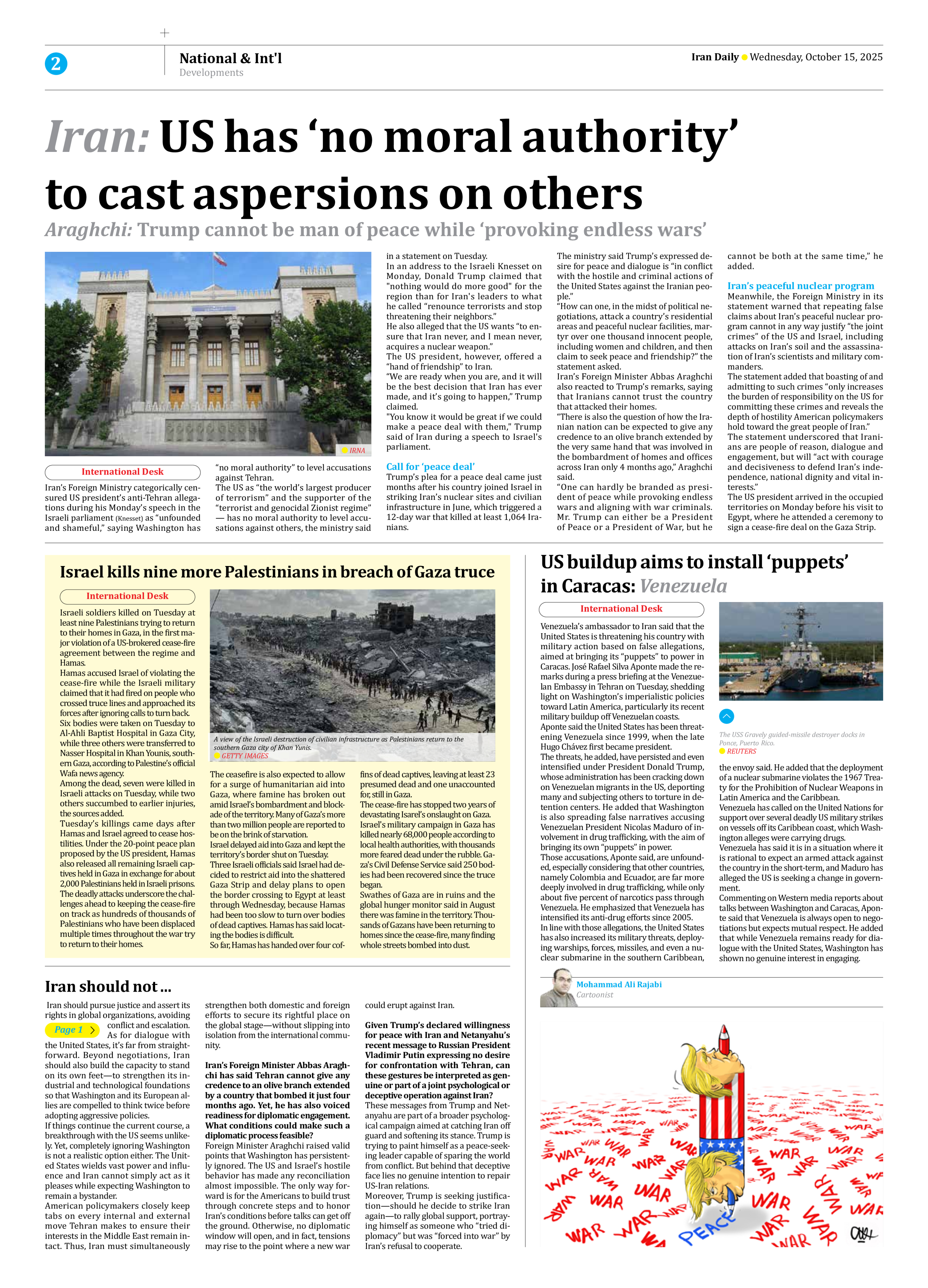
Given Trump’s declared willingness for peace with Iran and Netanyahu’s recent message to Russian President Vladimir Putin expressing no desire for confrontation with Tehran, can these gestures be interpreted as genuine or part of a joint psychological or deceptive operation against Iran?
These messages from Trump and Netanyahu are part of a broader psychological campaign aimed at catching Iran off guard and softening its stance. Trump is trying to paint himself as a peace-seeking leader capable of sparing the world from conflict. But behind that deceptive face lies no genuine intention to repair US-Iran relations.
Moreover, Trump is seeking justification—should he decide to strike Iran again—to rally global support, portraying himself as someone who “tried diplomacy” but was “forced into war” by Iran’s refusal to cooperate.