







Nasir al-Mulk Mosque, a masterpiece of light, legacy in Shiraz
Nasir al-Mulk Mosque was constructed between 1876 to 1887 CE (1293 to 1305 AH) under the order of Mirza Hasan Ali Khan Nasir al-Mulk, the governor of Fars during the Qajar period. Nasir al-Mulk, a member of the renowned Qavam family of Shiraz, was not only a just and benevolent ruler but also paid special attention to charitable endeavors, dedicating a portion of his wealth to the mosque’s construction. The mosque derives its name from his title, reflecting his social standing and prestige at that time.
The mosque’s construction and decoration spanned approximately 11 years and were carried out by two eminent architects of the era, Haj Mohammad Hasan Memar and Mirza Reza Kashipaz. Registered as one of Iran’s national heritage sites, this mosque attracts numerous visitors annually due to its unique and exquisite features, chtn.ir wrote.
Nasir al-Mulk Mosque stands as a remarkable example of Qajar-era architecture, showcasing an artistic fusion of tradition and innovation. The design of the building is such that each section tells a story embedded in art, history, and spirituality.
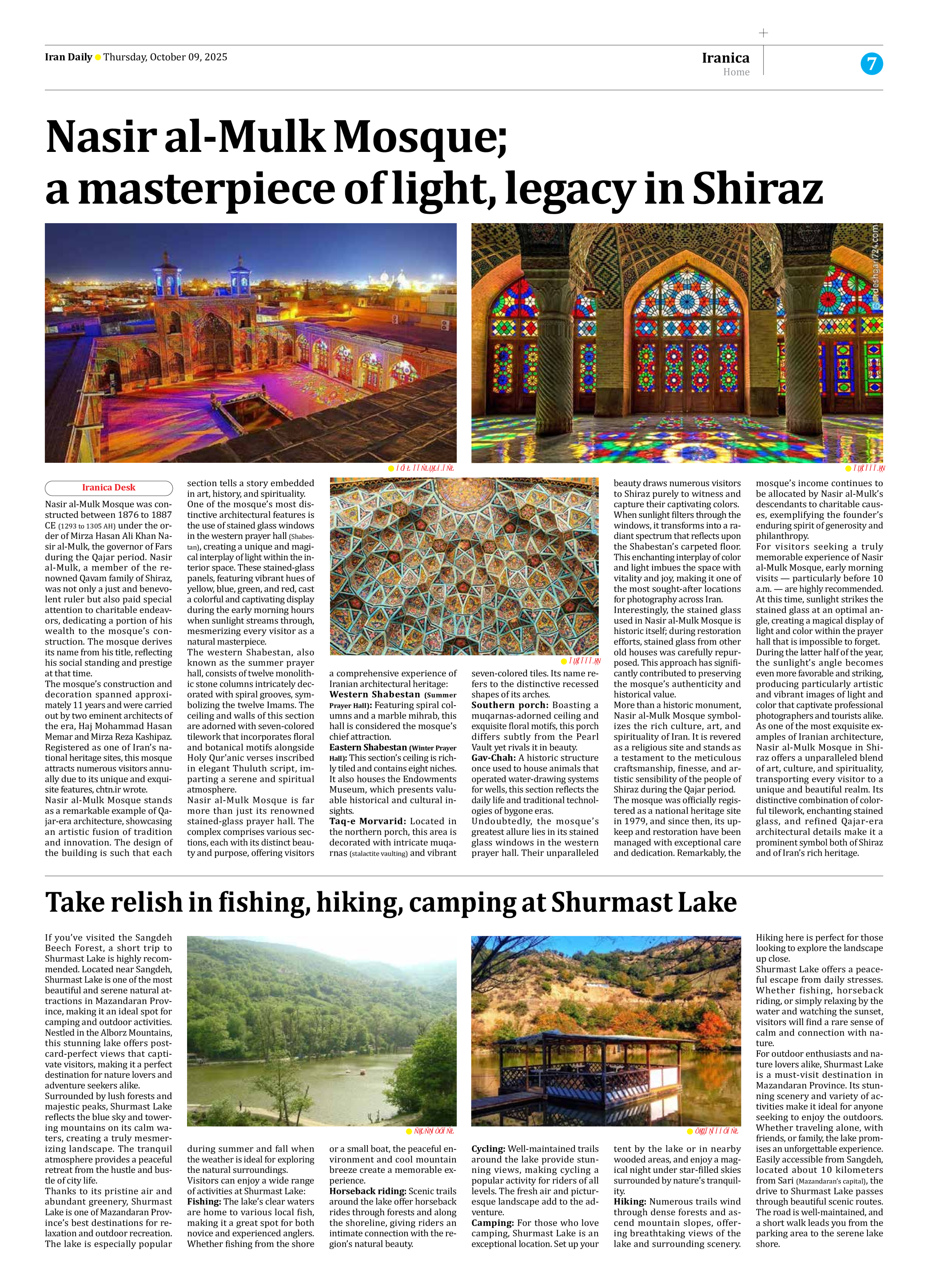
One of the mosque’s most distinctive architectural features is the use of stained glass windows in the western prayer hall (Shabestan), creating a unique and magical interplay of light within the interior space. These stained-glass panels, featuring vibrant hues of yellow, blue, green, and red, cast a colorful and captivating display during the early morning hours when sunlight streams through, mesmerizing every visitor as a natural masterpiece.
The western Shabestan, also known as the summer prayer hall, consists of twelve monolithic stone columns intricately decorated with spiral grooves, symbolizing the twelve Imams. The ceiling and walls of this section are adorned with seven-colored tilework that incorporates floral and botanical motifs alongside Holy Qur'anic verses inscribed in elegant Thuluth script, imparting a serene and spiritual atmosphere.
Nasir al-Mulk Mosque is far more than just its renowned stained-glass prayer hall. The complex comprises various sections, each with its distinct beauty and purpose, offering visitors a comprehensive experience of Iranian architectural heritage:
Western Shabestan (Summer Prayer Hall): Featuring spiral columns and a marble mihrab, this hall is considered the mosque’s chief attraction.
Eastern Shabestan (Winter Prayer Hall): This section’s ceiling is richly tiled and contains eight niches. It also houses the Endowments Museum, which presents valuable historical and cultural insights.
Taq-e Morvarid: Located in the northern porch, this area is decorated with intricate muqarnas (stalactite vaulting) and vibrant seven-colored tiles. Its name refers to the distinctive recessed shapes of its arches.
Southern porch: Boasting a muqarnas-adorned ceiling and exquisite floral motifs, this porch differs subtly from the Pearl Vault yet rivals it in beauty.
Gav-Chah: A historic structure once used to house animals that operated water-drawing systems for wells, this section reflects the daily life and traditional technologies of bygone eras.
Undoubtedly, the mosque’s greatest allure lies in its stained glass windows in the western prayer hall. Their unparalleled beauty draws numerous visitors to Shiraz purely to witness and capture their captivating colors.
When sunlight filters through the windows, it transforms into a radiant spectrum that reflects upon the Shabestan’s carpeted floor. This enchanting interplay of color and light imbues the space with vitality and joy, making it one of the most sought-after locations for photography across Iran.
Interestingly, the stained glass used in Nasir al-Mulk Mosque is historic itself; during restoration efforts, stained glass from other old houses was carefully repurposed. This approach has significantly contributed to preserving the mosque’s authenticity and historical value.
More than a historic monument, Nasir al-Mulk Mosque symbolizes the rich culture, art, and spirituality of Iran. It is revered as a religious site and stands as a testament to the meticulous craftsmanship, finesse, and artistic sensibility of the people of Shiraz during the Qajar period.
The mosque was officially registered as a national heritage site in 1979, and since then, its upkeep and restoration have been managed with exceptional care and dedication. Remarkably, the mosque’s income continues to be allocated by Nasir al-Mulk’s descendants to charitable causes, exemplifying the founder’s enduring spirit of generosity and philanthropy.
For visitors seeking a truly memorable experience of Nasir al-Mulk Mosque, early morning visits — particularly before 10 a.m. — are highly recommended. At this time, sunlight strikes the stained glass at an optimal angle, creating a magical display of light and color within the prayer hall that is impossible to forget.
During the latter half of the year, the sunlight’s angle becomes even more favorable and striking, producing particularly artistic and vibrant images of light and color that captivate professional photographers and tourists alike.
As one of the most exquisite examples of Iranian architecture, Nasir al-Mulk Mosque in Shiraz offers a unparalleled blend of art, culture, and spirituality, transporting every visitor to a unique and beautiful realm. Its distinctive combination of colorful tilework, enchanting stained glass, and refined Qajar-era architectural details make it a prominent symbol both of Shiraz and of Iran’s rich heritage.