







Shahrak-e Hezarani village brings growth to Ilam’s rural landscape
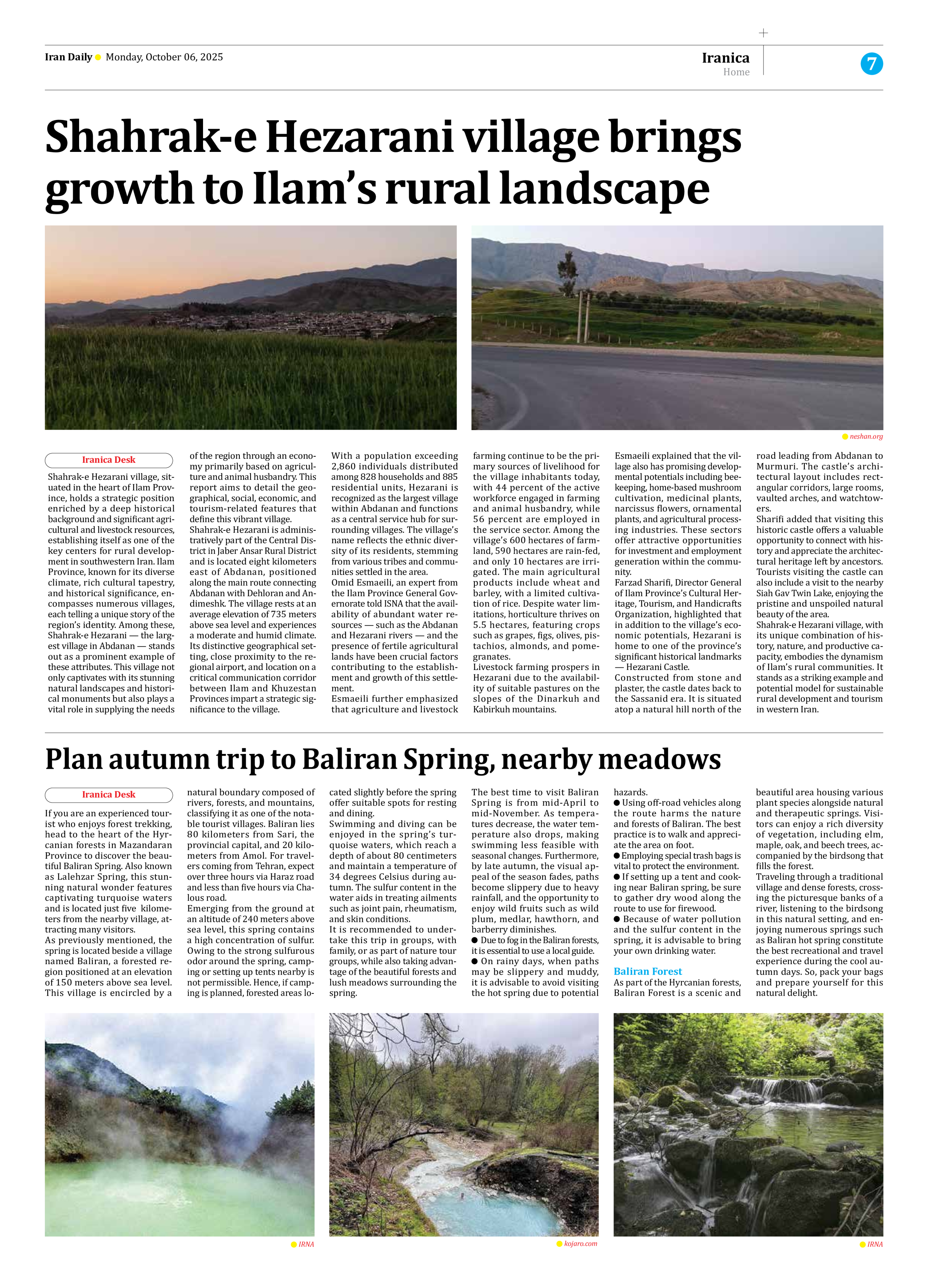
Shahrak-e Hezarani village, situated in the heart of Ilam Province, holds a strategic position enriched by a deep historical background and significant agricultural and livestock resources, establishing itself as one of the key centers for rural development in southwestern Iran. Ilam Province, known for its diverse climate, rich cultural tapestry, and historical significance, encompasses numerous villages, each telling a unique story of the region’s identity. Among these, Shahrak-e Hezarani — the largest village in Abdanan — stands out as a prominent example of these attributes. This village not only captivates with its stunning natural landscapes and historical monuments but also plays a vital role in supplying the needs of the region through an economy primarily based on agriculture and animal husbandry. This report aims to detail the geographical, social, economic, and tourism-related features that define this vibrant village.
Shahrak-e Hezarani is administratively part of the Central District in Jaber Ansar Rural District and is located eight kilometers east of Abdanan, positioned along the main route connecting Abdanan with Dehloran and Andimeshk. The village rests at an average elevation of 735 meters above sea level and experiences a moderate and humid climate. Its distinctive geographical setting, close proximity to the regional airport, and location on a critical communication corridor between Ilam and Khuzestan Provinces impart a strategic significance to the village.
With a population exceeding 2,860 individuals distributed among 828 households and 885 residential units, Hezarani is recognized as the largest village within Abdanan and functions as a central service hub for surrounding villages. The village’s name reflects the ethnic diversity of its residents, stemming from various tribes and communities settled in the area.
Omid Esmaeili, an expert from the Ilam Province General Governorate told ISNA that the availability of abundant water resources — such as the Abdanan and Hezarani rivers — and the presence of fertile agricultural lands have been crucial factors contributing to the establishment and growth of this settlement.
Esmaeili further emphasized that agriculture and livestock farming continue to be the primary sources of livelihood for the village inhabitants today, with 44 percent of the active workforce engaged in farming and animal husbandry, while 56 percent are employed in the service sector. Among the village’s 600 hectares of farmland, 590 hectares are rain-fed, and only 10 hectares are irrigated. The main agricultural products include wheat and barley, with a limited cultivation of rice. Despite water limitations, horticulture thrives on 5.5 hectares, featuring crops such as grapes, figs, olives, pistachios, almonds, and pomegranates.
Livestock farming prospers in Hezarani due to the availability of suitable pastures on the slopes of the Dinarkuh and Kabirkuh mountains.
Esmaeili explained that the village also has promising developmental potentials including beekeeping, home-based mushroom cultivation, medicinal plants, narcissus flowers, ornamental plants, and agricultural processing industries. These sectors offer attractive opportunities for investment and employment generation within the community.
Farzad Sharifi, Director General of Ilam Province’s Cultural Heritage, Tourism, and Handicrafts Organization, highlighted that in addition to the village’s economic potentials, Hezarani is home to one of the province’s significant historical landmarks — Hezarani Castle.
Constructed from stone and plaster, the castle dates back to the Sassanid era. It is situated atop a natural hill north of the road leading from Abdanan to Murmuri. The castle’s architectural layout includes rectangular corridors, large rooms, vaulted arches, and watchtowers.
Sharifi added that visiting this historic castle offers a valuable opportunity to connect with history and appreciate the architectural heritage left by ancestors. Tourists visiting the castle can also include a visit to the nearby Siah Gav Twin Lake, enjoying the pristine and unspoiled natural beauty of the area.
Shahrak-e Hezarani village, with its unique combination of history, nature, and productive capacity, embodies the dynamism of Ilam’s rural communities. It stands as a striking example and potential model for sustainable rural development and tourism in western Iran.