





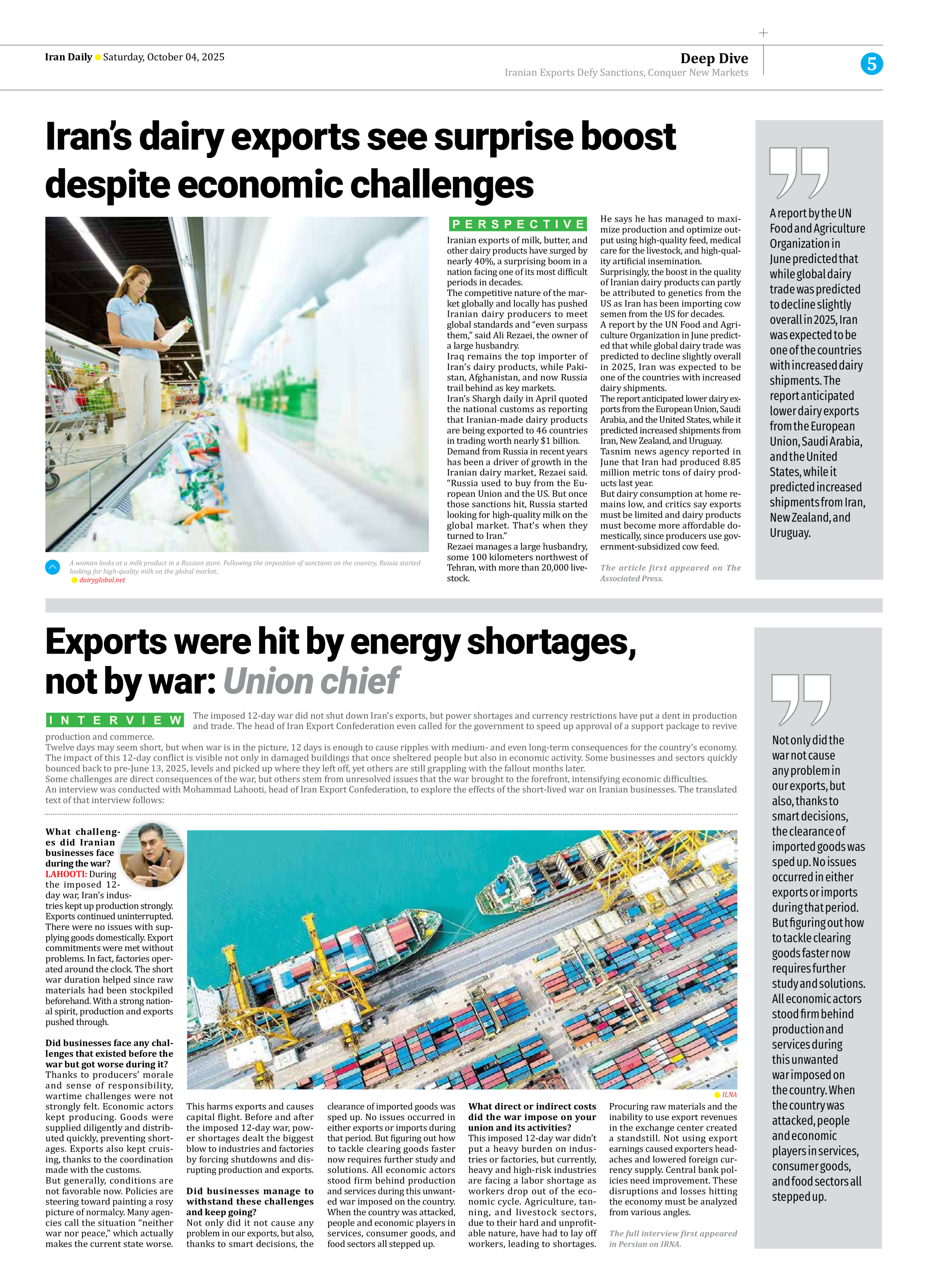


Exports were hit by energy shortages, not by war: Union chief
The imposed 12-day war did not shut down Iran’s exports, but power shortages and currency restrictions have put a dent in production and trade. The head of Iran Export Confederation even called for the government to speed up approval of a support package to revive production and commerce. Twelve days may seem short, but when war is in the picture, 12 days is enough to cause ripples with medium- and even long-term consequences for the country’s economy. The impact of this 12-day conflict is visible not only in damaged buildings that once sheltered people but also in economic activity. Some businesses and sectors quickly bounced back to pre-June 13, 2025, levels and picked up where they left off, yet others are still grappling with the fallout months later. Some challenges are direct consequences of the war, but others stem from unresolved issues that the war brought to the forefront, intensifying economic difficulties. An interview was conducted with Mohammad Lahooti, head of Iran Export Confederation, to explore the effects of the short-lived war on Iranian businesses. The translated text of that interview follows:
What challenges did Iranian businesses face during the war?
LAHOOTI: During the imposed 12-day war, Iran’s industries kept up production strongly. Exports continued uninterrupted. There were no issues with supplying goods domestically. Export commitments were met without problems. In fact, factories operated around the clock. The short war duration helped since raw materials had been stockpiled beforehand. With a strong national spirit, production and exports pushed through.
Did businesses face any challenges that existed before the war but got worse during it?
Thanks to producers’ morale and sense of responsibility, wartime challenges were not strongly felt. Economic actors kept producing. Goods were supplied diligently and distributed quickly, preventing shortages. Exports also kept cruising, thanks to the coordination made with the customs.
But generally, conditions are not favorable now. Policies are steering toward painting a rosy picture of normalcy. Many agencies call the situation “neither war nor peace,” which actually makes the current state worse. This harms exports and causes capital flight. Before and after the imposed 12-day war, power shortages dealt the biggest blow to industries and factories by forcing shutdowns and disrupting production and exports.
Did businesses manage to withstand these challenges and keep going?
Not only did it not cause any problem in our exports, but also, thanks to smart decisions, the clearance of imported goods was sped up. No issues occurred in either exports or imports during that period. But figuring out how to tackle clearing goods faster now requires further study and solutions. All economic actors stood firm behind production and services during this unwanted war imposed on the country. When the country was attacked, people and economic players in services, consumer goods, and food sectors all stepped up.
What direct or indirect costs did the war impose on your union and its activities?
This imposed 12-day war didn’t put a heavy burden on industries or factories, but currently, heavy and high-risk industries are facing a labor shortage as workers drop out of the economic cycle. Agriculture, tanning, and livestock sectors, due to their hard and unprofitable nature, have had to lay off workers, leading to shortages. Procuring raw materials and the inability to use export revenues in the exchange center created a standstill. Not using export earnings caused exporters headaches and lowered foreign currency supply. Central bank policies need improvement. These disruptions and losses hitting the economy must be analyzed from various angles.
The full interview first appeared in Persian on IRNA.