







Archaeologists uncover Parthian-Sassanid settlement in Iran’s NE
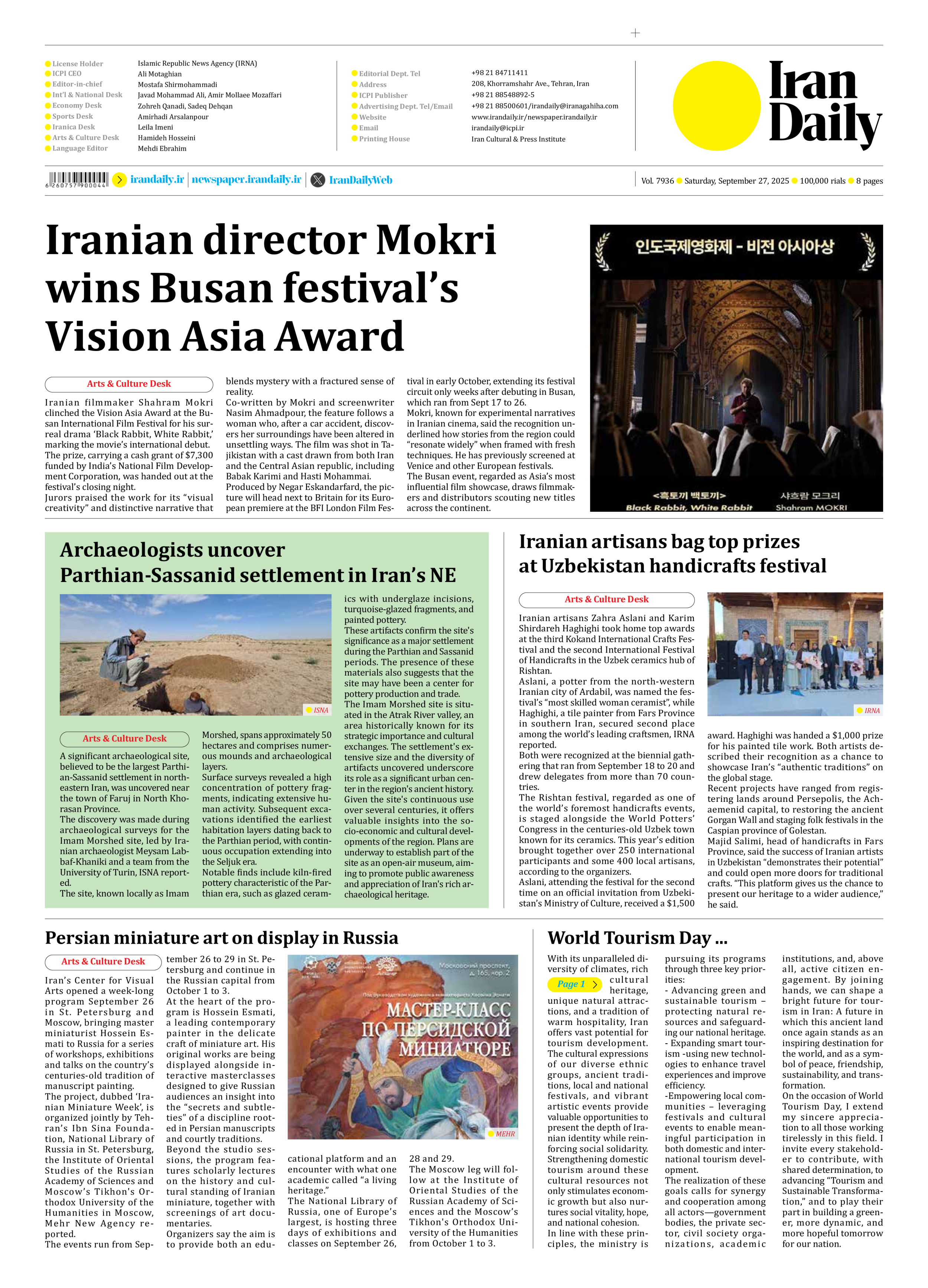
A significant archaeological site, believed to be the largest Parthian-Sassanid settlement in northeastern Iran, was uncovered near the town of Faruj in North Khorasan Province.
The discovery was made during archaeological surveys for the Imam Morshed site, led by Iranian archaeologist Meysam Labbaf-Khaniki and a team from the University of Turin, ISNA reported.
The site, known locally as Imam Morshed, spans approximately 50 hectares and comprises numerous mounds and archaeological layers.
Surface surveys revealed a high concentration of pottery fragments, indicating extensive human activity. Subsequent excavations identified the earliest habitation layers dating back to the Parthian period, with continuous occupation extending into the Seljuk era.
Notable finds include kiln-fired pottery characteristic of the Parthian era, such as glazed ceramics with underglaze incisions, turquoise-glazed fragments, and painted pottery.
These artifacts confirm the site's significance as a major settlement during the Parthian and Sassanid periods. The presence of these materials also suggests that the site may have been a center for pottery production and trade.
The Imam Morshed site is situated in the Atrak River valley, an area historically known for its strategic importance and cultural exchanges. The settlement's extensive size and the diversity of artifacts uncovered underscore its role as a significant urban center in the region's ancient history.
Given the site's continuous use over several centuries, it offers valuable insights into the socio-economic and cultural developments of the region. Plans are underway to establish part of the site as an open-air museum, aiming to promote public awareness and appreciation of Iran's rich archaeological heritage.