







Copy in clipboard...
Iran prepares 50 heritage files for potential UNESCO World Heritage listing
Farhad Azizi, director general of Iran’s National and World Heritage Bases at the Ministry of Cultural Heritage, Tourism and Handicrafts, said the dossiers were being prepared according to UNESCO benchmarks, unique site features and specialized infrastructure needs.
“Besides cultural and historical indicators, proper management of the sites – including research, protection, support facilities and conditions for visitors – is an essential prerequisite for global registration,” Azizi said.
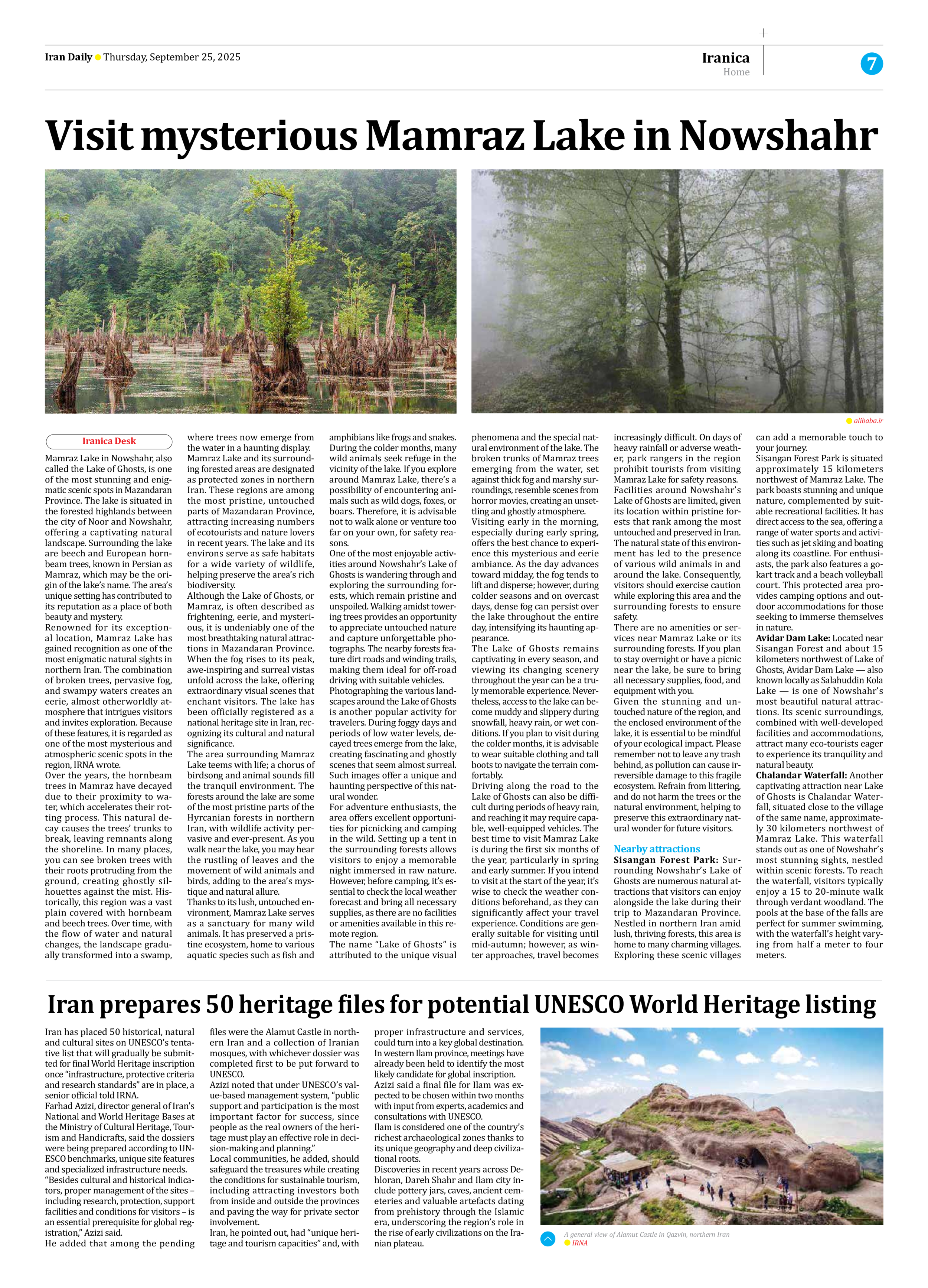
He added that among the pending files were the Alamut Castle in northern Iran and a collection of Iranian mosques, with whichever dossier was completed first to be put forward to UNESCO.
Azizi noted that under UNESCO’s value-based management system, “public support and participation is the most important factor for success, since people as the real owners of the heritage must play an effective role in decision-making and planning.”
Local communities, he added, should safeguard the treasures while creating the conditions for sustainable tourism, including attracting investors both from inside and outside the provinces and paving the way for private sector involvement.
Iran, he pointed out, had “unique heritage and tourism capacities” and, with proper infrastructure and services, could turn into a key global destination.
In western Ilam province, meetings have already been held to identify the most likely candidate for global inscription.
Azizi said a final file for Ilam was expected to be chosen within two months with input from experts, academics and consultations with UNESCO.
Ilam is considered one of the country’s richest archaeological zones thanks to its unique geography and deep civilizational roots.
Discoveries in recent years across Dehloran, Dareh Shahr and Ilam city include pottery jars, caves, ancient cemeteries and valuable artefacts dating from prehistory through the Islamic era, underscoring the region’s role in the rise of early civilizations on the Iranian plateau.