







Feast your eyes on Chahkuh Canyon’s unique landscape
Chahkuh Canyon, one of the most beautiful and distinctive geosites within the Qeshm Geopark, is situated approximately 70 to 95 kilometers northwest of Qeshm Island, adjacent to the village of Chahu Sharghi. This magnificent canyon is renowned not only for its geological significance but also for its historic role in storing and supplying water to the local community.
Living in a region devoid of permanent water sources like rivers, dams, and wells has been a longstanding challenge for inhabitants of arid areas. To overcome this, residents of Qeshm employed various water conservation methods including storing rainwater in underground reservoirs, creating ponds, constructing water cisterns, and digging qanats and wells, chtn.ir wrote.
Chahkuh Canyon acts as a natural channel for rainwater flow, prompting locals to dig wells along its pathway to capture and preserve water for use during dry seasons. The canyon’s impermeable rock formations prevent rainwater seepage, allowing water to remain accessible for prolonged periods.
According to geological principles, water naturally flows toward the lowest point or base level. Along its course, it encounters natural barriers such as hills and rocks and gradually carves its path by infiltrating cracks and fissures in the stone. The distinctive shape of Chahkuh Canyon is the outcome of this natural erosional process spanning millions of years.
Qeshm Island’s geological history, which stretches back several million years, includes multiple episodes of submersion under the sea followed by emergence. Ripple marks, known as ripple marks, found at the canyon’s entrance reveal that this area was once a seashore.
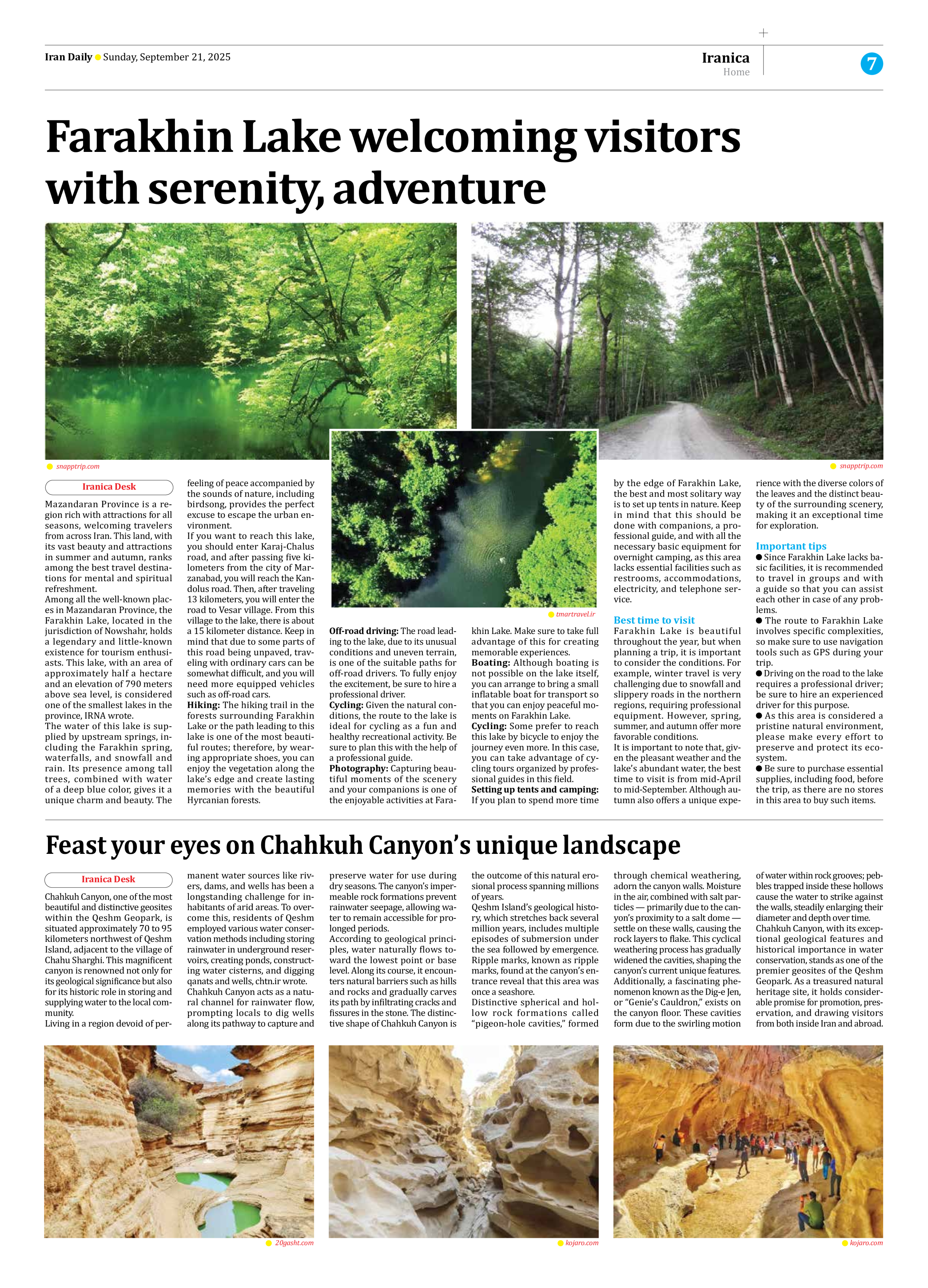
Distinctive spherical and hollow rock formations called “pigeon-hole cavities,” formed through chemical weathering, adorn the canyon walls. Moisture in the air, combined with salt particles — primarily due to the canyon’s proximity to a salt dome — settle on these walls, causing the rock layers to flake. This cyclical weathering process has gradually widened the cavities, shaping the canyon’s current unique features.
Additionally, a fascinating phenomenon known as the Dig-e Jen, or “Genie’s Cauldron,” exists on the canyon floor. These cavities form due to the swirling motion of water within rock grooves; pebbles trapped inside these hollows cause the water to strike against the walls, steadily enlarging their diameter and depth over time.
Chahkuh Canyon, with its exceptional geological features and historical importance in water conservation, stands as one of the premier geosites of the Qeshm Geopark. As a treasured natural heritage site, it holds considerable promise for promotion, preservation, and drawing visitors from both inside Iran and abroad.