





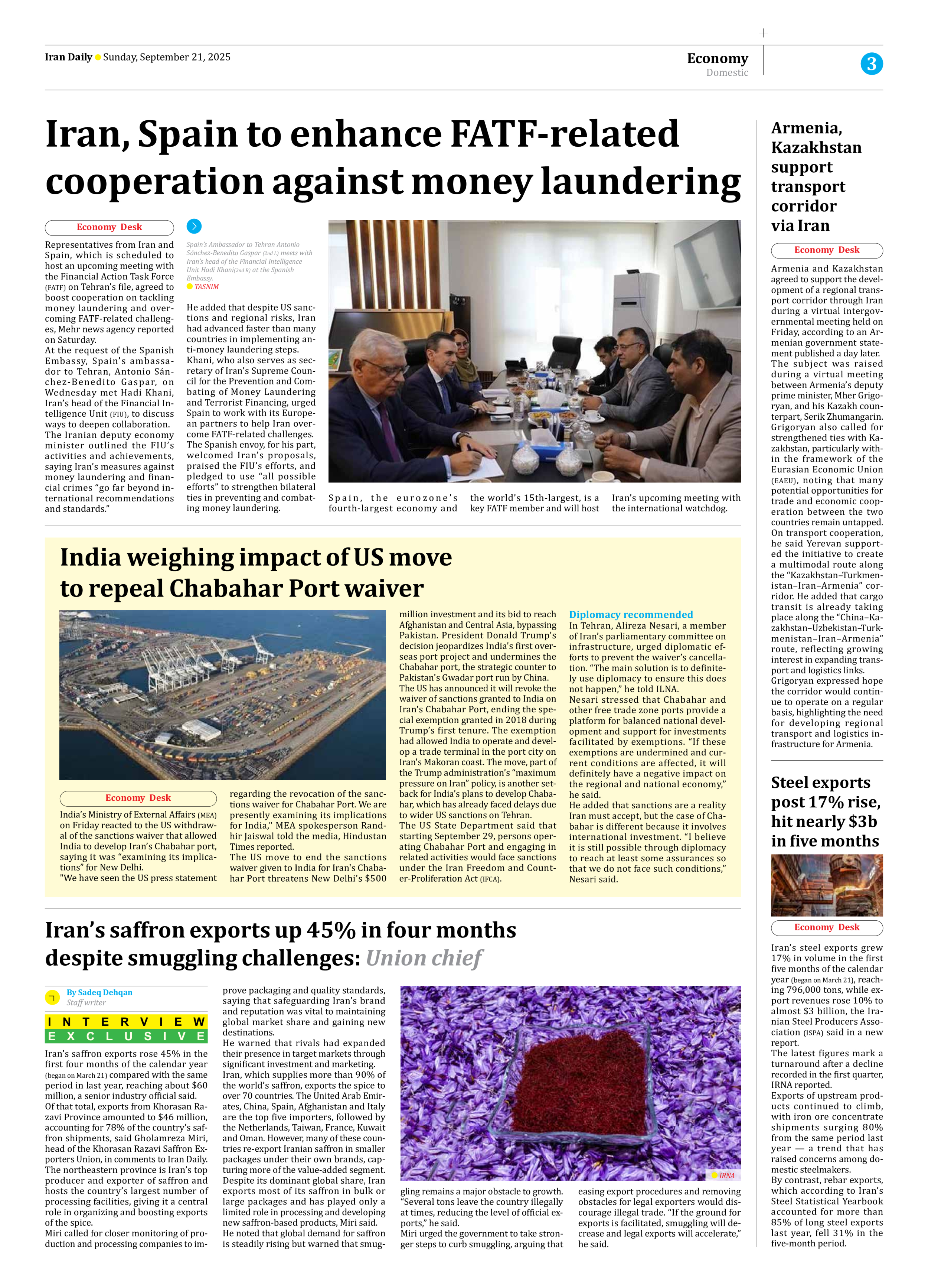


Iran’s saffron exports up 45% in four months despite smuggling challenges: Union chief
By Sadeq Dehqan
Staff writer
Iran’s saffron exports rose 45% in the first four months of the calendar year (began on March 21) compared with the same period in last year, reaching about $60 million, a senior industry official said.
Of that total, exports from Khorasan Razavi Province amounted to $46 million, accounting for 78% of the country’s saffron shipments, said Gholamreza Miri, head of the Khorasan Razavi Saffron Exporters Union, in comments to Iran Daily.
The northeastern province is Iran’s top producer and exporter of saffron and hosts the country’s largest number of processing facilities, giving it a central role in organizing and boosting exports of the spice.
Miri called for closer monitoring of production and processing companies to improve packaging and quality standards, saying that safeguarding Iran’s brand and reputation was vital to maintaining global market share and gaining new destinations.
He warned that rivals had expanded their presence in target markets through significant investment and marketing.
Iran, which supplies more than 90% of the world’s saffron, exports the spice to over 70 countries. The United Arab Emirates, China, Spain, Afghanistan and Italy are the top five importers, followed by the Netherlands, Taiwan, France, Kuwait and Oman. However, many of these countries re-export Iranian saffron in smaller packages under their own brands, capturing more of the value-added segment.
Despite its dominant global share, Iran exports most of its saffron in bulk or large packages and has played only a limited role in processing and developing new saffron-based products, Miri said.
He noted that global demand for saffron is steadily rising but warned that smuggling remains a major obstacle to growth. “Several tons leave the country illegally at times, reducing the level of official exports,” he said.
Miri urged the government to take stronger steps to curb smuggling, arguing that easing export procedures and removing obstacles for legal exporters would discourage illegal trade. “If the ground for exports is facilitated, smuggling will decrease and legal exports will accelerate,” he said.