







Zaman Khan Bridge; a reflection of Sassanid architecture
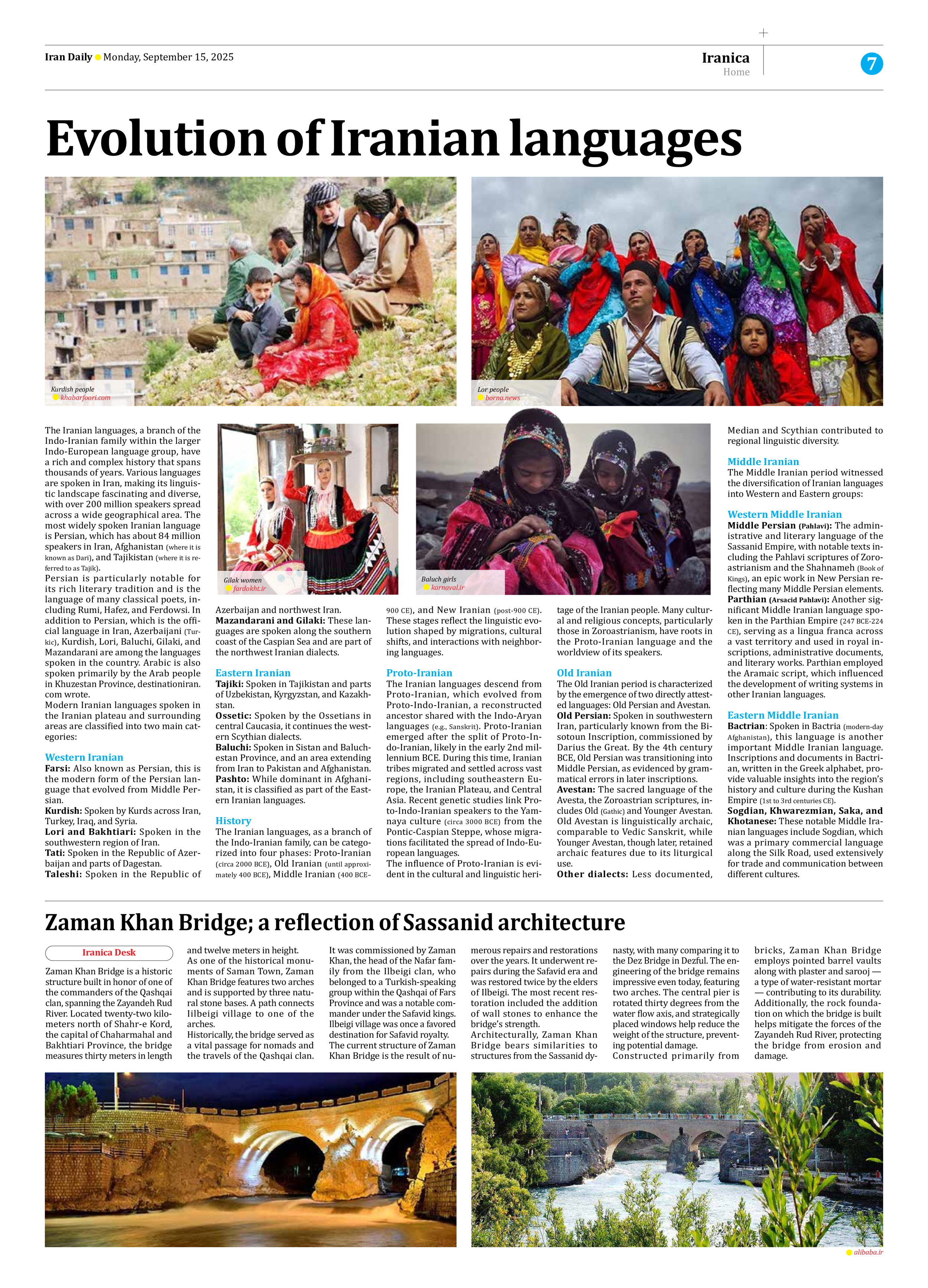
Zaman Khan Bridge is a historic structure built in honor of one of the commanders of the Qashqai clan, spanning the Zayandeh Rud River. Located twenty-two kilometers north of Shahr-e Kord, the capital of Chaharmahal and Bakhtiari Province, the bridge measures thirty meters in length and twelve meters in height.
As one of the historical monuments of Saman Town, Zaman Khan Bridge features two arches and is supported by three natural stone bases. A path connects Iilbeigi village to one of the arches.
Historically, the bridge served as a vital passage for nomads and the travels of the Qashqai clan. It was commissioned by Zaman Khan, the head of the Nafar family from the Ilbeigi clan, who belonged to a Turkish-speaking group within the Qashqai of Fars Province and was a notable commander under the Safavid kings. Ilbeigi village was once a favored destination for Safavid royalty.
The current structure of Zaman Khan Bridge is the result of numerous repairs and restorations over the years. It underwent repairs during the Safavid era and was restored twice by the elders of Ilbeigi. The most recent restoration included the addition of wall stones to enhance the bridge’s strength.
Architecturally, Zaman Khan Bridge bears similarities to structures from the Sassanid dynasty, with many comparing it to the Dez Bridge in Dezful. The engineering of the bridge remains impressive even today, featuring two arches. The central pier is rotated thirty degrees from the water flow axis, and strategically placed windows help reduce the weight of the structure, preventing potential damage.
Constructed primarily from bricks, Zaman Khan Bridge employs pointed barrel vaults along with plaster and sarooj — a type of water-resistant mortar — contributing to its durability. Additionally, the rock foundation on which the bridge is built helps mitigate the forces of the Zayandeh Rud River, protecting the bridge from erosion and damage.