







Copy in clipboard...
On National Cinema Day; Iranians salute film as refuge in wartime
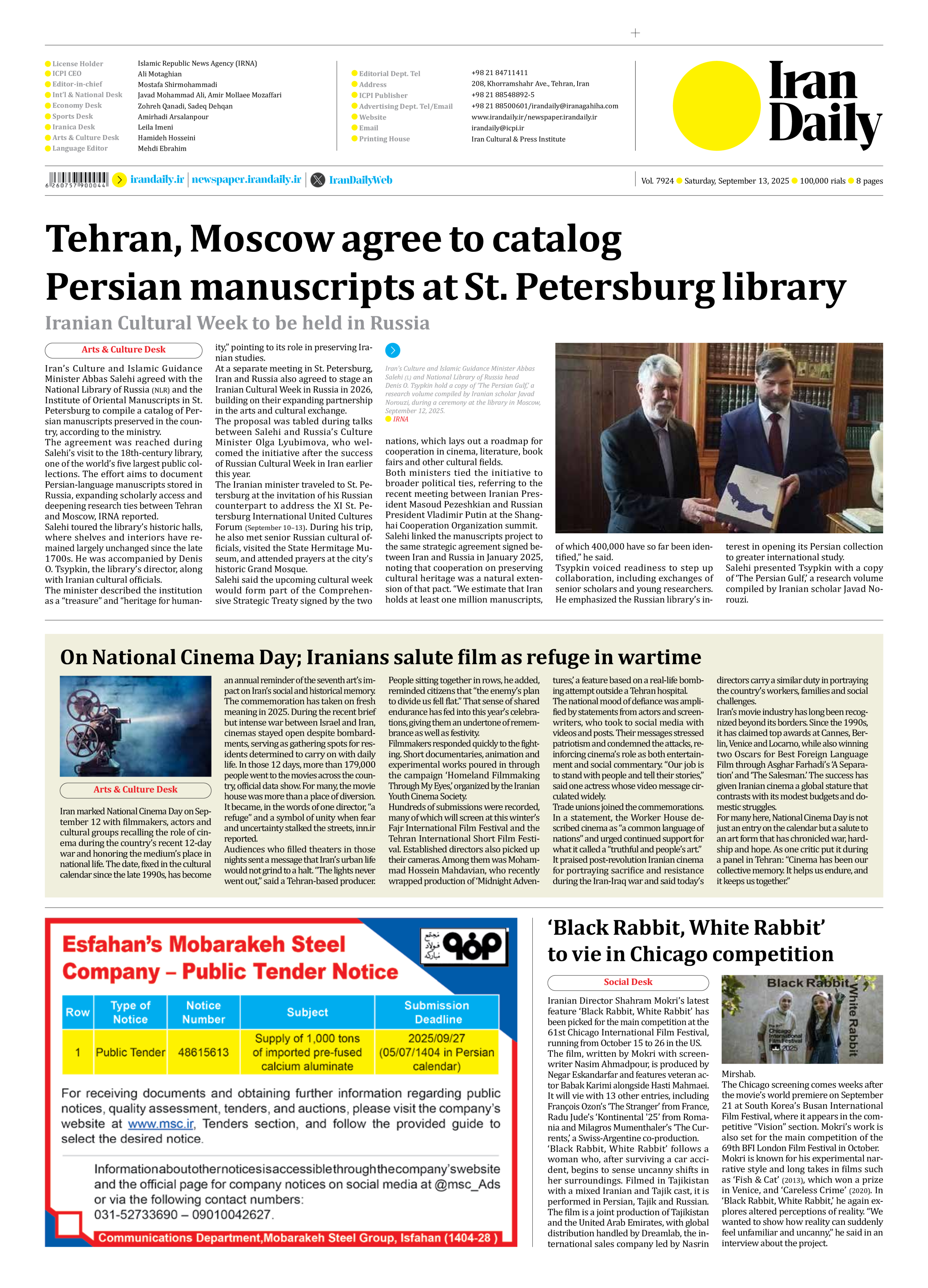
Iran marked National Cinema Day on September 12 with filmmakers, actors and cultural groups recalling the role of cinema during the country’s recent 12-day war and honoring the medium’s place in national life. The date, fixed in the cultural calendar since the late 1990s, has become an annual reminder of the seventh art’s impact on Iran’s social and historical memory.
The commemoration has taken on fresh meaning in 2025. During the recent brief but intense war between Israel and Iran, cinemas stayed open despite bombardments, serving as gathering spots for residents determined to carry on with daily life. In those 12 days, more than 179,000 people went to the movies across the country, official data show. For many, the movie house was more than a place of diversion. It became, in the words of one director, “a refuge” and a symbol of unity when fear and uncertainty stalked the streets, inn.ir reported.
Audiences who filled theaters in those nights sent a message that Iran’s urban life would not grind to a halt. “The lights never went out,” said a Tehran-based producer. People sitting together in rows, he added, reminded citizens that “the enemy’s plan to divide us fell flat.” That sense of shared endurance has fed into this year’s celebrations, giving them an undertone of remembrance as well as festivity.
Filmmakers responded quickly to the fighting. Short documentaries, animation and experimental works poured in through the campaign ‘Homeland Filmmaking Through My Eyes,’ organized by the Iranian Youth Cinema Society.
Hundreds of submissions were recorded, many of which will screen at this winter’s Fajr International Film Festival and the Tehran International Short Film Festival. Established directors also picked up their cameras. Among them was Mohammad Hossein Mahdavian, who recently wrapped production of ‘Midnight Adventures,’ a feature based on a real-life bombing attempt outside a Tehran hospital.
The national mood of defiance was amplified by statements from actors and screenwriters, who took to social media with videos and posts. Their messages stressed patriotism and condemned the attacks, reinforcing cinema’s role as both entertainment and social commentary. “Our job is to stand with people and tell their stories,” said one actress whose video message circulated widely.
Trade unions joined the commemorations. In a statement, the Worker House described cinema as “a common language of nations” and urged continued support for what it called a “truthful and people’s art.”
It praised post-revolution Iranian cinema for portraying sacrifice and resistance during the Iran-Iraq war and said today’s directors carry a similar duty in portraying the country’s workers, families and social challenges.
Iran’s movie industry has long been recognized beyond its borders. Since the 1990s, it has claimed top awards at Cannes, Berlin, Venice and Locarno, while also winning two Oscars for Best Foreign Language Film through Asghar Farhadi’s ‘A Separation’ and ‘The Salesman.’ The success has given Iranian cinema a global stature that contrasts with its modest budgets and domestic struggles.
For many here, National Cinema Day is not just an entry on the calendar but a salute to an art form that has chronicled war, hardship and hope. As one critic put it during a panel in Tehran: “Cinema has been our collective memory. It helps us endure, and it keeps us together.”