







Woman artist from Abarkuh devotes life to preserving kilim tradition
The artistic and handicraft community of Iran mourned the loss of a remarkable lady whose art and creativity stood as enduring symbols of the identity and capability of Iranian women. Roqayeh Ardichi, a distinguished veteran of kilim weaving and an artist from Abarkuh in Yazd Province, passed away recently after dedicating many years to the pursuit and advancement of traditional arts.
Maliheh Fakhari, a respected journalist, remarked in a note that Roqayeh’s works went far beyond mere decorative arts; they served as a profound window into the culture, history, and creativity of Iranian women, leaving behind an eternal legacy of authenticity and artistic innovation for generations to come, chtn.ir wrote.
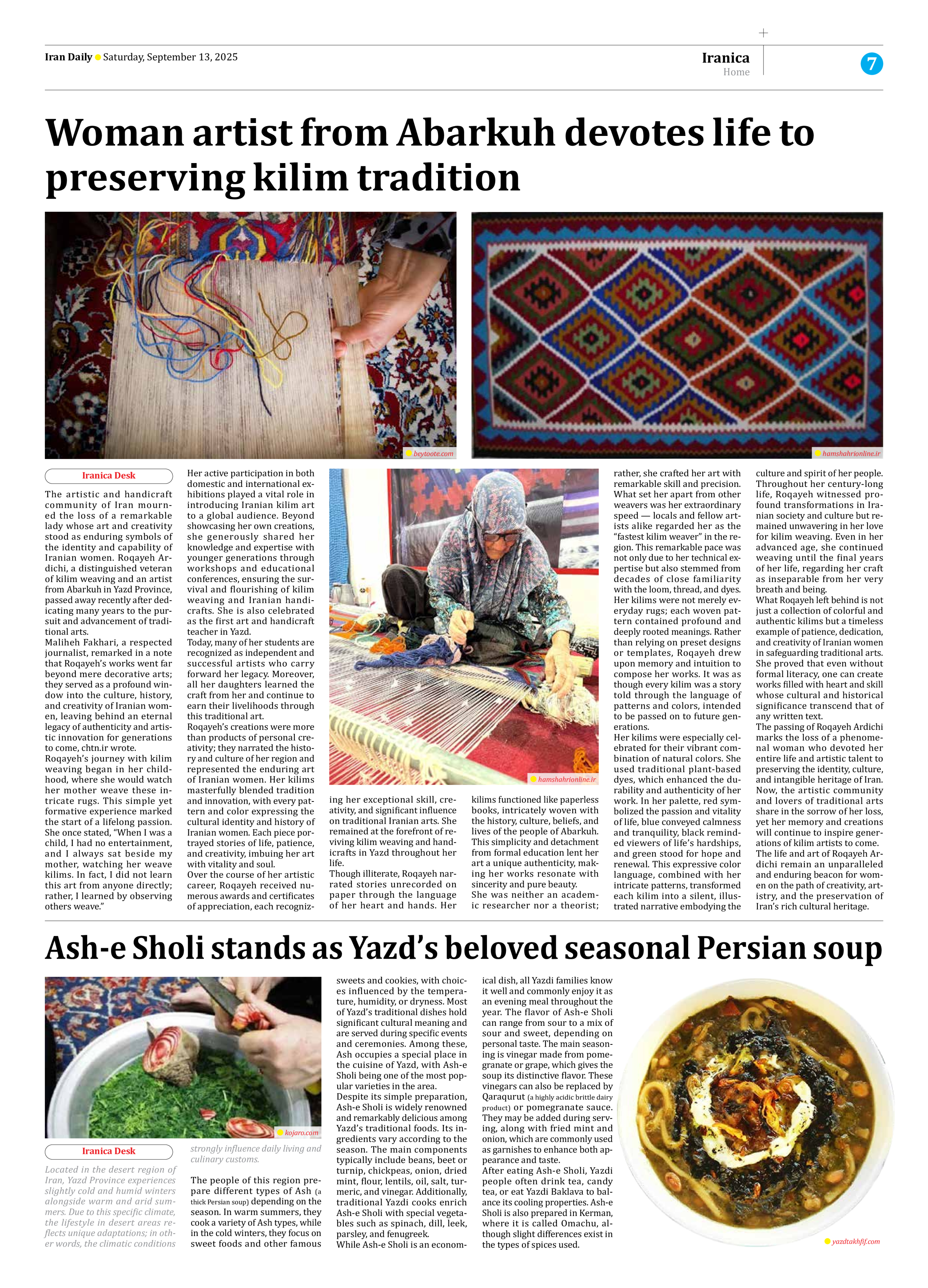
Roqayeh’s journey with kilim weaving began in her childhood, where she would watch her mother weave these intricate rugs. This simple yet formative experience marked the start of a lifelong passion. She once stated, “When I was a child, I had no entertainment, and I always sat beside my mother, watching her weave kilims. In fact, I did not learn this art from anyone directly; rather, I learned by observing others weave.”
Her active participation in both domestic and international exhibitions played a vital role in introducing Iranian kilim art to a global audience. Beyond showcasing her own creations, she generously shared her knowledge and expertise with younger generations through workshops and educational conferences, ensuring the survival and flourishing of kilim weaving and Iranian handicrafts. She is also celebrated as the first art and handicraft teacher in Yazd.
Today, many of her students are recognized as independent and successful artists who carry forward her legacy. Moreover, all her daughters learned the craft from her and continue to earn their livelihoods through this traditional art.
Roqayeh’s creations were more than products of personal creativity; they narrated the history and culture of her region and represented the enduring art of Iranian women. Her kilims masterfully blended tradition and innovation, with every pattern and color expressing the cultural identity and history of Iranian women. Each piece portrayed stories of life, patience, and creativity, imbuing her art with vitality and soul.
Over the course of her artistic career, Roqayeh received numerous awards and certificates of appreciation, each recognizing her exceptional skill, creativity, and significant influence on traditional Iranian arts. She remained at the forefront of reviving kilim weaving and handicrafts in Yazd throughout her life.
Though illiterate, Roqayeh narrated stories unrecorded on paper through the language of her heart and hands. Her kilims functioned like paperless books, intricately woven with the history, culture, beliefs, and lives of the people of Abarkuh. This simplicity and detachment from formal education lent her art a unique authenticity, making her works resonate with sincerity and pure beauty.
She was neither an academic researcher nor a theorist; rather, she crafted her art with remarkable skill and precision. What set her apart from other weavers was her extraordinary speed — locals and fellow artists alike regarded her as the “fastest kilim weaver” in the region. This remarkable pace was not only due to her technical expertise but also stemmed from decades of close familiarity with the loom, thread, and dyes.
Her kilims were not merely everyday rugs; each woven pattern contained profound and deeply rooted meanings. Rather than relying on preset designs or templates, Roqayeh drew upon memory and intuition to compose her works. It was as though every kilim was a story told through the language of patterns and colors, intended to be passed on to future generations.
Her kilims were especially celebrated for their vibrant combination of natural colors. She used traditional plant-based dyes, which enhanced the durability and authenticity of her work. In her palette, red symbolized the passion and vitality of life, blue conveyed calmness and tranquility, black reminded viewers of life’s hardships, and green stood for hope and renewal. This expressive color language, combined with her intricate patterns, transformed each kilim into a silent, illustrated narrative embodying the culture and spirit of her people.
Throughout her century-long life, Roqayeh witnessed profound transformations in Iranian society and culture but remained unwavering in her love for kilim weaving. Even in her advanced age, she continued weaving until the final years of her life, regarding her craft as inseparable from her very breath and being.
What Roqayeh left behind is not just a collection of colorful and authentic kilims but a timeless example of patience, dedication, and creativity of Iranian women in safeguarding traditional arts. She proved that even without formal literacy, one can create works filled with heart and skill whose cultural and historical significance transcend that of any written text.
The passing of Roqayeh Ardichi marks the loss of a phenomenal woman who devoted her entire life and artistic talent to preserving the identity, culture, and intangible heritage of Iran. Now, the artistic community and lovers of traditional arts share in the sorrow of her loss, yet her memory and creations will continue to inspire generations of kilim artists to come.
The life and art of Roqayeh Ardichi remain an unparalleled and enduring beacon for women on the path of creativity, artistry, and the preservation of Iran’s rich cultural heritage.