





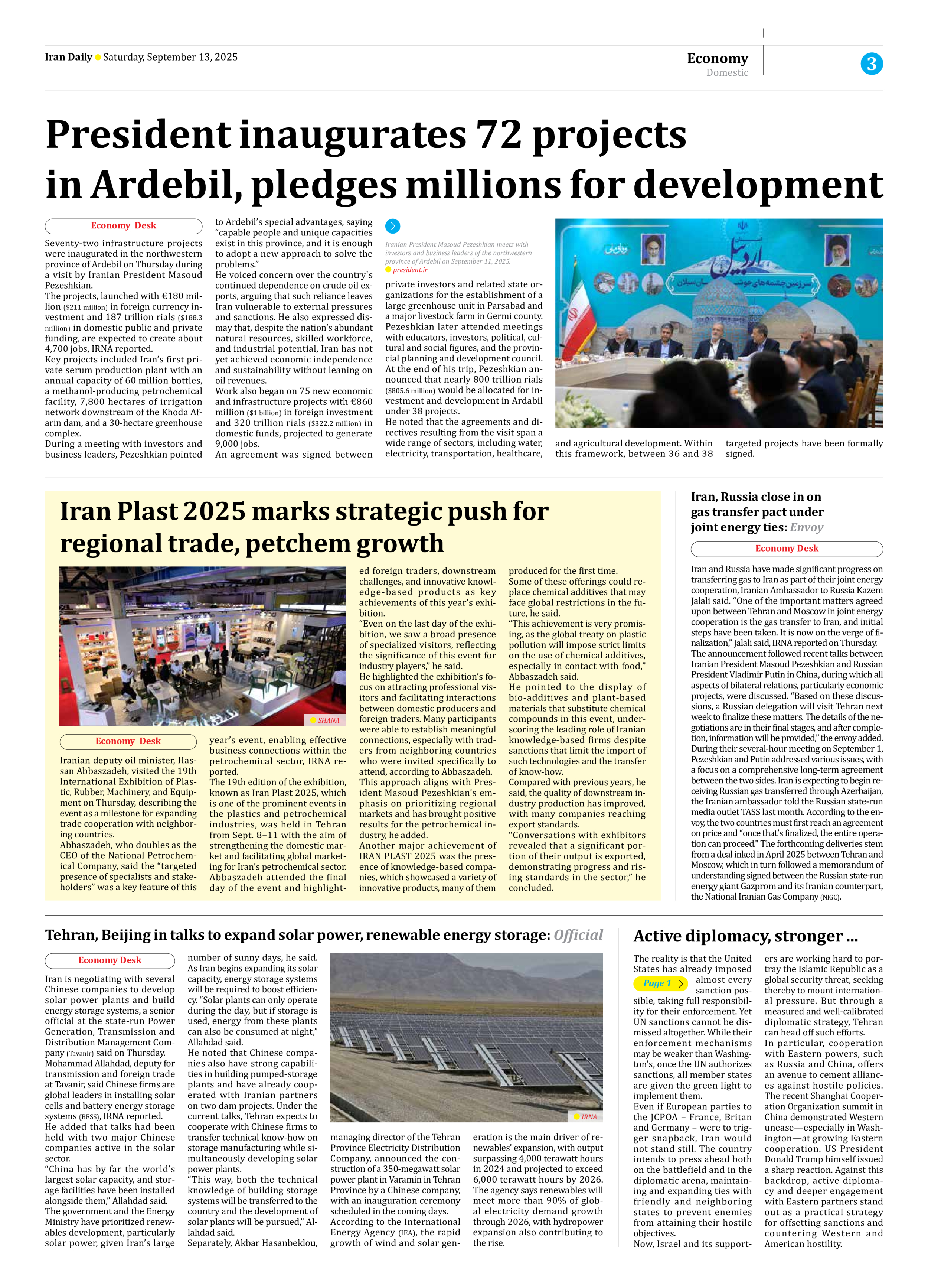


Iran Plast 2025 marks strategic push for regional trade, petchem growth
Iranian deputy oil minister, Hassan Abbaszadeh, visited the 19th International Exhibition of Plastic, Rubber, Machinery, and Equipment on Thursday, describing the event as a milestone for expanding trade cooperation with neighboring countries.
Abbaszadeh, who doubles as the CEO of the National Petrochemical Company, said the “targeted presence of specialists and stakeholders” was a key feature of this year’s event, enabling effective business connections within the petrochemical sector, IRNA reported.
The 19th edition of the exhibition, known as Iran Plast 2025, which is one of the prominent events in the plastics and petrochemical industries, was held in Tehran from Sept. 8–11 with the aim of strengthening the domestic market and facilitating global marketing for Iran’s petrochemical sector.
Abbaszadeh attended the final day of the event and highlighted foreign traders, downstream challenges, and innovative knowledge-based products as key achievements of this year’s exhibition.
“Even on the last day of the exhibition, we saw a broad presence of specialized visitors, reflecting the significance of this event for industry players,” he said.
He highlighted the exhibition’s focus on attracting professional visitors and facilitating interactions between domestic producers and foreign traders. Many participants were able to establish meaningful connections, especially with traders from neighboring countries who were invited specifically to attend, according to Abbaszadeh.
This approach aligns with President Masoud Pezeshkian’s emphasis on prioritizing regional markets and has brought positive results for the petrochemical industry, he added.
Another major achievement of IRAN PLAST 2025 was the presence of knowledge-based companies, which showcased a variety of innovative products, many of them produced for the first time.
Some of these offerings could replace chemical additives that may face global restrictions in the future, he said.
“This achievement is very promising, as the global treaty on plastic pollution will impose strict limits on the use of chemical additives, especially in contact with food,” Abbaszadeh said.
He pointed to the display of bio-additives and plant-based materials that substitute chemical compounds in this event, underscoring the leading role of Iranian knowledge-based firms despite sanctions that limit the import of such technologies and the transfer of know-how.
Compared with previous years, he said, the quality of downstream industry production has improved, with many companies reaching export standards.
“Conversations with exhibitors revealed that a significant portion of their output is exported, demonstrating progress and rising standards in the sector,” he concluded.