







Tehran eyes role as health tourism hub for Islamic countries
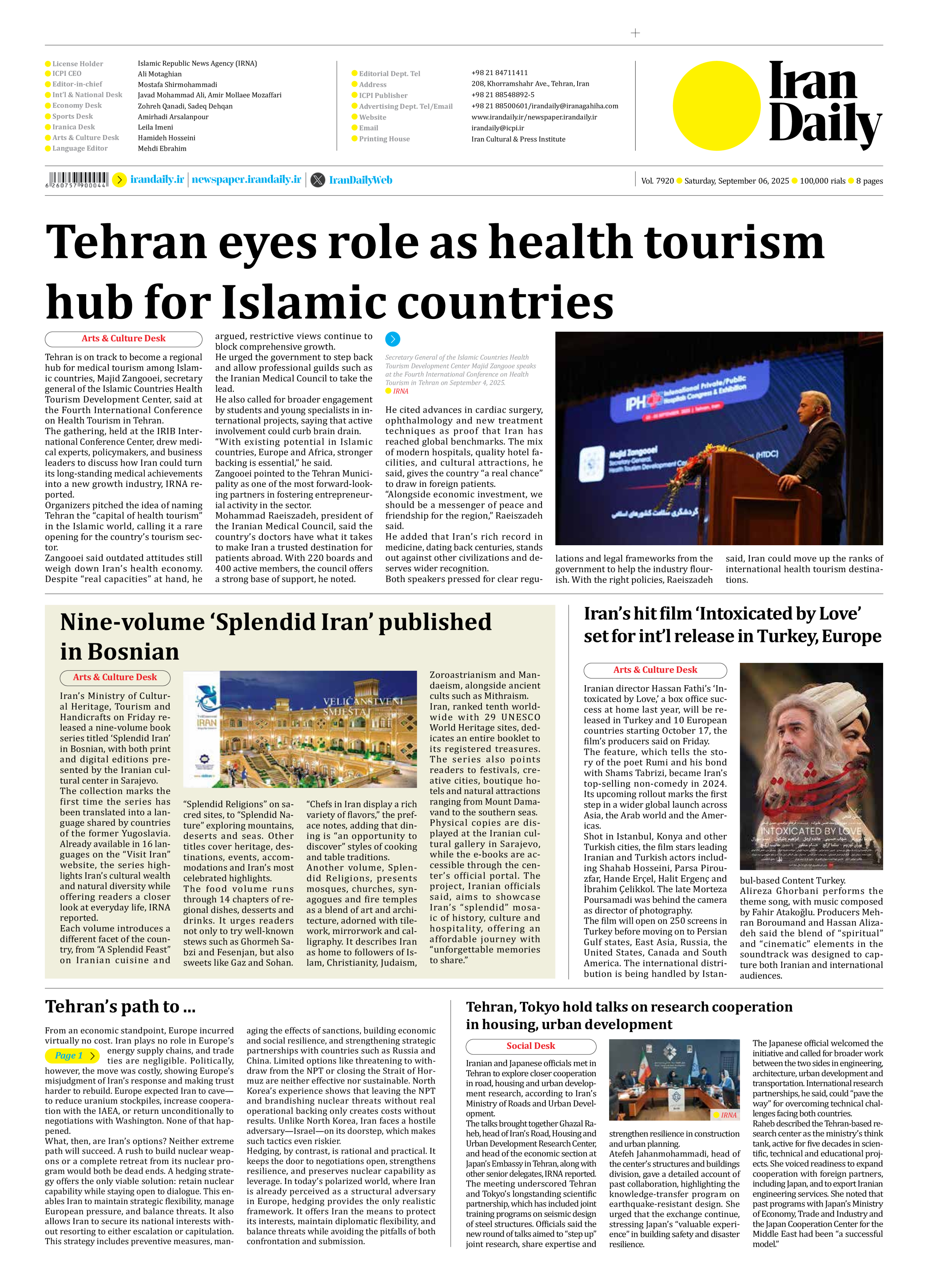
Tehran is on track to become a regional hub for medical tourism among Islamic countries, Majid Zangooei, secretary general of the Islamic Countries Health Tourism Development Center, said at the Fourth International Conference on Health Tourism in Tehran.
The gathering, held at the IRIB International Conference Center, drew medical experts, policymakers, and business leaders to discuss how Iran could turn its long-standing medical achievements into a new growth industry, IRNA reported.
Organizers pitched the idea of naming Tehran the “capital of health tourism” in the Islamic world, calling it a rare opening for the country’s tourism sector.
Zangooei said outdated attitudes still weigh down Iran’s health economy. Despite “real capacities” at hand, he argued, restrictive views continue to block comprehensive growth.
He urged the government to step back and allow professional guilds such as the Iranian Medical Council to take the lead.
He also called for broader engagement by students and young specialists in international projects, saying that active involvement could curb brain drain.
“With existing potential in Islamic countries, Europe and Africa, stronger backing is essential,” he said.
Zangooei pointed to the Tehran Municipality as one of the most forward-looking partners in fostering entrepreneurial activity in the sector.
Mohammad Raeiszadeh, president of the Iranian Medical Council, said the country’s doctors have what it takes to make Iran a trusted destination for patients abroad. With 220 boards and 400 active members, the council offers a strong base of support, he noted.
He cited advances in cardiac surgery, ophthalmology and new treatment techniques as proof that Iran has reached global benchmarks. The mix of modern hospitals, quality hotel facilities, and cultural attractions, he said, gives the country “a real chance” to draw in foreign patients.
“Alongside economic investment, we should be a messenger of peace and friendship for the region,” Raeiszadeh said.
He added that Iran’s rich record in medicine, dating back centuries, stands out against other civilizations and deserves wider recognition.
Both speakers pressed for clear regulations and legal frameworks from the government to help the industry flourish. With the right policies, Raeiszadeh said, Iran could move up the ranks of international health tourism destinations.