







Unique experiences awaiting visitors in Yazd during summer
Summer presents a unique season and a valuable opportunity to discover lesser-known aspects of Yazd Province. During this time, Yazd reveals a different side to tourists; despite the intense desert heat, it offers exceptional chances to experience tranquility, authenticity, and economic savings, according to the deputy head of Yazd Province’s Cultural Heritage, Tourism, and Handicrafts Organization.
Seyyed Alireza Salarhosseini explained in an interview with ISNA that one of the most notable features of traveling to Yazd in this season, particularly in September when the heat begins to ease, is the peacefulness of the tourist areas. He noted, “Unlike the busy tourist seasons, Yazd’s streets and historical sites are much quieter in the summer, allowing visitors to enjoy the grandeur of the windcatcher architecture, qanats, and adobe houses in peace and without crowds.”
He further highlighted that accommodation and transportation costs drop significantly during summer, with discounts sometimes reaching 40 to 50 percent. This makes summer an economically attractive option for travel enthusiasts.
Salarhosseini also emphasized that Yazd’s architecture naturally provides effective measures to counter the heat. “Staying in eco-lodges and traditional hotels, which are often built underground or adjacent to windcatchers, offers visitors an authentic experience of traditional coolness and showcases the ingenuity of Iranians in adapting to the desert climate.”
He added, “Local drinks and snacks, such as Yazdi Faloodeh, traditional distillates like rosewater, bitter orange blossom, mint, and other regional delicacies are not only refreshing but also tell the story of the culture and lifestyle of the people in this area.”
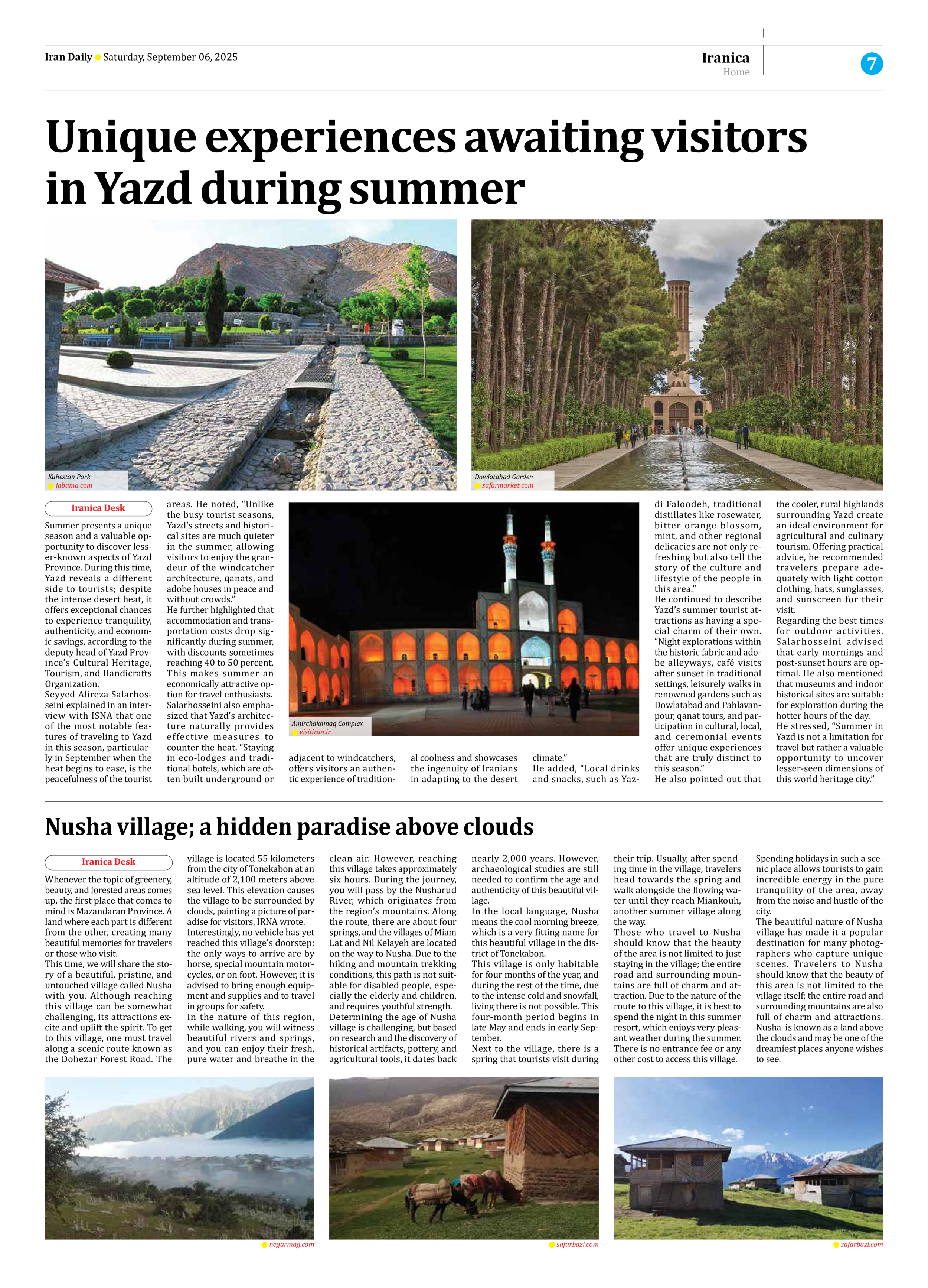
He continued to describe Yazd’s summer tourist attractions as having a special charm of their own. “Night explorations within the historic fabric and adobe alleyways, café visits after sunset in traditional settings, leisurely walks in renowned gardens such as Dowlatabad and Pahlavanpour, qanat tours, and participation in cultural, local, and ceremonial events offer unique experiences that are truly distinct to this season.”
He also pointed out that the cooler, rural highlands surrounding Yazd create an ideal environment for agricultural and culinary tourism. Offering practical advice, he recommended travelers prepare adequately with light cotton clothing, hats, sunglasses, and sunscreen for their visit.
Regarding the best times for outdoor activities, Salarhosseini advised that early mornings and post-sunset hours are optimal. He also mentioned that museums and indoor historical sites are suitable for exploration during the hotter hours of the day.
He stressed, “Summer in Yazd is not a limitation for travel but rather a valuable opportunity to uncover lesser-seen dimensions of this world heritage city.”