







Iran launches 183-MW power plant, $10b petchem projects in Makoran
10m-ton output capacity sought in first phase of investment
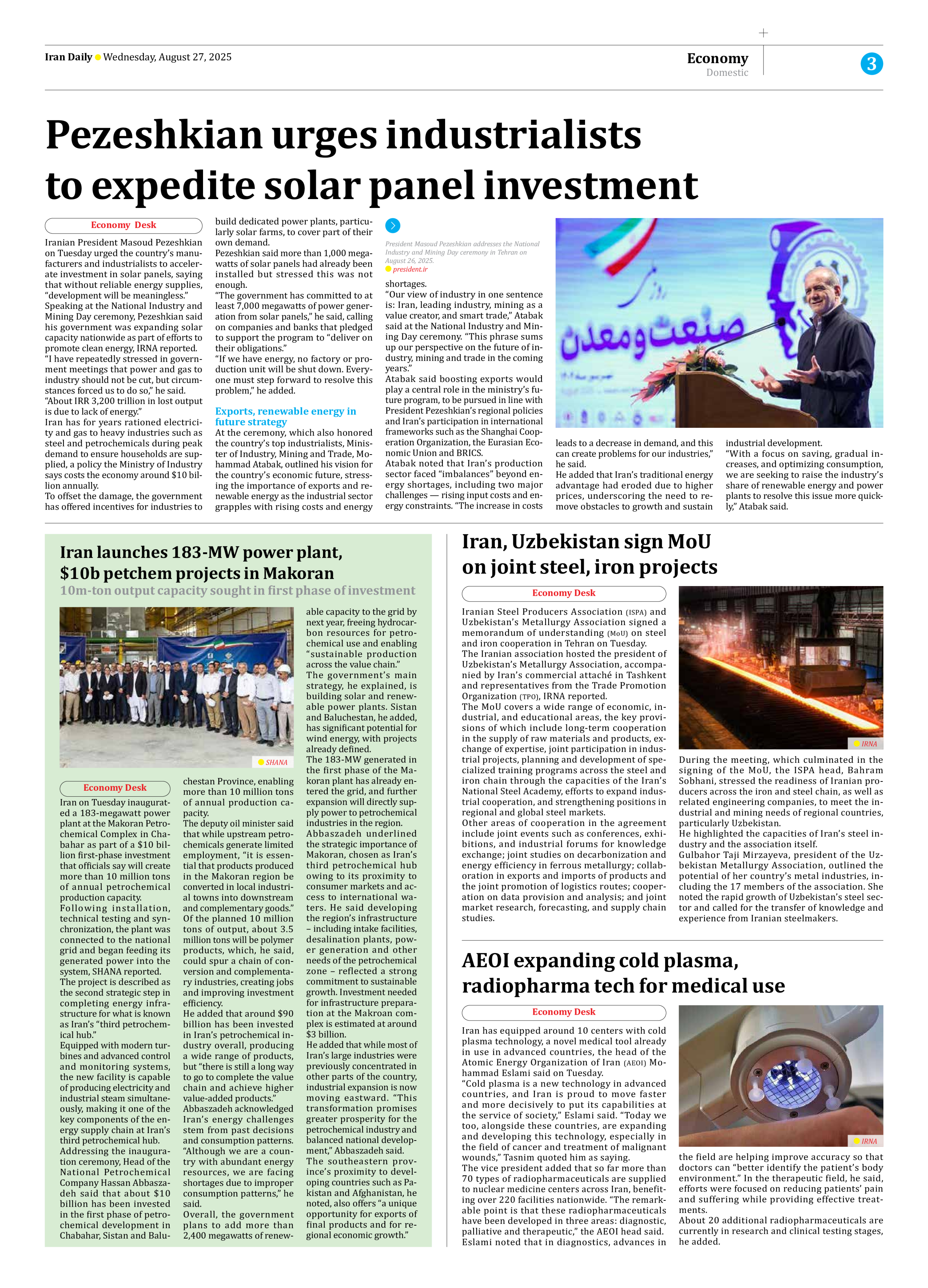
Iran on Tuesday inaugurated a 183-megawatt power plant at the Makoran Petrochemical Complex in Chabahar as part of a $10 billion first-phase investment that officials say will create more than 10 million tons of annual petrochemical production capacity.
Following installation, technical testing and synchronization, the plant was connected to the national grid and began feeding its generated power into the system, SHANA reported.
The project is described as the second strategic step in completing energy infrastructure for what is known as Iran’s “third petrochemical hub.”
Equipped with modern turbines and advanced control and monitoring systems, the new facility is capable of producing electricity and industrial steam simultaneously, making it one of the key components of the energy supply chain at Iran’s third petrochemical hub.
Addressing the inauguration ceremony, Head of the National Petrochemical Company Hassan Abbaszadeh said that about $10 billion has been invested in the first phase of petrochemical development in Chabahar, Sistan and Baluchestan Province, enabling more than 10 million tons of annual production capacity.
The deputy oil minister said that while upstream petrochemicals generate limited employment, “it is essential that products produced in the Makoran region be converted in local industrial towns into downstream and complementary goods.”
Of the planned 10 million tons of output, about 3.5 million tons will be polymer products, which, he said, could spur a chain of conversion and complementary industries, creating jobs and improving investment efficiency.
He added that around $90 billion has been invested in Iran’s petrochemical industry overall, producing a wide range of products, but “there is still a long way to go to complete the value chain and achieve higher value-added products.”
Abbaszadeh acknowledged Iran’s energy challenges stem from past decisions and consumption patterns. “Although we are a country with abundant energy resources, we are facing shortages due to improper consumption patterns,” he said.
Overall, the government plans to add more than 2,400 megawatts of renewable capacity to the grid by next year, freeing hydrocarbon resources for petrochemical use and enabling “sustainable production across the value chain.”
The government’s main strategy, he explained, is building solar and renewable power plants. Sistan and Baluchestan, he added, has significant potential for wind energy, with projects already defined.
The 183-MW generated in the first phase of the Makoran plant has already entered the grid, and further expansion will directly supply power to petrochemical industries in the region.
Abbaszadeh underlined the strategic importance of Makoran, chosen as Iran’s third petrochemical hub owing to its proximity to consumer markets and access to international waters. He said developing the region’s infrastructure – including intake facilities, desalination plants, power generation and other needs of the petrochemical zone – reflected a strong commitment to sustainable growth. Investment needed for infrastructure preparation at the Makroan complex is estimated at around $3 billion.
He added that while most of Iran’s large industries were previously concentrated in other parts of the country, industrial expansion is now moving eastward. “This transformation promises greater prosperity for the petrochemical industry and balanced national development,” Abbaszadeh said.
The southeastern province’s proximity to developing countries such as Pakistan and Afghanistan, he noted, also offers “a unique opportunity for exports of final products and for regional economic growth.”