







Deputy FM: High time for E3, UNSC to make right choice, give diplomacy chance
Iran’s Deputy Foreign Minister Kazem Gharibabadi said on Tuesday that it is time for the Europe and the UN Security Council to make the right choice and give diplomacy a chance after representatives from Iran, Britain, France and Germany held another round of nuclear talks in Geneva.
“Dr. Takht-Ravanchi and I held another meeting with the political directors of the three European countries in Geneva. Both sides outlined their views regarding UN Security Council Resolution 2231,” Gharibabadi wrote on X.
“Iran remains committed to diplomacy and to seeking a mutually beneficial diplomatic solution. It is time for the three European countries and the UN Security Council to make the right choice and give diplomacy the time and space it needs.”
France, Britain and Germany – known as the E3 – have long threatened to trigger a “snapback” of sanctions at the UN security council before October 18, when a nuclear deal struck 10 years ago between Tehran and major powers expires.
Western officials have said they would wait until the end of August to decide whether Iran was serious about further negotiations, with a six-month extension only on the condition that Iran showed seriousness about the talks with the US.
“We are going to see whether the Iranians are credible about an extension or whether they are messing us around. We want to see whether they have made any progress on the conditions we set to extend,” one E3 official said before the negotiations in Geneva.
Russia and China – two of the security council’s five permanent members – cannot veto the snapback if Europe decides to take the step.
On Tuesday, Iranian Foreign Ministry’s spokesman Ismaeil Baqaei reiterated Iran’s assertion that the European trio lacked all legal and moral authority to try to have the United Nations Security Council (UNSC) restore its sanctions on Iran.
However, Tehran was, at the same time, aware of the “unfavorable” outcome of the bans’ potential return, he said, adding that the country was sparing no efforts to prevent realization of the prospect.
Baqaei noted that Iran has a “clear plan” in store to deploy to either avert the likelihood or contain its fallout.
He, meanwhile, underlined that the country had to be wary of efforts aimed at abusing the situation to wage “psychological warfare” against the Iranian people.
In 2018, the United States left the nuclear agreement, officially known as the Joint Comprehensive Plan of Action (JCPOA), in an illegal and unilateral move that was followed by Washington’s return to its sanctions against Iran.
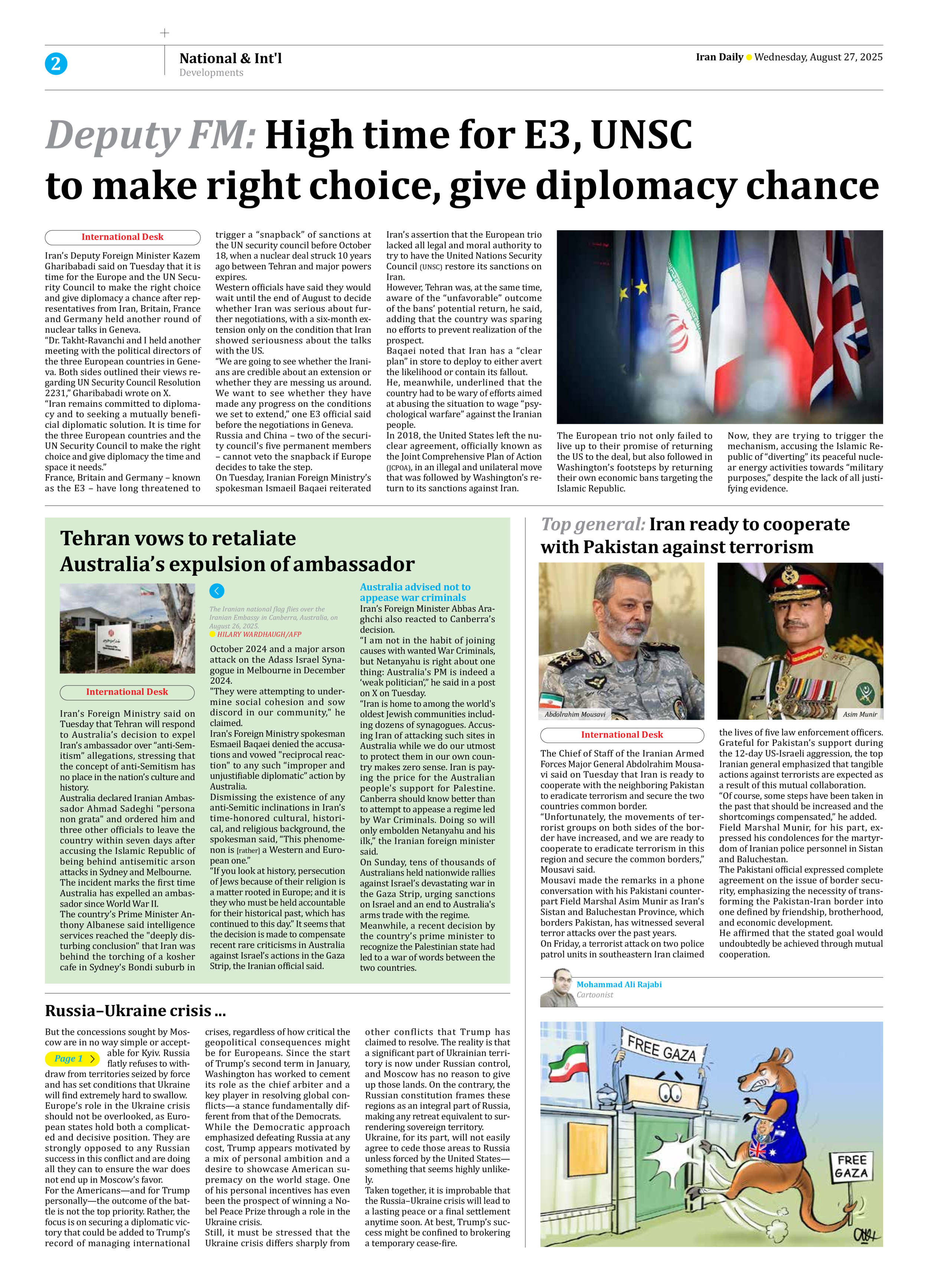
The European trio not only failed to live up to their promise of returning the US to the deal, but also followed in Washington’s footsteps by returning their own economic bans targeting the Islamic Republic.
Now, they are trying to trigger the mechanism, accusing the Islamic Republic of “diverting” its peaceful nuclear energy activities towards “military purposes,” despite the lack of all justifying evidence.