







Boshruyeh’s Salt Bath reviving Iran’s tradition of wellness
South Khorasan Province is one of the largest provinces of Iran, featuring diverse climates ranging from hot and dry deserts to cold mountainous areas. This geographical diversity has endowed the province with numerous natural and historical tourist attractions. There are over a thousand nationally registered historical sites and 10 UNESCO World Heritage sites in this province, drawing the attention of both domestic and international tourists.
Among this diversity, natural salt reserves in the province’s deserts, especially in Boshruyeh, hold a special place. The salt ponds and springs in this region, regarded as shining white treasures, have been used for years by local people and enthusiasts of natural remedies, chtn.ir wrote.
Boshruyeh, with more than 20 natural salt ponds, is known as the “heart of Iran’s desert salt.” This salt, a mixture of sodium chloride and valuable minerals such as magnesium, calcium, and potassium, possesses profound healing properties. In Iranian traditional medicine, this salt is recognized as a natural disinfectant and a treatment for skin diseases such as eczema and skin inflammations, as well as respiratory conditions including asthma and sinusitis.
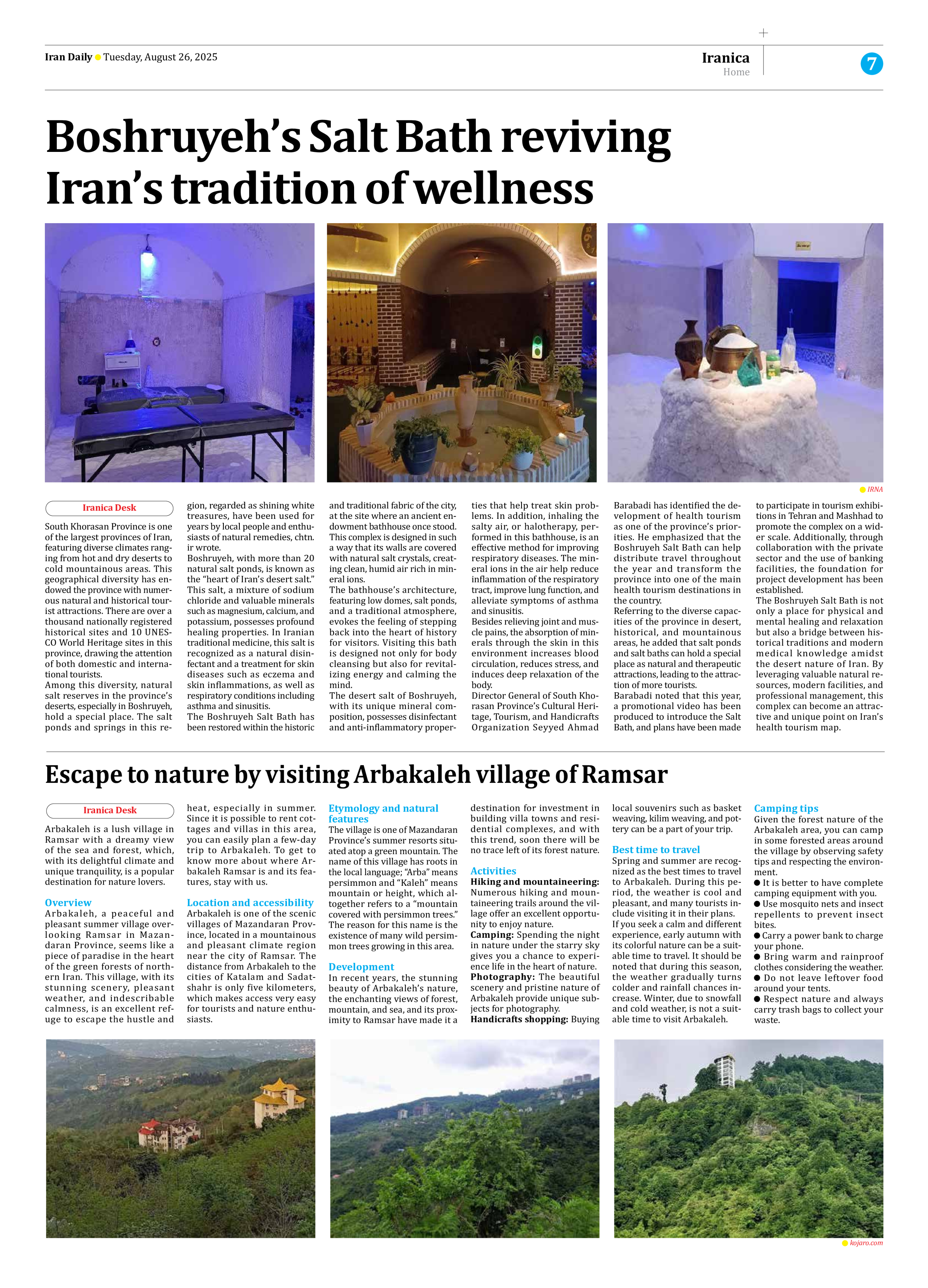
The Boshruyeh Salt Bath has been restored within the historic and traditional fabric of the city, at the site where an ancient endowment bathhouse once stood. This complex is designed in such a way that its walls are covered with natural salt crystals, creating clean, humid air rich in mineral ions.
The bathhouse’s architecture, featuring low domes, salt ponds, and a traditional atmosphere, evokes the feeling of stepping back into the heart of history for visitors. Visiting this bath is designed not only for body cleansing but also for revitalizing energy and calming the mind.
The desert salt of Boshruyeh, with its unique mineral composition, possesses disinfectant and anti-inflammatory properties that help treat skin problems. In addition, inhaling the salty air, or halotherapy, performed in this bathhouse, is an effective method for improving respiratory diseases. The mineral ions in the air help reduce inflammation of the respiratory tract, improve lung function, and alleviate symptoms of asthma and sinusitis.
Besides relieving joint and muscle pains, the absorption of minerals through the skin in this environment increases blood circulation, reduces stress, and induces deep relaxation of the body.
Director General of South Khorasan Province’s Cultural Heritage, Tourism, and Handicrafts Organization Seyyed Ahmad Barabadi has identified the development of health tourism as one of the province’s priorities. He emphasized that the Boshruyeh Salt Bath can help distribute travel throughout the year and transform the province into one of the main health tourism destinations in the country.
Referring to the diverse capacities of the province in desert, historical, and mountainous areas, he added that salt ponds and salt baths can hold a special place as natural and therapeutic attractions, leading to the attraction of more tourists.
Barabadi noted that this year, a promotional video has been produced to introduce the Salt Bath, and plans have been made to participate in tourism exhibitions in Tehran and Mashhad to promote the complex on a wider scale. Additionally, through collaboration with the private sector and the use of banking facilities, the foundation for project development has been established.
The Boshruyeh Salt Bath is not only a place for physical and mental healing and relaxation but also a bridge between historical traditions and modern medical knowledge amidst the desert nature of Iran. By leveraging valuable natural resources, modern facilities, and professional management, this complex can become an attractive and unique point on Iran’s health tourism map.