







Iran taps East-West corridor with first major rail shipment from China
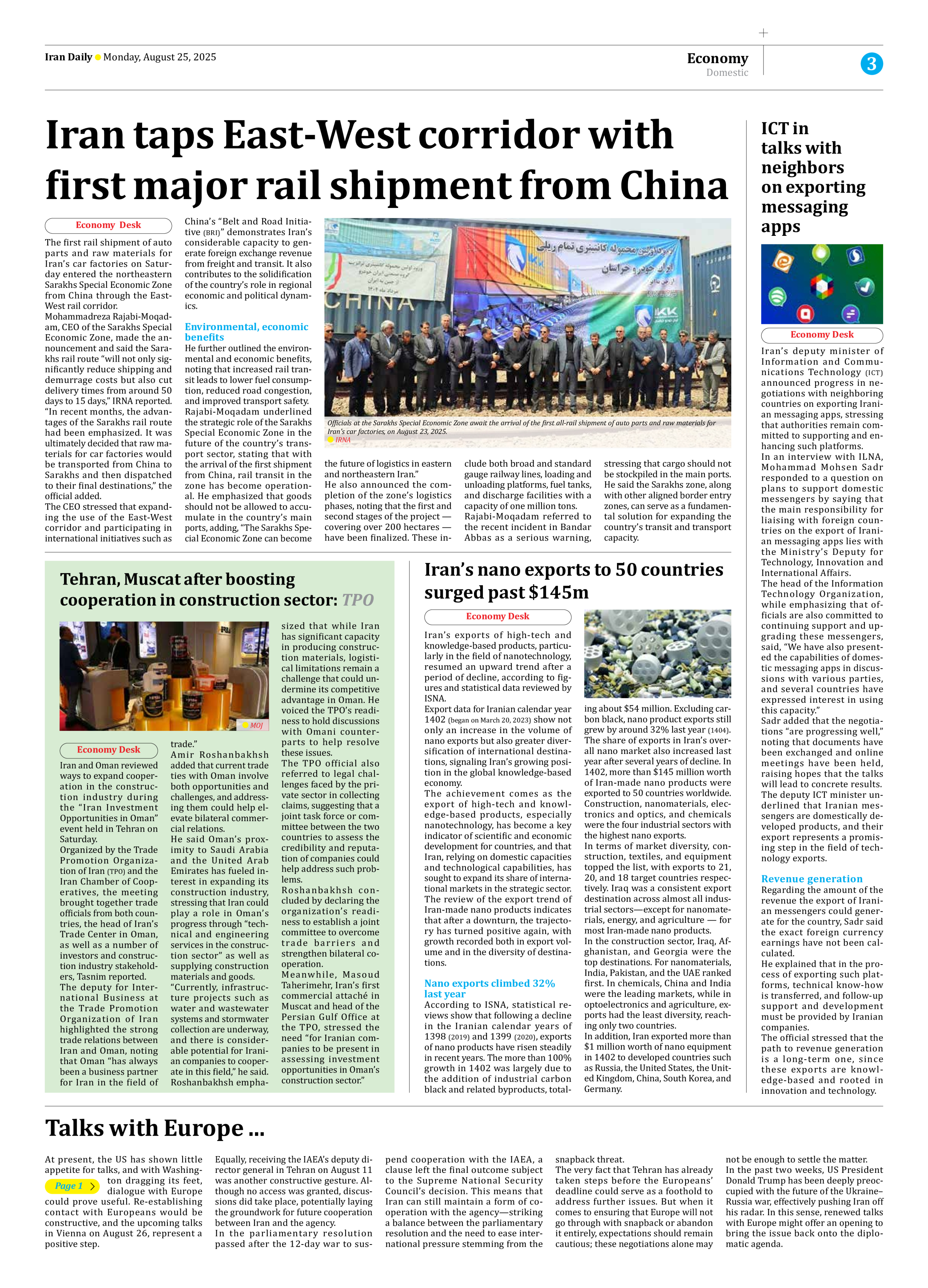
The first rail shipment of auto parts and raw materials for Iran’s car factories on Saturday entered the northeastern Sarakhs Special Economic Zone from China through the East-West rail corridor.
Mohammadreza Rajabi-Moqadam, CEO of the Sarakhs Special Economic Zone, made the announcement and said the Sarakhs rail route “will not only significantly reduce shipping and demurrage costs but also cut delivery times from around 50 days to 15 days,” IRNA reported.
“In recent months, the advantages of the Sarakhs rail route had been emphasized. It was ultimately decided that raw materials for car factories would be transported from China to Sarakhs and then dispatched to their final destinations,” the official added.
The CEO stressed that expanding the use of the East-West corridor and participating in international initiatives such as China’s “Belt and Road Initiative (BRI)” demonstrates Iran’s considerable capacity to generate foreign exchange revenue from freight and transit. It also contributes to the solidification of the country’s role in regional economic and political dynamics.
Environmental, economic benefits
He further outlined the environmental and economic benefits, noting that increased rail transit leads to lower fuel consumption, reduced road congestion, and improved transport safety.
Rajabi-Moqadam underlined the strategic role of the Sarakhs Special Economic Zone in the future of the country’s transport sector, stating that with the arrival of the first shipment from China, rail transit in the zone has become operational. He emphasized that goods should not be allowed to accumulate in the country’s main ports, adding, “The Sarakhs Special Economic Zone can become the future of logistics in eastern and northeastern Iran.”
He also announced the completion of the zone’s logistics phases, noting that the first and second stages of the project — covering over 200 hectares — have been finalized. These include both broad and standard gauge railway lines, loading and unloading platforms, fuel tanks, and discharge facilities with a capacity of one million tons.
Rajabi-Moqadam referred to the recent incident in Bandar Abbas as a serious warning, stressing that cargo should not be stockpiled in the main ports. He said the Sarakhs zone, along with other aligned border entry zones, can serve as a fundamental solution for expanding the country’s transit and transport capacity.