







Tehran, Islamabad ink deals on agriculture, plant protection
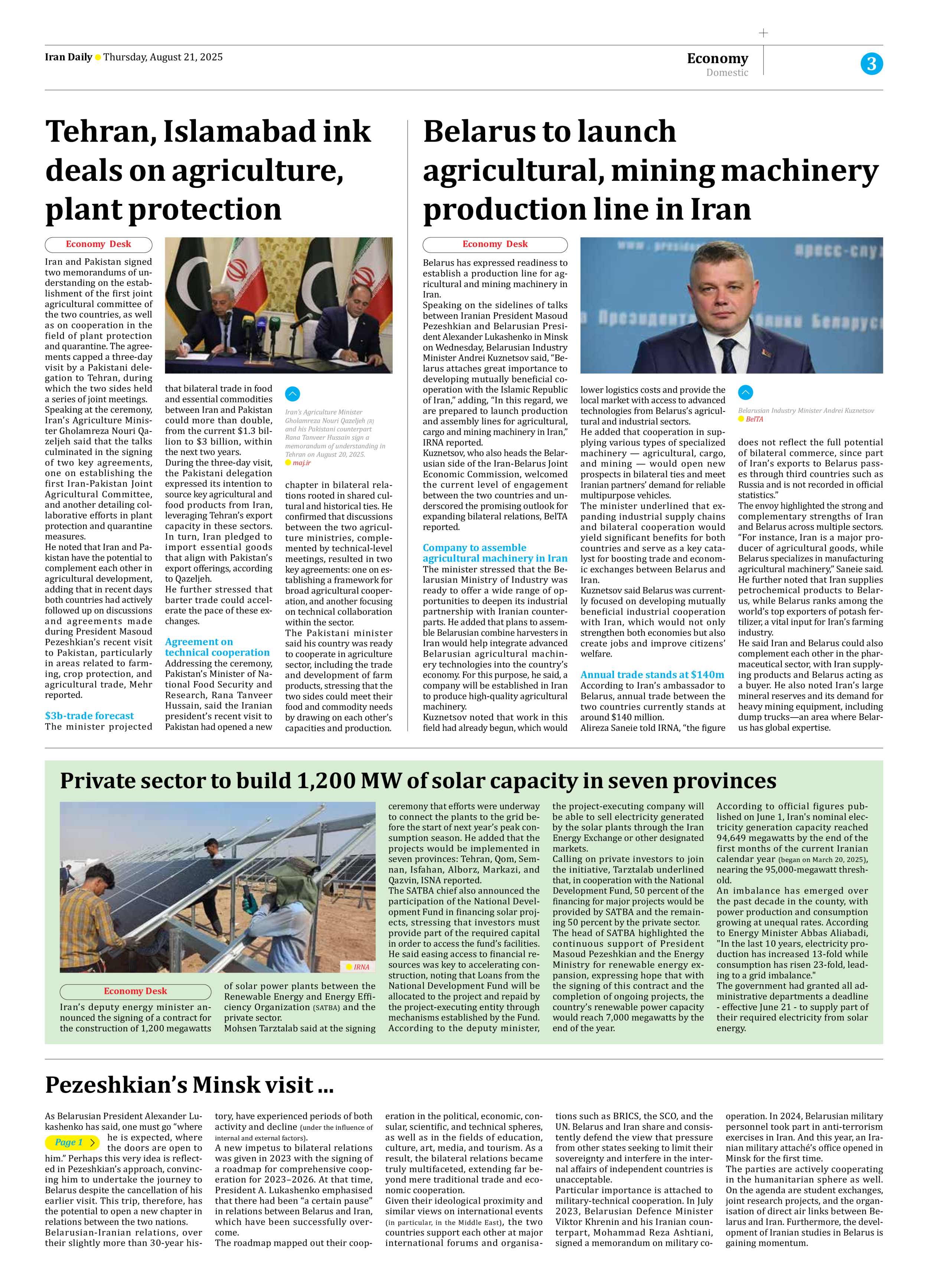
Iran and Pakistan signed two memorandums of understanding on the establishment of the first joint agricultural committee of the two countries, as well as on cooperation in the field of plant protection and quarantine. The agreements capped a three-day visit by a Pakistani delegation to Tehran, during which the two sides held a series of joint meetings.
Speaking at the ceremony, Iran’s Agriculture Minister Gholamreza Nouri Qazeljeh said that the talks culminated in the signing of two key agreements, one on establishing the first Iran-Pakistan Joint Agricultural Committee, and another detailing collaborative efforts in plant protection and quarantine measures.
He noted that Iran and Pakistan have the potential to complement each other in agricultural development, adding that in recent days both countries had actively followed up on discussions and agreements made during President Masoud Pezeshkian’s recent visit to Pakistan, particularly in areas related to farming, crop protection, and agricultural trade, Mehr reported.
$3b-trade forecast
The minister projected that bilateral trade in food and essential commodities between Iran and Pakistan could more than double, from the current $1.3 billion to $3 billion, within the next two years.
During the three-day visit, the Pakistani delegation expressed its intention to source key agricultural and food products from Iran, leveraging Tehran’s export capacity in these sectors. In turn, Iran pledged to import essential goods that align with Pakistan’s export offerings, according to Qazeljeh.
He further stressed that barter trade could accelerate the pace of these exchanges.
Agreement on technical cooperation
Addressing the ceremony, Pakistan’s Minister of National Food Security and Research, Rana Tanveer Hussain, said the Iranian president’s recent visit to Pakistan had opened a new chapter in bilateral relations rooted in shared cultural and historical ties. He confirmed that discussions between the two agriculture ministries, complemented by technical-level meetings, resulted in two key agreements: one on establishing a framework for broad agricultural cooperation, and another focusing on technical collaboration within the sector.
The Pakistani minister said his country was ready to cooperate in agriculture sector, including the trade and development of farm products, stressing that the two sides could meet their food and commodity needs by drawing on each other’s capacities and production.