







Iran’s strategic position ...
Page 1
Iran’s main strategy for managing disputes and promoting regional stability has been to adopt a “balanced policy.” Given the current landscape, this approach is not without logic, since strategic alliances in the South Caucasus are themselves riddled with weaknesses and contradictions. Even when Iran has sought closer ties with Armenia, the internal divisions within Yerevan have limited results, with today’s dynamics being part of those very contradictions.
It is in this context that projects such as the Zangezur Corridor and the so-called Trump Route have come to the fore. In such ventures, geographical proximity often outweighs both investment volumes and the might of outside sponsors. That is why the Zangezur Corridor is seen as costlier than the Trump Route, though the two can be complementary rather than mutually exclusive. For Iran, the bigger concern lies not in the routes themselves, but in their potential military and security repercussions for the region.
Yet Iran holds a strategic position that can overshadow even the Zangezur Corridor or the Trump Route. Neighboring four geostrategic zones, enjoying access to open waters, and lying on the natural East–West and North–South axes, Tehran has diverse opportunities within reach.
Moreover, rival roads are still a long way from becoming fully operational, given the need for stable financing, security guarantees, and resolution of border issues. Their success depends heavily on risk management and political continuity. This time gap could open the door for Iran to push forward its own routes and projects, involving both Armenia and Azerbaijan—initiatives that are not only feasible but also actionable.
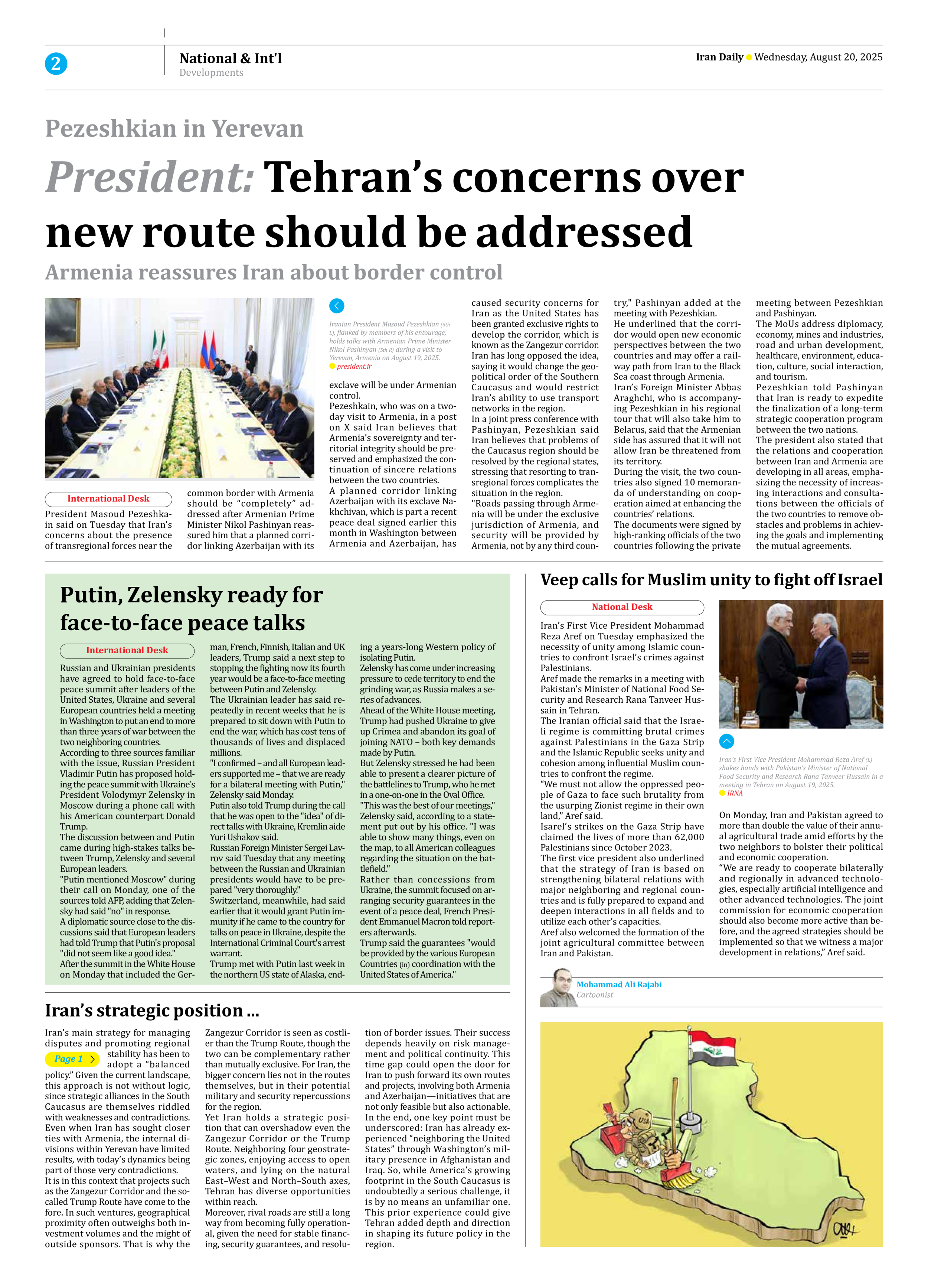
In the end, one key point must be underscored: Iran has already experienced “neighboring the United States” through Washington’s military presence in Afghanistan and Iraq. So, while America’s growing footprint in the South Caucasus is undoubtedly a serious challenge, it is by no means an unfamiliar one. This prior experience could give Tehran added depth and direction in shaping its future policy in the region.