





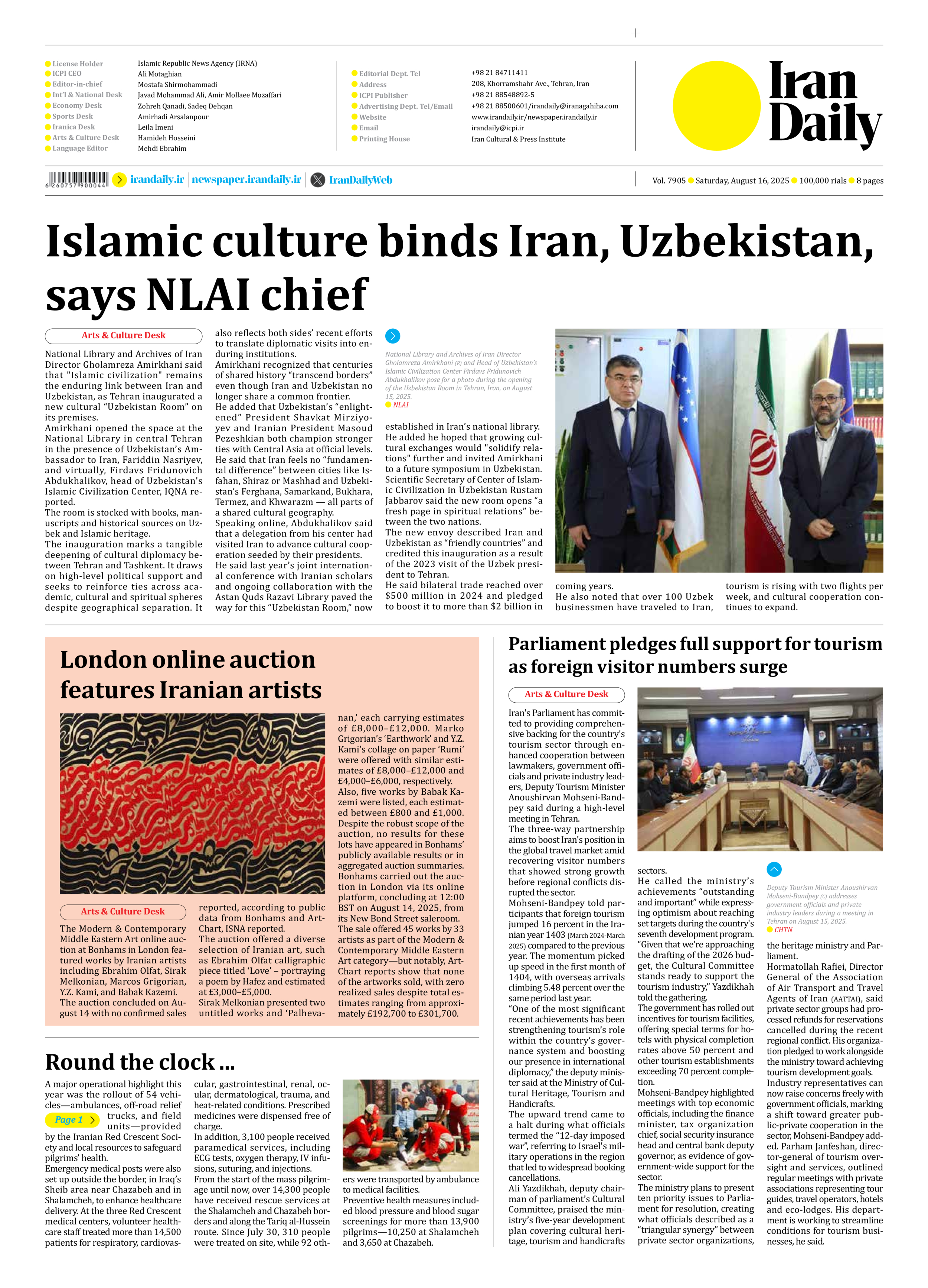


Parliament pledges full support for tourism as foreign visitor numbers surge
Iran's Parliament has committed to providing comprehensive backing for the country’s tourism sector through enhanced cooperation between lawmakers, government officials and private industry leaders, Deputy Tourism Minister Anoushirvan Mohseni-Bandpey said during a high-level meeting in Tehran.
The three-way partnership aims to boost Iran's position in the global travel market amid recovering visitor numbers that showed strong growth before regional conflicts disrupted the sector.
Mohseni-Bandpey told participants that foreign tourism jumped 16 percent in the Iranian year 1403 (March 2024-March 2025) compared to the previous year. The momentum picked up speed in the first month of 1404, with overseas arrivals climbing 5.48 percent over the same period last year.
“One of the most significant recent achievements has been strengthening tourism’s role within the country’s governance system and boosting our presence in international diplomacy,” the deputy minister said at the Ministry of Cultural Heritage, Tourism and Handicrafts.
The upward trend came to a halt during what officials termed the “12-day imposed war”, referring to Israel's military operations in the region that led to widespread booking cancellations.
Ali Yazdikhah, deputy chairman of parliament’s Cultural Committee, praised the ministry’s five-year development plan covering cultural heritage, tourism and handicrafts sectors.
He called the ministry’s achievements “outstanding and important” while expressing optimism about reaching set targets during the country's seventh development program.
“Given that we’re approaching the drafting of the 2026 budget, the Cultural Committee stands ready to support the tourism industry,” Yazdikhah told the gathering.
The government has rolled out incentives for tourism facilities, offering special terms for hotels with physical completion rates above 50 percent and other tourism establishments exceeding 70 percent completion.
Mohseni-Bandpey highlighted meetings with top economic officials, including the finance minister, tax organization chief, social security insurance head and central bank deputy governor, as evidence of government-wide support for the sector.
The ministry plans to present ten priority issues to Parliament for resolution, creating what officials described as a “triangular synergy” between private sector organizations, the heritage ministry and Parliament.
Hormatollah Rafiei, Director General of the Association of Air Transport and Travel Agents of Iran (AATTAI), said private sector groups had processed refunds for reservations cancelled during the recent regional conflict. His organization pledged to work alongside the ministry toward achieving tourism development goals.
Industry representatives can now raise concerns freely with government officials, marking a shift toward greater public-private cooperation in the sector, Mohseni-Bandpey added. Parham Janfeshan, director-general of tourism oversight and services, outlined regular meetings with private associations representing tour guides, travel operators, hotels and eco-lodges. His department is working to streamline conditions for tourism businesses, he said.