







Fin Castle bridging history, modern life in southern Iran
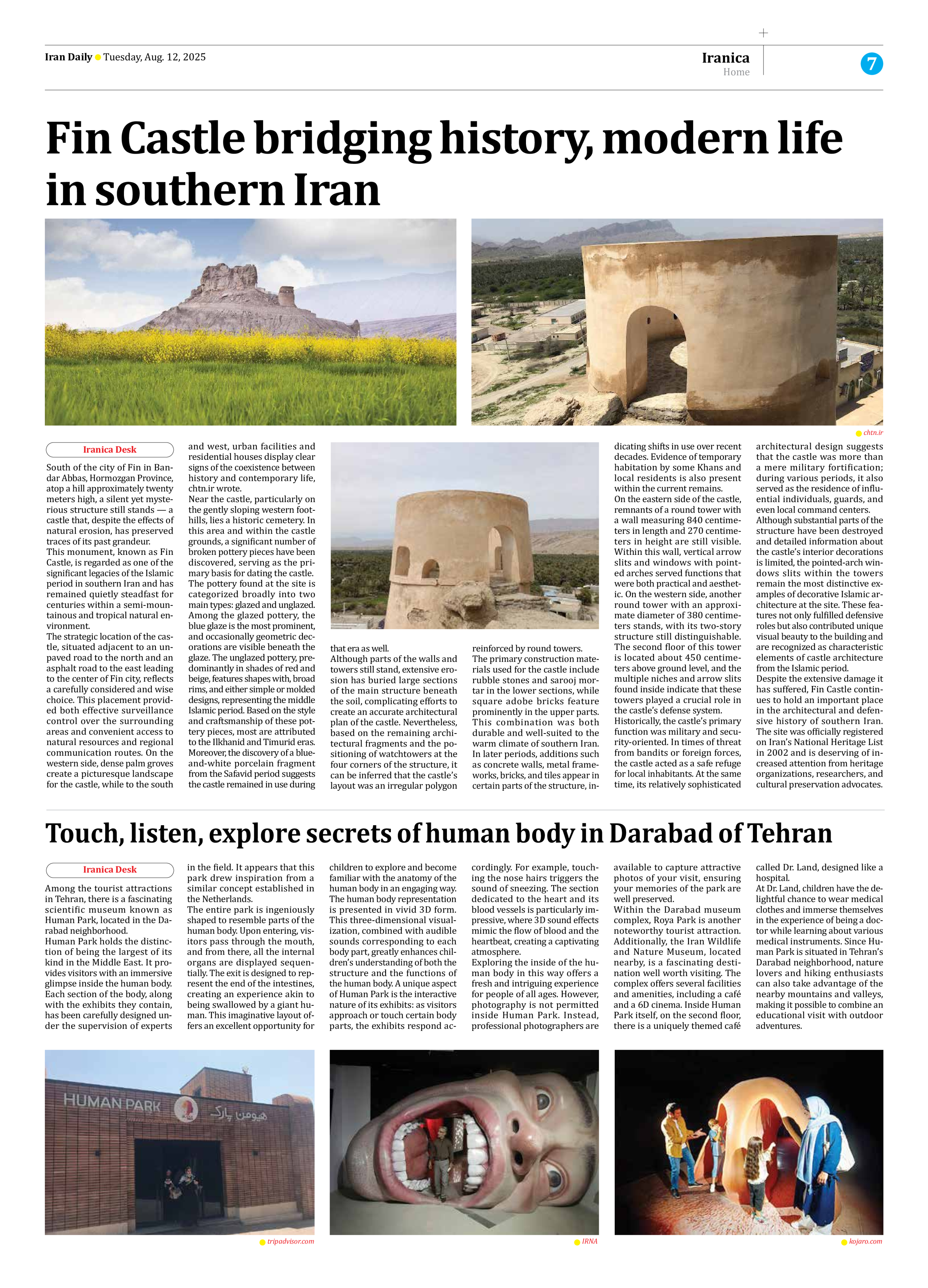
South of the city of Fin in Bandar Abbas, Hormozgan Province, atop a hill approximately twenty meters high, a silent yet mysterious structure still stands — a castle that, despite the effects of natural erosion, has preserved traces of its past grandeur.
This monument, known as Fin Castle, is regarded as one of the significant legacies of the Islamic period in southern Iran and has remained quietly steadfast for centuries within a semi-mountainous and tropical natural environment.
The strategic location of the castle, situated adjacent to an unpaved road to the north and an asphalt road to the east leading to the center of Fin city, reflects a carefully considered and wise choice. This placement provided both effective surveillance control over the surrounding areas and convenient access to natural resources and regional communication routes. On the western side, dense palm groves create a picturesque landscape for the castle, while to the south and west, urban facilities and residential houses display clear signs of the coexistence between history and contemporary life, chtn.ir wrote.
Near the castle, particularly on the gently sloping western foothills, lies a historic cemetery. In this area and within the castle grounds, a significant number of broken pottery pieces have been discovered, serving as the primary basis for dating the castle.
The pottery found at the site is categorized broadly into two main types: glazed and unglazed. Among the glazed pottery, the blue glaze is the most prominent, and occasionally geometric decorations are visible beneath the glaze. The unglazed pottery, predominantly in shades of red and beige, features shapes with, broad rims, and either simple or molded designs, representing the middle Islamic period. Based on the style and craftsmanship of these pottery pieces, most are attributed to the Ilkhanid and Timurid eras. Moreover, the discovery of a blue-and-white porcelain fragment from the Safavid period suggests the castle remained in use during that era as well.
Although parts of the walls and towers still stand, extensive erosion has buried large sections of the main structure beneath the soil, complicating efforts to create an accurate architectural plan of the castle. Nevertheless, based on the remaining architectural fragments and the positioning of watchtowers at the four corners of the structure, it can be inferred that the castle’s layout was an irregular polygon reinforced by round towers.
The primary construction materials used for the castle include rubble stones and sarooj mortar in the lower sections, while square adobe bricks feature prominently in the upper parts. This combination was both durable and well-suited to the warm climate of southern Iran. In later periods, additions such as concrete walls, metal frameworks, bricks, and tiles appear in certain parts of the structure, indicating shifts in use over recent decades. Evidence of temporary habitation by some Khans and local residents is also present within the current remains.
On the eastern side of the castle, remnants of a round tower with a wall measuring 840 centimeters in length and 270 centimeters in height are still visible. Within this wall, vertical arrow slits and windows with pointed arches served functions that were both practical and aesthetic. On the western side, another round tower with an approximate diameter of 380 centimeters stands, with its two-story structure still distinguishable. The second floor of this tower is located about 450 centimeters above ground level, and the multiple niches and arrow slits found inside indicate that these towers played a crucial role in the castle’s defense system.
Historically, the castle’s primary function was military and security-oriented. In times of threat from bandits or foreign forces, the castle acted as a safe refuge for local inhabitants. At the same time, its relatively sophisticated architectural design suggests that the castle was more than a mere military fortification; during various periods, it also served as the residence of influential individuals, guards, and even local command centers.
Although substantial parts of the structure have been destroyed and detailed information about the castle’s interior decorations is limited, the pointed-arch windows slits within the towers remain the most distinctive examples of decorative Islamic architecture at the site. These features not only fulfilled defensive roles but also contributed unique visual beauty to the building and are recognized as characteristic elements of castle architecture from the Islamic period.
Despite the extensive damage it has suffered, Fin Castle continues to hold an important place in the architectural and defensive history of southern Iran. The site was officially registered on Iran’s National Heritage List in 2002 and is deserving of increased attention from heritage organizations, researchers, and cultural preservation advocates.