







Rudbar-e Qasran; a jewel in Tehran’s northern slopes
Rudbar-e Qasran district in northern Tehran is a region with a rich historical and natural heritage that has played diverse and significant roles in the economic, industrial, and tourism sectors of the capital from ancient times up to the present day. The name Rudbar, which means riverbank, reflects its distinctive location alongside permanent rivers that traverse the area.
Historically, Rudbar-e Qasran was vitally important for supplying fuel to trains and supporting the rail transport industry, owing to its strategic geographical position and abundant natural resources. With the establishment of the Trans-Iranian Railway, particularly during the 1940s and 1950s, the demand for coal as a primary locomotive fuel surged.
Among the most important sources of this fuel were the coal mines of Rudbar-e Qasran. This area, rich with numerous mines including the notable Shemshak coal mine, served as one of the principal centers for supplying fuel to locomotives during that era, chtn.ir wrote.
Coal transport from these mines to various parts of the country relied on specially engineered routes. These routes were carefully designed using precise technical calculations and utilized specialized wagons and freight paths tailored to the terrain and logistical demands. The existence of numerous tunnels and bridges — several of which remain standing in parts of the region today — attests to the strategic significance of Rudbar-e Qasran during the first Pahlavi period.
Over time, however, especially from the late 1950s through the 1960s, the advent of newer generations of locomotives powered by alternative fuels such as diesel and electricity drastically reduced the demand for coal. Consequently, Rudbar-e Qasran’s traditional role in coal supply diminished, and many of its mines gradually ceased operation. By the 1990s, remnants of mining activity were still observable, but over time, the traces of this once vital industry slowly vanished from the landscape.
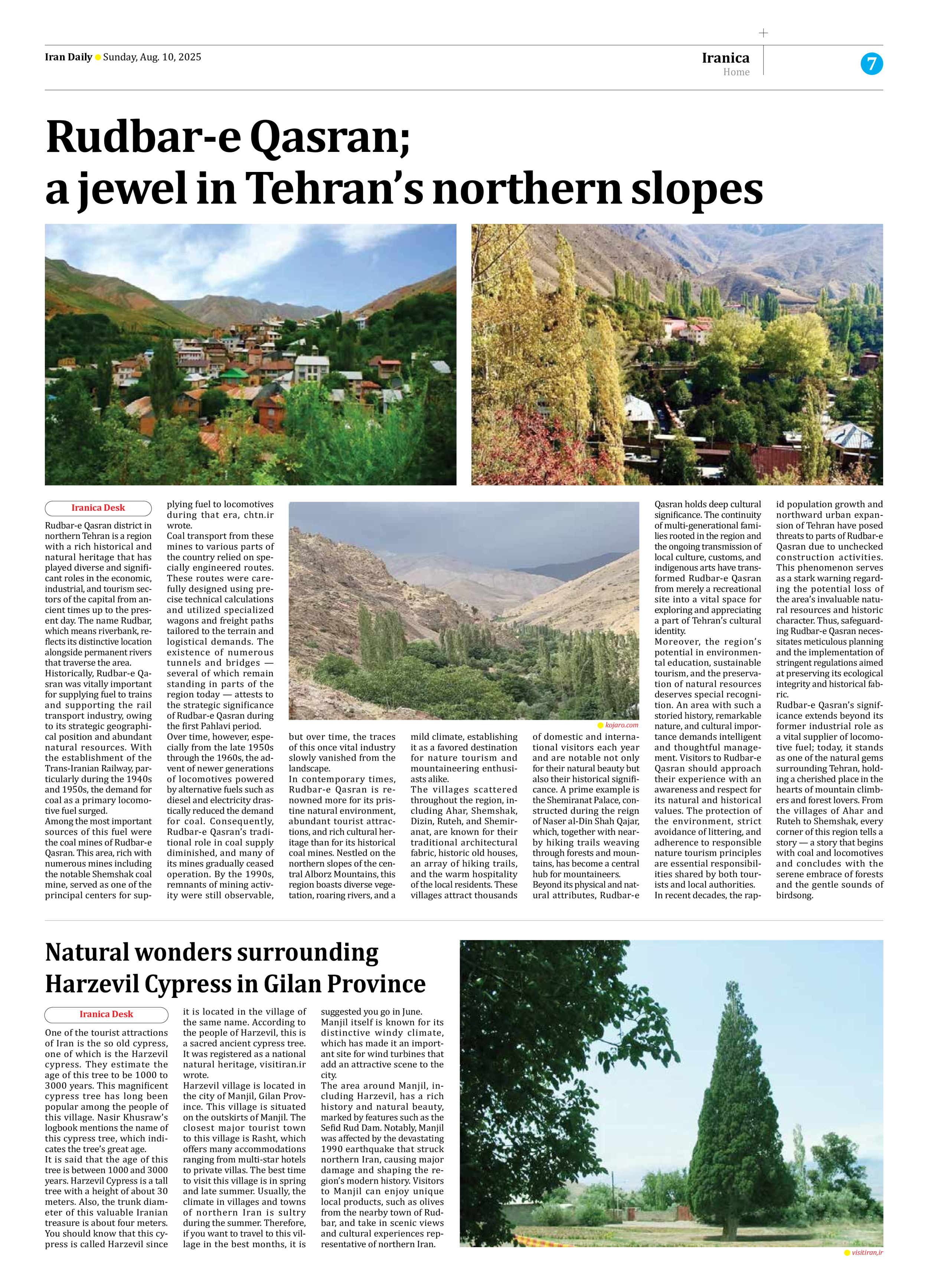
In contemporary times, Rudbar-e Qasran is renowned more for its pristine natural environment, abundant tourist attractions, and rich cultural heritage than for its historical coal mines. Nestled on the northern slopes of the central Alborz Mountains, this region boasts diverse vegetation, roaring rivers, and a mild climate, establishing it as a favored destination for nature tourism and mountaineering enthusiasts alike.
The villages scattered throughout the region, including Ahar, Shemshak, Dizin, Ruteh, and Shemiranat, are known for their traditional architectural fabric, historic old houses, an array of hiking trails, and the warm hospitality of the local residents. These villages attract thousands of domestic and international visitors each year and are notable not only for their natural beauty but also their historical significance. A prime example is the Shemiranat Palace, constructed during the reign of Naser al-Din Shah Qajar, which, together with nearby hiking trails weaving through forests and mountains, has become a central hub for mountaineers.
Beyond its physical and natural attributes, Rudbar-e Qasran holds deep cultural significance. The continuity of multi-generational families rooted in the region and the ongoing transmission of local culture, customs, and indigenous arts have transformed Rudbar-e Qasran from merely a recreational site into a vital space for exploring and appreciating a part of Tehran’s cultural identity.
Moreover, the region’s potential in environmental education, sustainable tourism, and the preservation of natural resources deserves special recognition. An area with such a storied history, remarkable nature, and cultural importance demands intelligent and thoughtful management. Visitors to Rudbar-e Qasran should approach their experience with an awareness and respect for its natural and historical values. The protection of the environment, strict avoidance of littering, and adherence to responsible nature tourism principles are essential responsibilities shared by both tourists and local authorities.
In recent decades, the rapid population growth and northward urban expansion of Tehran have posed threats to parts of Rudbar-e Qasran due to unchecked construction activities. This phenomenon serves as a stark warning regarding the potential loss of the area’s invaluable natural resources and historic character. Thus, safeguarding Rudbar-e Qasran necessitates meticulous planning and the implementation of stringent regulations aimed at preserving its ecological integrity and historical fabric.
Rudbar-e Qasran’s significance extends beyond its former industrial role as a vital supplier of locomotive fuel; today, it stands as one of the natural gems surrounding Tehran, holding a cherished place in the hearts of mountain climbers and forest lovers. From the villages of Ahar and Ruteh to Shemshak, every corner of this region tells a story — a story that begins with coal and locomotives and concludes with the serene embrace of forests and the gentle sounds of birdsong.