







Abouei House reflects Zahedan’s rich cultural heritage
Abouei House in Zahedan, Sistan and Baluchestan Province, was constructed in 1932 by Mohammad Ali Mahmoudi, a renowned architect from Yazd, during the early Pahlavi era, coinciding with the formation of the modern city. It was built for Zaeim Abouei, a justice ministry employee, reflecting the architectural and cultural transition of that period.
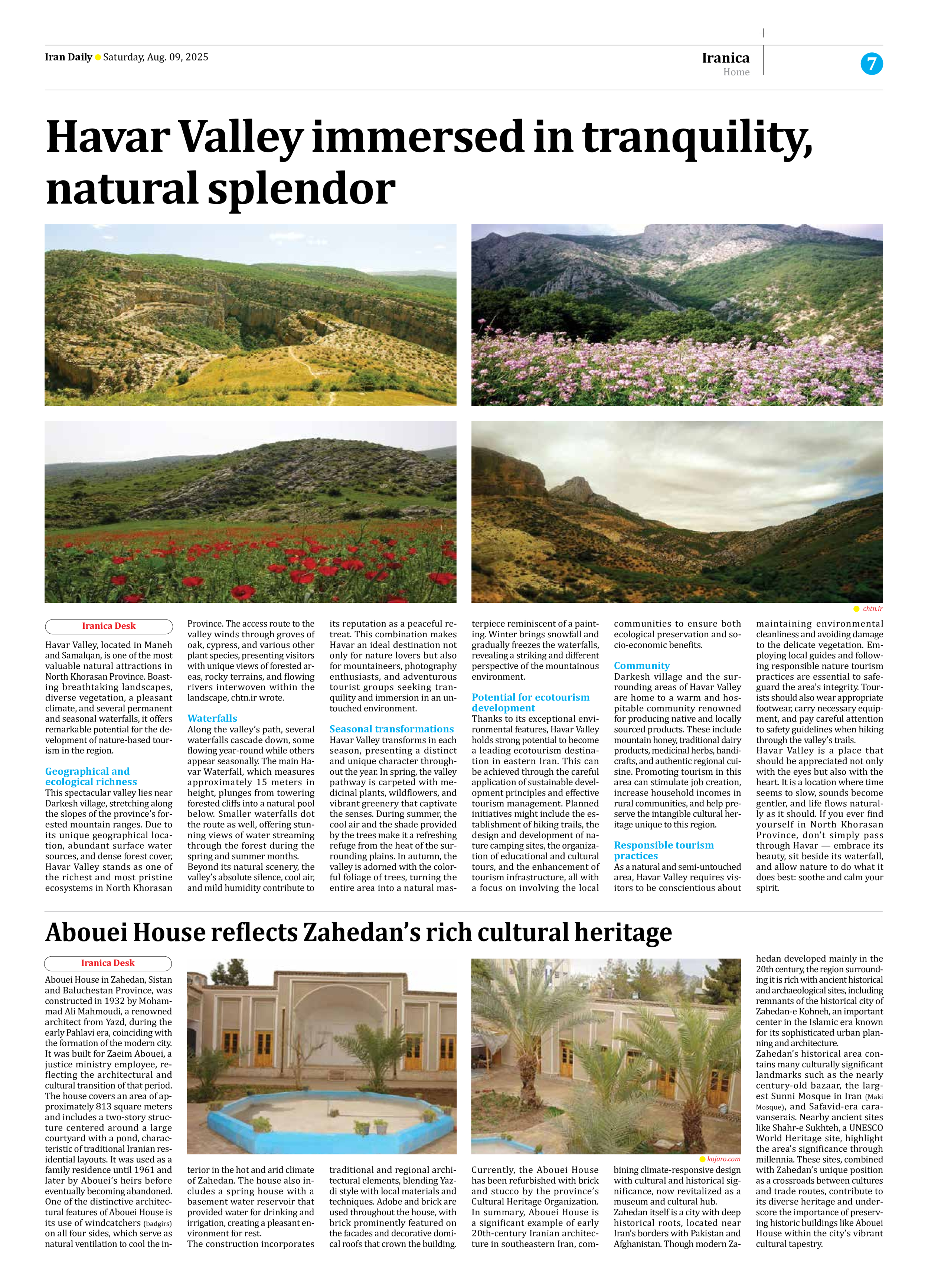
The house covers an area of approximately 813 square meters and includes a two-story structure centered around a large courtyard with a pond, characteristic of traditional Iranian residential layouts. It was used as a family residence until 1961 and later by Abouei’s heirs before eventually becoming abandoned.
One of the distinctive architectural features of Abouei House is its use of windcatchers (badgirs) on all four sides, which serve as natural ventilation to cool the interior in the hot and arid climate of Zahedan. The house also includes a spring house with a basement water reservoir that provided water for drinking and irrigation, creating a pleasant environment for rest.
The construction incorporates traditional and regional architectural elements, blending Yazdi style with local materials and techniques. Adobe and brick are used throughout the house, with brick prominently featured on the facades and decorative domical roofs that crown the building.
Currently, the Abouei House has been refurbished with brick and stucco by the province’s Cultural Heritage Organization. In summary, Abouei House is a significant example of early 20th-century Iranian architecture in southeastern Iran, combining climate-responsive design with cultural and historical significance, now revitalized as a museum and cultural hub.
Zahedan itself is a city with deep historical roots, located near Iran’s borders with Pakistan and Afghanistan. Though modern Zahedan developed mainly in the 20th century, the region surrounding it is rich with ancient historical and archaeological sites, including remnants of the historical city of Zahedan-e Kohneh, an important center in the Islamic era known for its sophisticated urban planning and architecture.
Zahedan’s historical area contains many culturally significant landmarks such as the nearly century-old bazaar, the largest Sunni Mosque in Iran (Maki Mosque), and Safavid-era caravanserais. Nearby ancient sites like Shahr-e Sukhteh, a UNESCO World Heritage site, highlight the area’s significance through millennia. These sites, combined with Zahedan’s unique position as a crossroads between cultures and trade routes, contribute to its diverse heritage and underscore the importance of preserving historic buildings like Abouei House within the city’s vibrant cultural tapestry.