







Ferry launch eases Iran-Pakistan travel
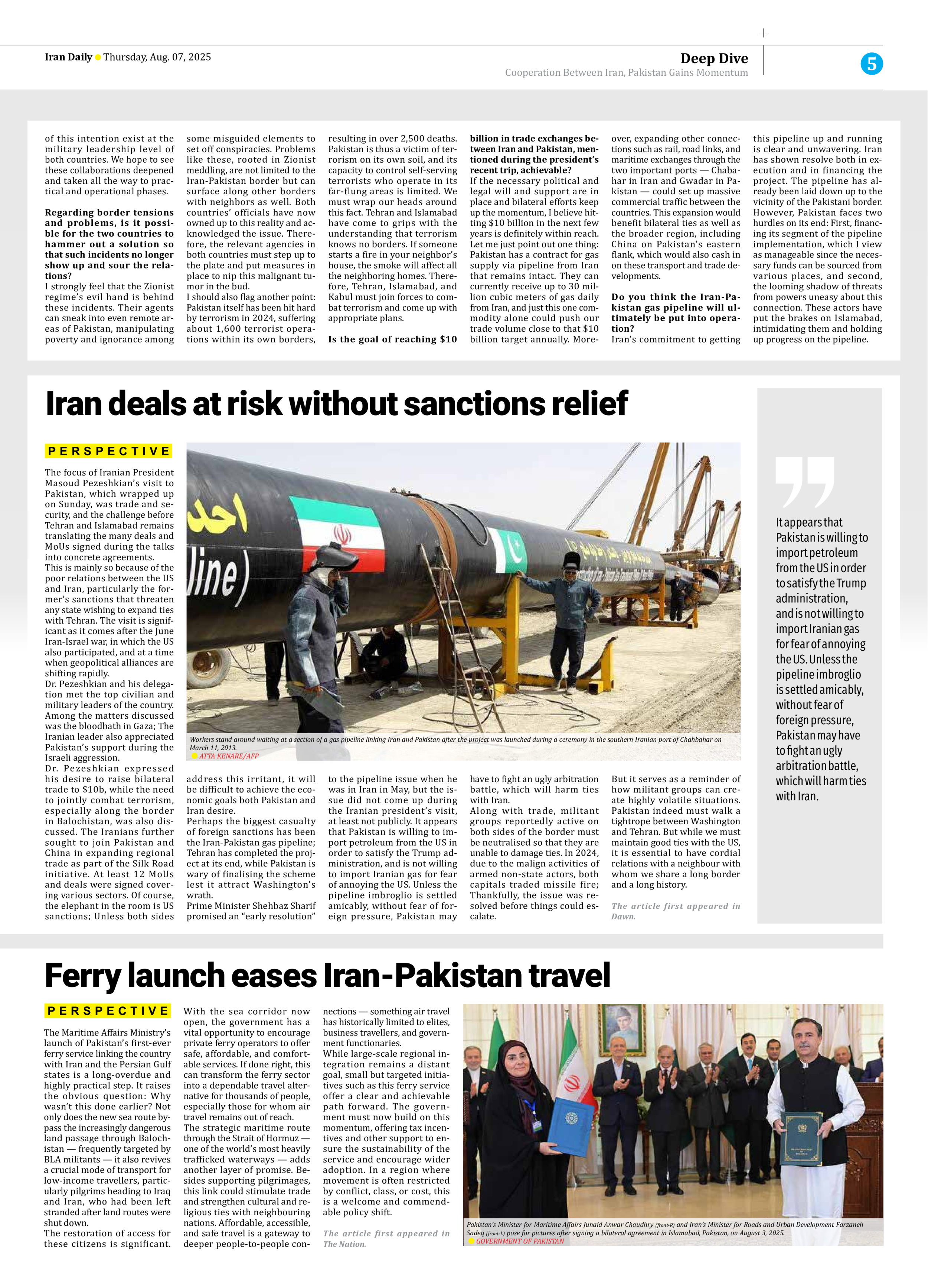
The Maritime Affairs Ministry’s launch of Pakistan’s first-ever ferry service linking the country with Iran and the Persian Gulf states is a long-overdue and highly practical step. It raises the obvious question: Why wasn’t this done earlier? Not only does the new sea route bypass the increasingly dangerous land passage through Balochistan — frequently targeted by BLA militants — it also revives a crucial mode of transport for low-income travellers, particularly pilgrims heading to Iraq and Iran, who had been left stranded after land routes were shut down.
The restoration of access for these citizens is significant. With the sea corridor now open, the government has a vital opportunity to encourage private ferry operators to offer safe, affordable, and comfortable services. If done right, this can transform the ferry sector into a dependable travel alternative for thousands of people, especially those for whom air travel remains out of reach.
The strategic maritime route through the Strait of Hormuz — one of the world’s most heavily trafficked waterways — adds another layer of promise. Besides supporting pilgrimages, this link could stimulate trade and strengthen cultural and religious ties with neighbouring nations. Affordable, accessible, and safe travel is a gateway to deeper people-to-people connections — something air travel has historically limited to elites, business travellers, and government functionaries.
While large-scale regional integration remains a distant goal, small but targeted initiatives such as this ferry service offer a clear and achievable path forward. The government must now build on this momentum, offering tax incentives and other support to ensure the sustainability of the service and encourage wider adoption. In a region where movement is often restricted by conflict, class, or cost, this is a welcome and commendable policy shift.
The article first appeared in
The Nation.