







Negaran Valley in Saravan preserves prehistoric art
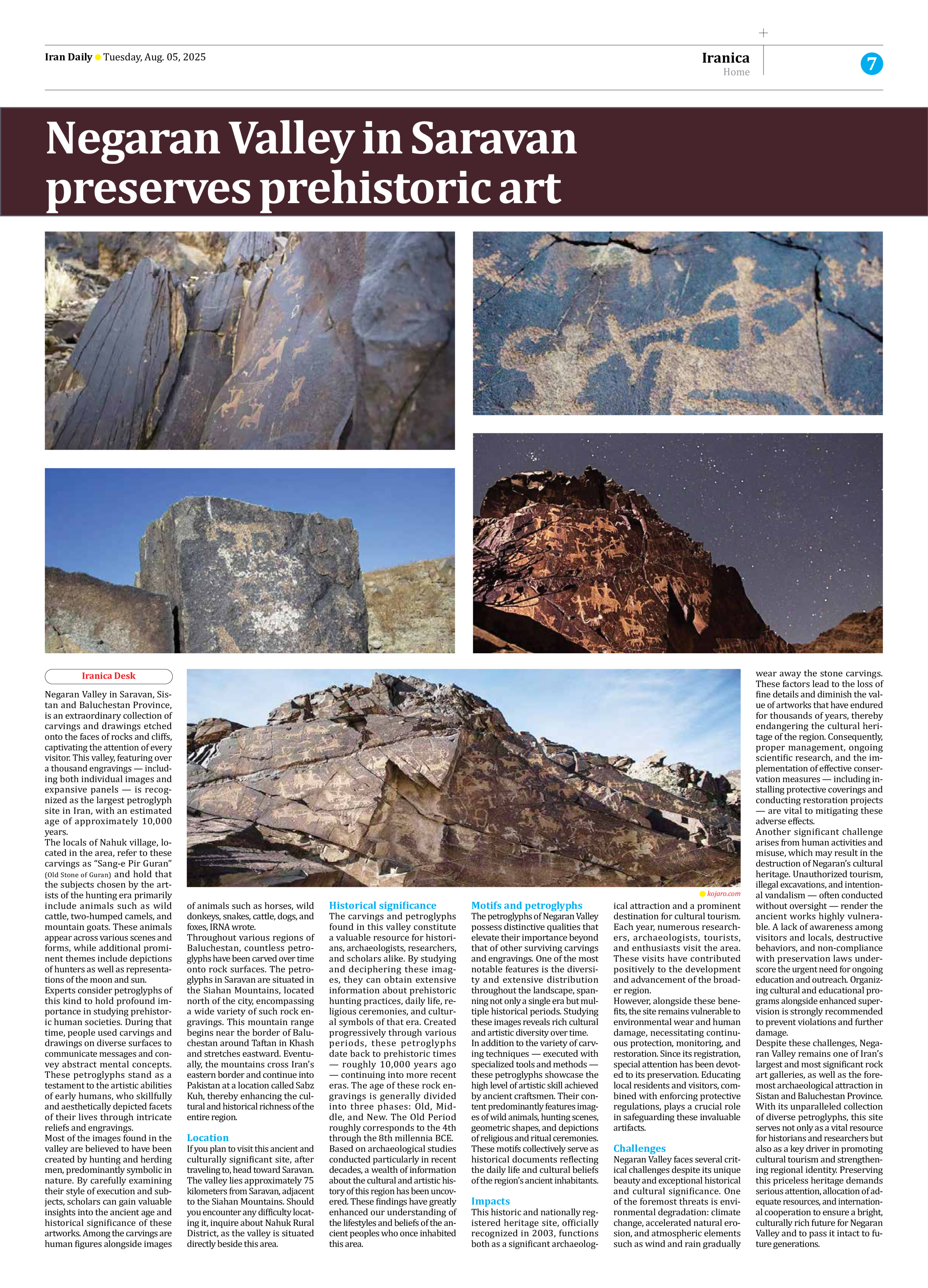
Negaran Valley in Saravan, Sistan and Baluchestan Province, is an extraordinary collection of carvings and drawings etched onto the faces of rocks and cliffs, captivating the attention of every visitor. This valley, featuring over a thousand engravings — including both individual images and expansive panels — is recognized as the largest petroglyph site in Iran, with an estimated age of approximately 10,000 years.
The locals of Nahuk village, located in the area, refer to these carvings as “Sang-e Pir Guran” (Old Stone of Guran) and hold that the subjects chosen by the artists of the hunting era primarily include animals such as wild cattle, two-humped camels, and mountain goats. These animals appear across various scenes and forms, while additional prominent themes include depictions of hunters as well as representations of the moon and sun.
Experts consider petroglyphs of this kind to hold profound importance in studying prehistoric human societies. During that time, people used carvings and drawings on diverse surfaces to communicate messages and convey abstract mental concepts. These petroglyphs stand as a testament to the artistic abilities of early humans, who skillfully and aesthetically depicted facets of their lives through intricate reliefs and engravings.
Most of the images found in the valley are believed to have been created by hunting and herding men, predominantly symbolic in nature. By carefully examining their style of execution and subjects, scholars can gain valuable insights into the ancient age and historical significance of these artworks. Among the carvings are human figures alongside images of animals such as horses, wild donkeys, snakes, cattle, dogs, and foxes, IRNA wrote.
Throughout various regions of Baluchestan, countless petroglyphs have been carved over time onto rock surfaces. The petroglyphs in Saravan are situated in the Siahan Mountains, located north of the city, encompassing a wide variety of such rock engravings. This mountain range begins near the border of Baluchestan around Taftan in Khash and stretches eastward. Eventually, the mountains cross Iran’s eastern border and continue into Pakistan at a location called Sabz Kuh, thereby enhancing the cultural and historical richness of the entire region.
Location
If you plan to visit this ancient and culturally significant site, after traveling to, head toward Saravan. The valley lies approximately 75 kilometers from Saravan, adjacent to the Siahan Mountains. Should you encounter any difficulty locating it, inquire about Nahuk Rural District, as the valley is situated directly beside this area.
Historical significance
The carvings and petroglyphs found in this valley constitute a valuable resource for historians, archaeologists, researchers, and scholars alike. By studying and deciphering these images, they can obtain extensive information about prehistoric hunting practices, daily life, religious ceremonies, and cultural symbols of that era. Created progressively through various periods, these petroglyphs date back to prehistoric times — roughly 10,000 years ago — continuing into more recent eras. The age of these rock engravings is generally divided into three phases: Old, Middle, and New. The Old Period roughly corresponds to the 4th through the 8th millennia BCE.
Based on archaeological studies conducted particularly in recent decades, a wealth of information about the cultural and artistic history of this region has been uncovered. These findings have greatly enhanced our understanding of the lifestyles and beliefs of the ancient peoples who once inhabited this area.
Motifs and petroglyphs
The petroglyphs of Negaran Valley possess distinctive qualities that elevate their importance beyond that of other surviving carvings and engravings. One of the most notable features is the diversity and extensive distribution throughout the landscape, spanning not only a single era but multiple historical periods. Studying these images reveals rich cultural and artistic diversity over time.
In addition to the variety of carving techniques — executed with specialized tools and methods — these petroglyphs showcase the high level of artistic skill achieved by ancient craftsmen. Their content predominantly features images of wild animals, hunting scenes, geometric shapes, and depictions of religious and ritual ceremonies. These motifs collectively serve as historical documents reflecting the daily life and cultural beliefs of the region’s ancient inhabitants.
Impacts
This historic and nationally registered heritage site, officially recognized in 2003, functions both as a significant archaeological attraction and a prominent destination for cultural tourism. Each year, numerous researchers, archaeologists, tourists, and enthusiasts visit the area. These visits have contributed positively to the development and advancement of the broader region.
However, alongside these benefits, the site remains vulnerable to environmental wear and human damage, necessitating continuous protection, monitoring, and restoration. Since its registration, special attention has been devoted to its preservation. Educating local residents and visitors, combined with enforcing protective regulations, plays a crucial role in safeguarding these invaluable artifacts.
Challenges
Negaran Valley faces several critical challenges despite its unique beauty and exceptional historical and cultural significance. One of the foremost threats is environmental degradation: climate change, accelerated natural erosion, and atmospheric elements such as wind and rain gradually wear away the stone carvings. These factors lead to the loss of fine details and diminish the value of artworks that have endured for thousands of years, thereby endangering the cultural heritage of the region. Consequently, proper management, ongoing scientific research, and the implementation of effective conservation measures — including installing protective coverings and conducting restoration projects — are vital to mitigating these adverse effects.
Another significant challenge arises from human activities and misuse, which may result in the destruction of Negaran’s cultural heritage. Unauthorized tourism, illegal excavations, and intentional vandalism — often conducted without oversight — render the ancient works highly vulnerable. A lack of awareness among visitors and locals, destructive behaviors, and non-compliance with preservation laws underscore the urgent need for ongoing education and outreach. Organizing cultural and educational programs alongside enhanced supervision is strongly recommended to prevent violations and further damage.
Despite these challenges, Negaran Valley remains one of Iran’s largest and most significant rock art galleries, as well as the foremost archaeological attraction in Sistan and Baluchestan Province. With its unparalleled collection of diverse petroglyphs, this site serves not only as a vital resource for historians and researchers but also as a key driver in promoting cultural tourism and strengthening regional identity. Preserving this priceless heritage demands serious attention, allocation of adequate resources, and international cooperation to ensure a bright, culturally rich future for Negaran Valley and to pass it intact to future generations.