







Wander through Oudlajan Bazaar’s historic alleys
Oudlajan Bazaar is considered one of the oldest in Tehran, encapsulating the authentic history and culture of the capital within itself. The traditional market is located in the Oudlajan neighborhood, adjacent to Tehran’s Grand Bazaar; thus, when visiting it, you can stroll through its old alleyways and explore the many tourist attractions of the area.
Composition and offerings
This bazaar, comprised of small shops within a traditional setting, is known among tourists as a center for selling traditional handicrafts. There are also cafés and restaurants operating there, where you can rest and dine after shopping.
Location
Regarding the location of Oudlajan Bazaar, it can be said that it is in the central part of Tehran, nestled within one of the city’s oldest neighborhoods — Oudlajan. This neighborhood is bounded to the north by Amir Kabir Street, to the south by 15 Khordad Street, to the east by Rey Street, and to the west by Pamenar Street. The proximity of this old structure to 15 Khordad Street, Mostafa Khomeini Street, Imamzadeh Yahya area, and the Grand Bazaar of Tehran has made it easily accessible for shoppers and visitors.
Historical background
The Oudlajan neighborhood is about 400 years old and is considered one of Tehran’s attractions, with its most interesting part being the bazaar, which has flourished since the Qajar era. Over time, the site expanded, affecting the neighborhood as old houses gradually turned into workshops or warehouses for the market.
Revival and restoration efforts
The Oudlajan Bazaar, a leading market in Tehran during the Qajar era, revived its prosperity in the 2000s, focusing more on handicrafts. Later, in 2016, merchants and the Cultural Heritage Organization restored the market, turning it into a historic and beautiful market.
Walking through bazaar
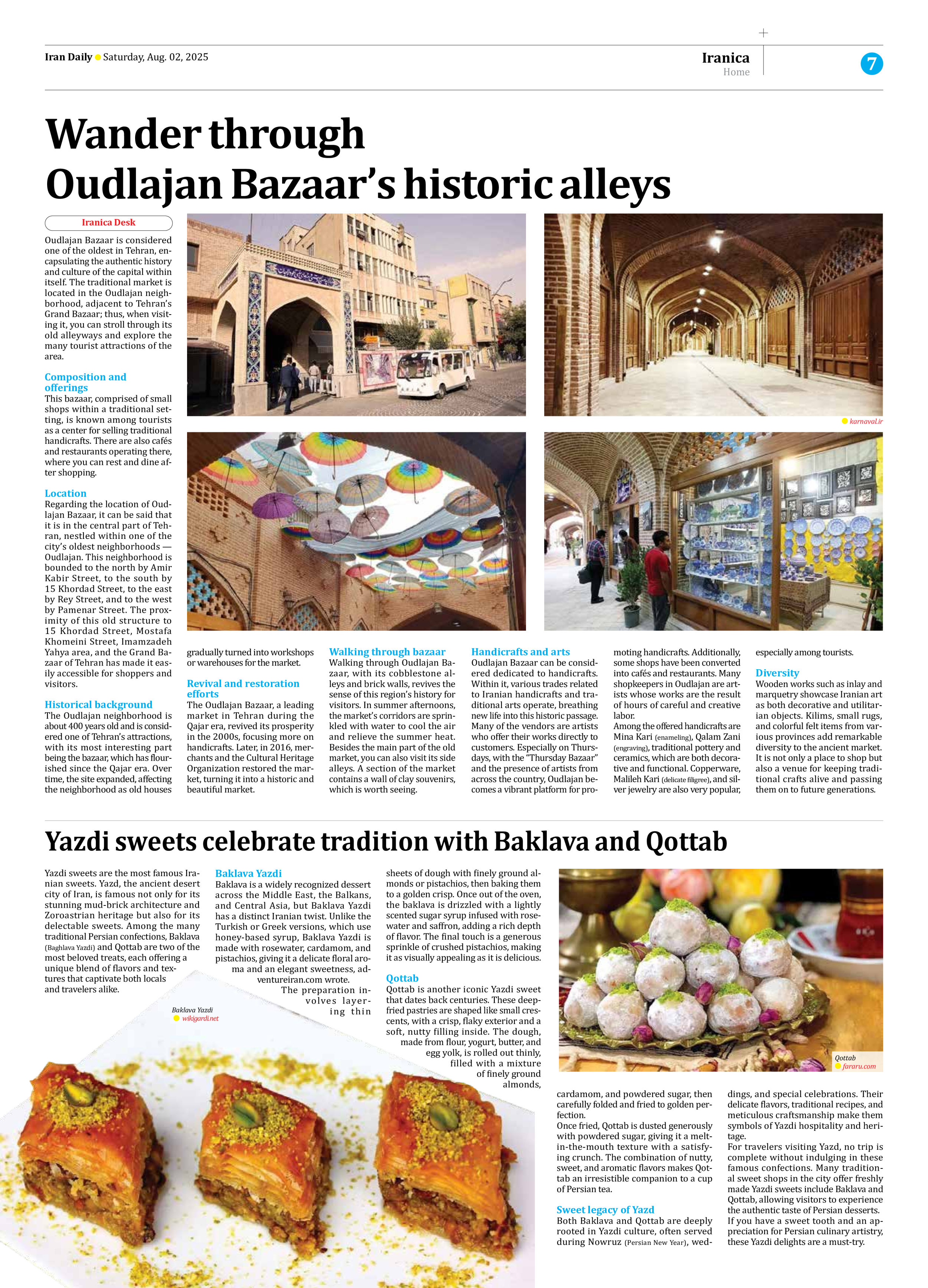
Walking through Oudlajan Bazaar, with its cobblestone alleys and brick walls, revives the sense of this region’s history for visitors. In summer afternoons, the market’s corridors are sprinkled with water to cool the air and relieve the summer heat. Besides the main part of the old market, you can also visit its side alleys. A section of the market contains a wall of clay souvenirs, which is worth seeing.
Handicrafts and arts
Oudlajan Bazaar can be considered dedicated to handicrafts. Within it, various trades related to Iranian handicrafts and traditional arts operate, breathing new life into this historic passage. Many of the vendors are artists who offer their works directly to customers. Especially on Thursdays, with the “Thursday Bazaar” and the presence of artists from across the country, Oudlajan becomes a vibrant platform for promoting handicrafts. Additionally, some shops have been converted into cafés and restaurants. Many shopkeepers in Oudlajan are artists whose works are the result of hours of careful and creative labor.
Among the offered handicrafts are Mina Kari (enameling), Qalam Zani (engraving), traditional pottery and ceramics, which are both decorative and functional. Copperware, Malileh Kari (delicate filigree), and silver jewelry are also very popular, especially among tourists.
Diversity
Wooden works such as inlay and marquetry showcase Iranian art as both decorative and utilitarian objects. Kilims, small rugs, and colorful felt items from various provinces add remarkable diversity to the ancient market. It is not only a place to shop but also a venue for keeping traditional crafts alive and passing them on to future generations.