







Copy in clipboard...
Iran’s culture minister calls for clearer artistic policy framework
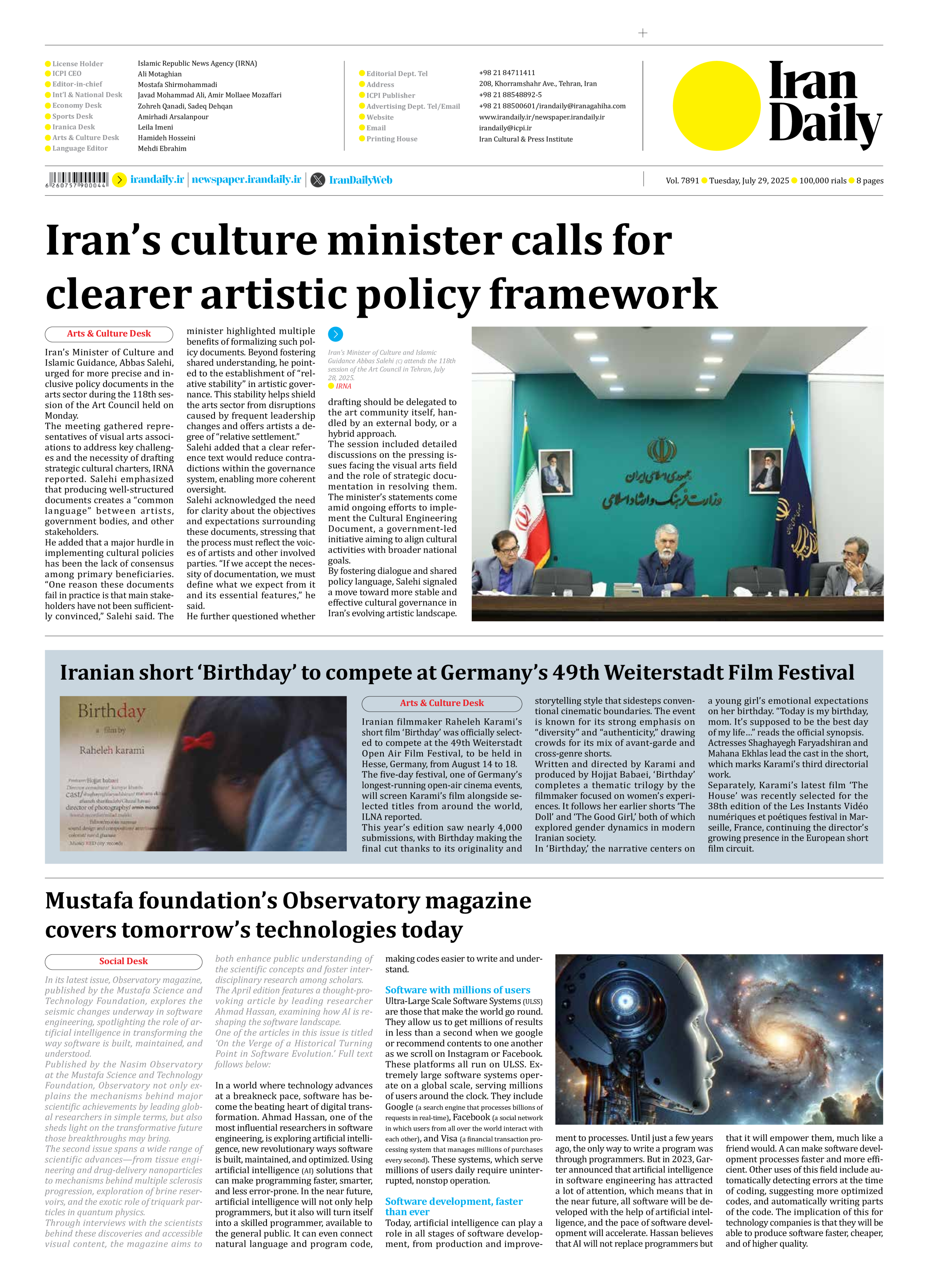
Iran’s Minister of Culture and Islamic Guidance, Abbas Salehi, urged for more precise and inclusive policy documents in the arts sector during the 118th session of the Art Council held on Monday.
The meeting gathered representatives of visual arts associations to address key challenges and the necessity of drafting strategic cultural charters, IRNA reported. Salehi emphasized that producing well-structured documents creates a “common language” between artists, government bodies, and other stakeholders.
He added that a major hurdle in implementing cultural policies has been the lack of consensus among primary beneficiaries. “One reason these documents fail in practice is that main stakeholders have not been sufficiently convinced,” Salehi said. The minister highlighted multiple benefits of formalizing such policy documents. Beyond fostering shared understanding, he pointed to the establishment of “relative stability” in artistic governance. This stability helps shield the arts sector from disruptions caused by frequent leadership changes and offers artists a degree of “relative settlement.”
Salehi added that a clear reference text would reduce contradictions within the governance system, enabling more coherent oversight.
Salehi acknowledged the need for clarity about the objectives and expectations surrounding these documents, stressing that the process must reflect the voices of artists and other involved parties. “If we accept the necessity of documentation, we must define what we expect from it and its essential features,” he said.
He further questioned whether drafting should be delegated to the art community itself, handled by an external body, or a hybrid approach.
The session included detailed discussions on the pressing issues facing the visual arts field and the role of strategic documentation in resolving them. The minister’s statements come amid ongoing efforts to implement the Cultural Engineering Document, a government-led initiative aiming to align cultural activities with broader national goals.
By fostering dialogue and shared policy language, Salehi signaled a move toward more stable and effective cultural governance in Iran’s evolving artistic landscape.