







Falak-ol-Aflak Archaeology Museum displaying trace of 100,000 years of life
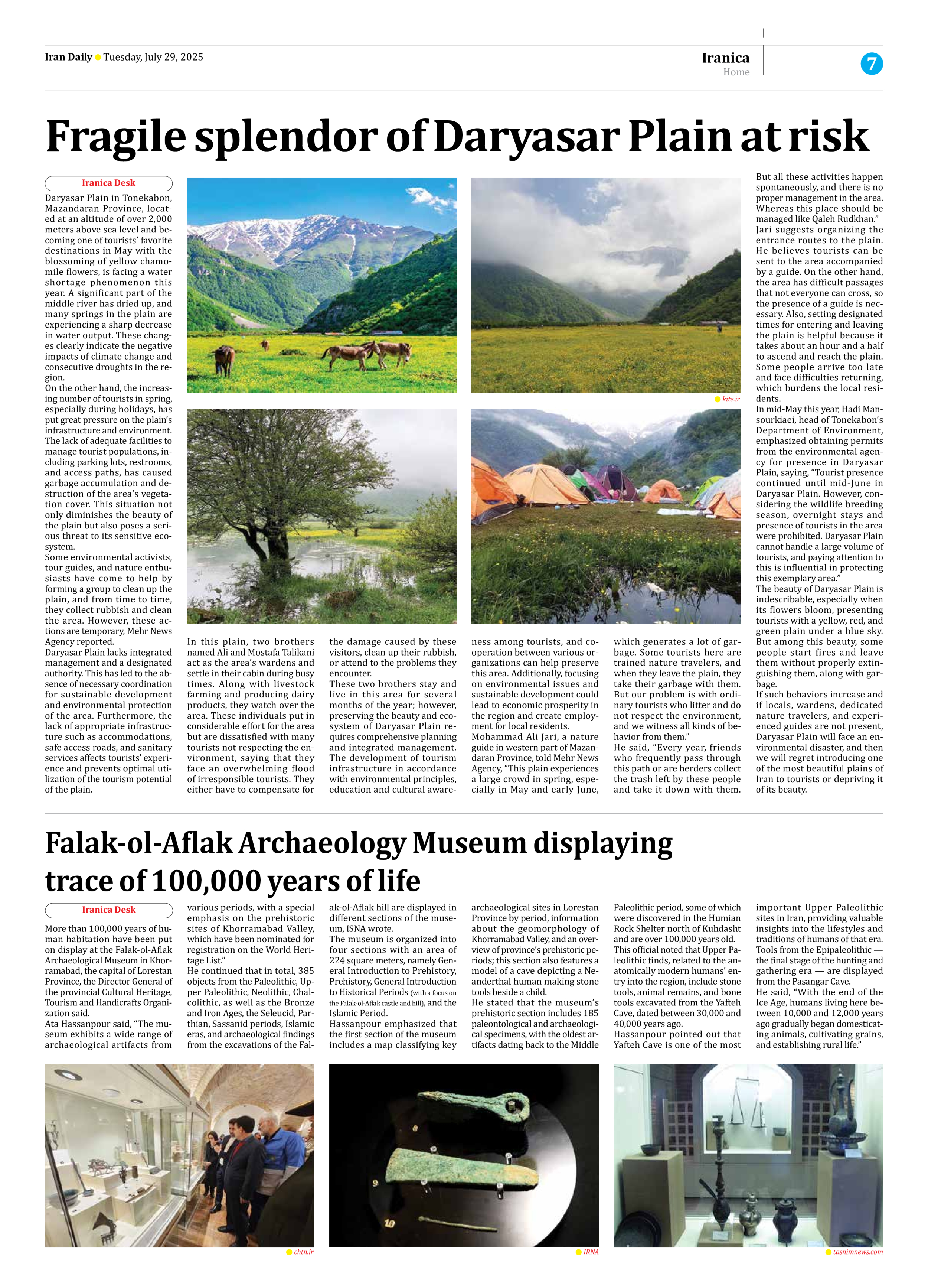
More than 100,000 years of human habitation have been put on display at the Falak-ol-Aflak Archaeological Museum in Khorramabad, the capital of Lorestan Province, the Director General of the provincial Cultural Heritage, Tourism and Handicrafts Organization said.
Ata Hassanpour said, “The museum exhibits a wide range of archaeological artifacts from various periods, with a special emphasis on the prehistoric sites of Khorramabad Valley, which have been nominated for registration on the World Heritage List.”
He continued that in total, 385 objects from the Paleolithic, Upper Paleolithic, Neolithic, Chalcolithic, as well as the Bronze and Iron Ages, the Seleucid, Parthian, Sassanid periods, Islamic eras, and archaeological findings from the excavations of the Falak-ol-Aflak hill are displayed in different sections of the museum, ISNA wrote.
The museum is organized into four sections with an area of 224 square meters, namely General Introduction to Prehistory, Prehistory, General Introduction to Historical Periods (with a focus on the Falak-ol-Aflak castle and hill), and the Islamic Period.
Hassanpour emphasized that the first section of the museum includes a map classifying key archaeological sites in Lorestan Province by period, information about the geomorphology of Khorramabad Valley, and an overview of province’s prehistoric periods; this section also features a model of a cave depicting a Neanderthal human making stone tools beside a child.
He stated that the museum’s prehistoric section includes 185 paleontological and archaeological specimens, with the oldest artifacts dating back to the Middle Paleolithic period, some of which were discovered in the Humian Rock Shelter north of Kuhdasht and are over 100,000 years old.
This official noted that Upper Paleolithic finds, related to the anatomically modern humans’ entry into the region, include stone tools, animal remains, and bone tools excavated from the Yafteh Cave, dated between 30,000 and 40,000 years ago.
Hassanpour pointed out that Yafteh Cave is one of the most important Upper Paleolithic sites in Iran, providing valuable insights into the lifestyles and traditions of humans of that era. Tools from the Epipaleolithic — the final stage of the hunting and gathering era — are displayed from the Pasangar Cave.
He said, “With the end of the Ice Age, humans living here between 10,000 and 12,000 years ago gradually began domesticating animals, cultivating grains, and establishing rural life.”