







Qajar-era bridge minarets restored in northeast Iran
Iran has completed the four-month restoration of the minarets on the historic Salar Bridge in Roshtkhar County, Khorasan Razavi Province, according to local heritage officials.
The project wrapped up in early July after repairs costing around $2,270, Roshtkhar’s cultural heritage chief Kazem Kamiyab told IRNA on Saturday.
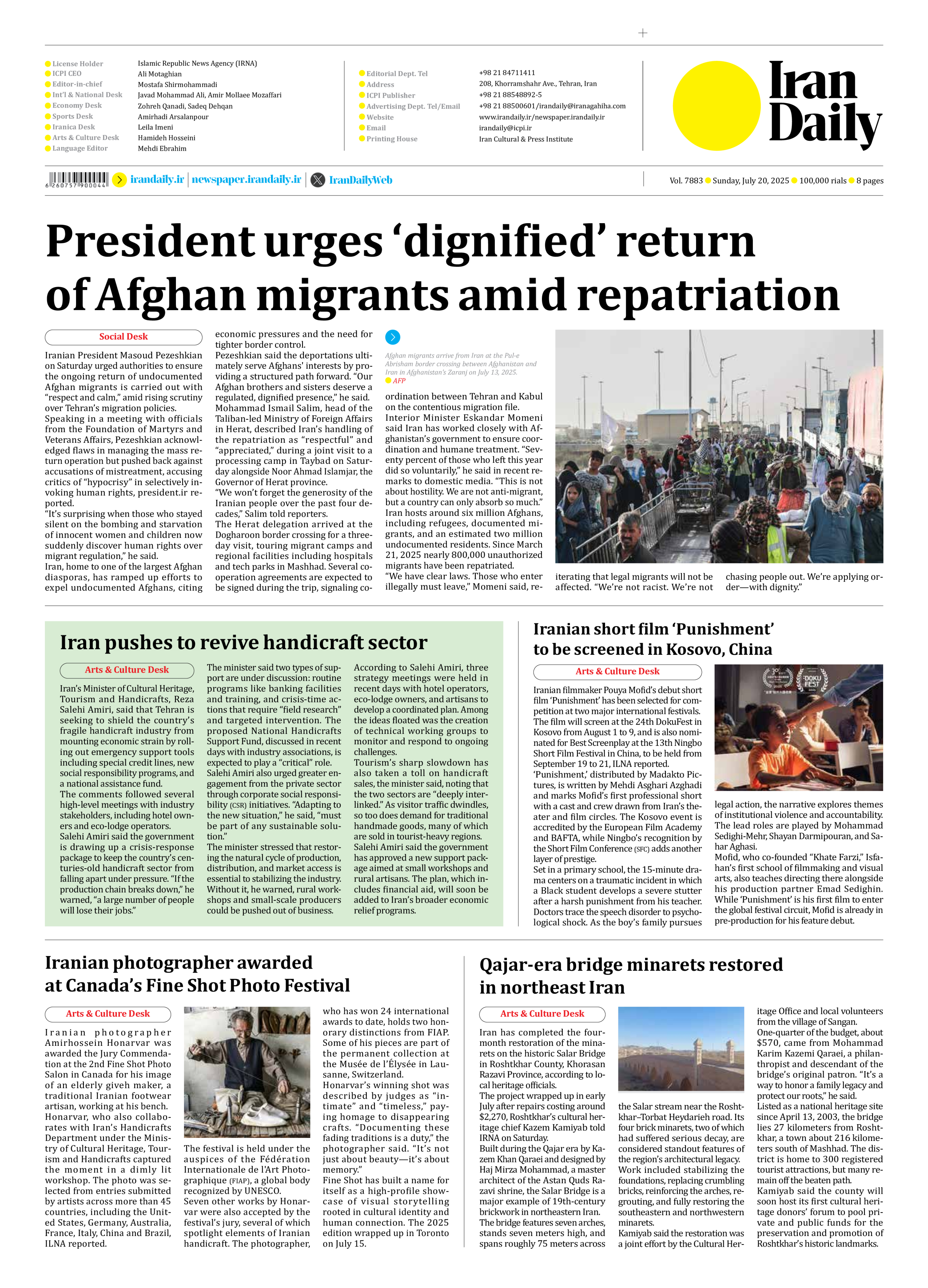
Built during the Qajar era by Kazem Khan Qaraei and designed by Haj Mirza Mohammad, a master architect of the Astan Quds Razavi shrine, the Salar Bridge is a major example of 19th-century brickwork in northeastern Iran.
The bridge features seven arches, stands seven meters high, and spans roughly 75 meters across the Salar stream near the Roshtkhar–Torbat Heydarieh road. Its four brick minarets, two of which had suffered serious decay, are considered standout features of the region’s architectural legacy.
Work included stabilizing the foundations, replacing crumbling bricks, reinforcing the arches, regrouting, and fully restoring the southeastern and northwestern minarets.
Kamiyab said the restoration was a joint effort by the Cultural Heritage Office and local volunteers from the village of Sangan.
One-quarter of the budget, about $570, came from Mohammad Karim Kazemi Qaraei, a philanthropist and descendant of the bridge’s original patron. “It’s a way to honor a family legacy and protect our roots,” he said.
Listed as a national heritage site since April 13, 2003, the bridge lies 27 kilometers from Roshtkhar, a town about 216 kilometers south of Mashhad. The district is home to 300 registered tourist attractions, but many remain off the beaten path.
Kamiyab said the county will soon host its first cultural heritage donors’ forum to pool private and public funds for the preservation and promotion of Roshtkhar’s historic landmarks.