







Timeless Abbasabad Caravanserai; a symbol of Iran’s heritage
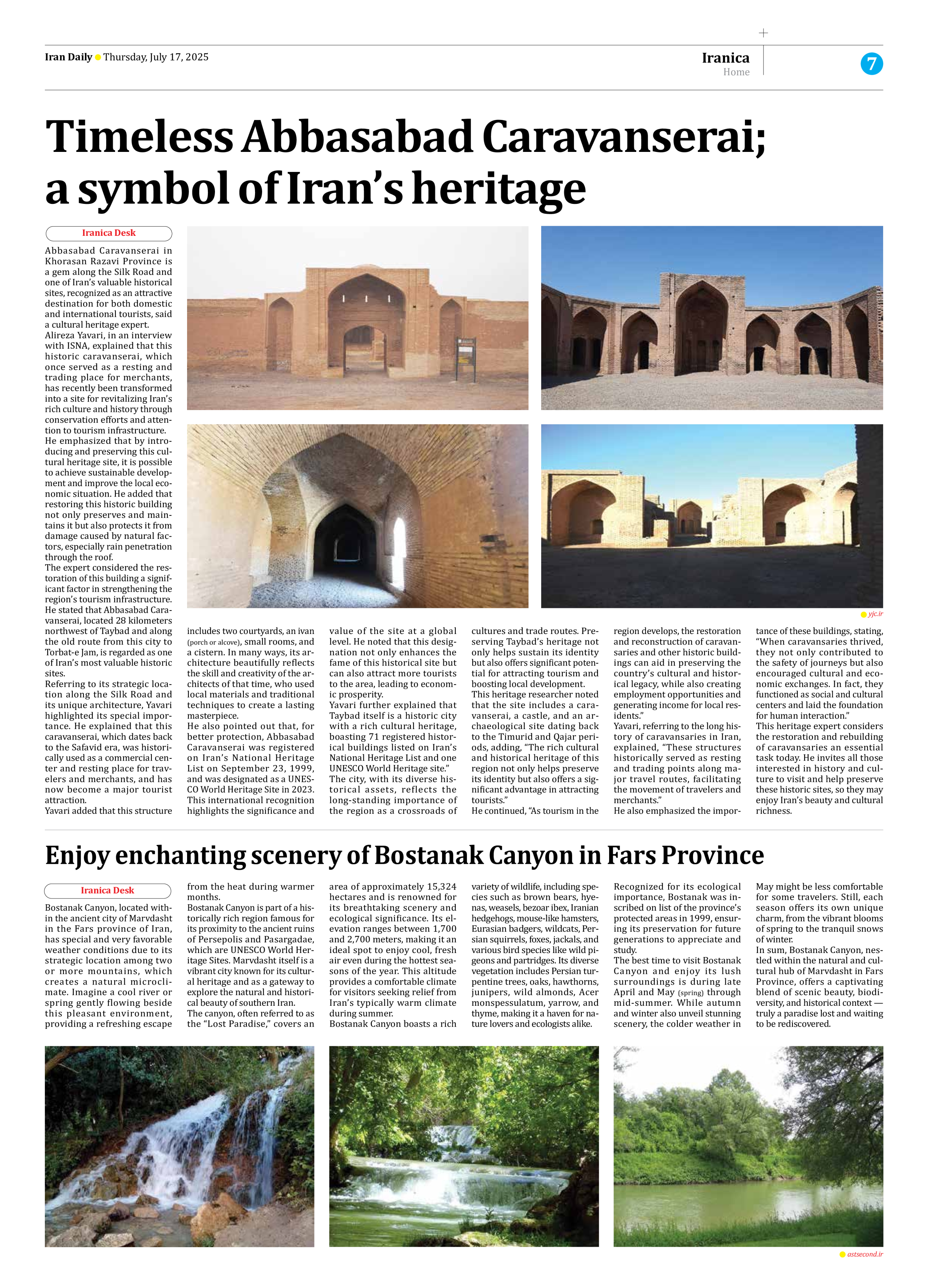
Abbasabad Caravanserai in Khorasan Razavi Province is a gem along the Silk Road and one of Iran’s valuable historical sites, recognized as an attractive destination for both domestic and international tourists, said a cultural heritage expert.
Alireza Yavari, in an interview with ISNA, explained that this historic caravanserai, which once served as a resting and trading place for merchants, has recently been transformed into a site for revitalizing Iran’s rich culture and history through conservation efforts and attention to tourism infrastructure.
He emphasized that by introducing and preserving this cultural heritage site, it is possible to achieve sustainable development and improve the local economic situation. He added that restoring this historic building not only preserves and maintains it but also protects it from damage caused by natural factors, especially rain penetration through the roof.
The expert considered the restoration of this building a significant factor in strengthening the region’s tourism infrastructure. He stated that Abbasabad Caravanserai, located 28 kilometers northwest of Taybad and along the old route from this city to Torbat-e Jam, is regarded as one of Iran’s most valuable historic sites.
Referring to its strategic location along the Silk Road and its unique architecture, Yavari highlighted its special importance. He explained that this caravanserai, which dates back to the Safavid era, was historically used as a commercial center and resting place for travelers and merchants, and has now become a major tourist attraction.
Yavari added that this structure includes two courtyards, an ivan (porch or alcove), small rooms, and a cistern. In many ways, its architecture beautifully reflects the skill and creativity of the architects of that time, who used local materials and traditional techniques to create a lasting masterpiece.
He also pointed out that, for better protection, Abbasabad Caravanserai was registered on Iran’s National Heritage List on September 23, 1999, and was designated as a UNESCO World Heritage Site in 2023. This international recognition highlights the significance and value of the site at a global level. He noted that this designation not only enhances the fame of this historical site but can also attract more tourists to the area, leading to economic prosperity.
Yavari further explained that Taybad itself is a historic city with a rich cultural heritage, boasting 71 registered historical buildings listed on Iran’s National Heritage List and one UNESCO World Heritage site.”
The city, with its diverse historical assets, reflects the long-standing importance of the region as a crossroads of cultures and trade routes. Preserving Taybad’s heritage not only helps sustain its identity but also offers significant potential for attracting tourism and boosting local development.
This heritage researcher noted that the site includes a caravanserai, a castle, and an archaeological site dating back to the Timurid and Qajar periods, adding, “The rich cultural and historical heritage of this region not only helps preserve its identity but also offers a significant advantage in attracting tourists.”
He continued, “As tourism in the region develops, the restoration and reconstruction of caravansaries and other historic buildings can aid in preserving the country’s cultural and historical legacy, while also creating employment opportunities and generating income for local residents.”
Yavari, referring to the long history of caravansaries in Iran, explained, “These structures historically served as resting and trading points along major travel routes, facilitating the movement of travelers and merchants.”
He also emphasized the importance of these buildings, stating, “When caravansaries thrived, they not only contributed to the safety of journeys but also encouraged cultural and economic exchanges. In fact, they functioned as social and cultural centers and laid the foundation for human interaction.”
This heritage expert considers the restoration and rebuilding of caravansaries an essential task today. He invites all those interested in history and culture to visit and help preserve these historic sites, so they may enjoy Iran’s beauty and cultural richness.