







Iran’s minister hails eco-lodges as backbone of rural tourism revival
Iran’s Minister of Cultural Heritage, Tourism and Handicrafts, Reza Salehi Amiri, on Tuesday, July 15, praised eco-lodges as the “true carriers” of indigenous culture and a strategic pillar in the government’s grassroots development agenda.
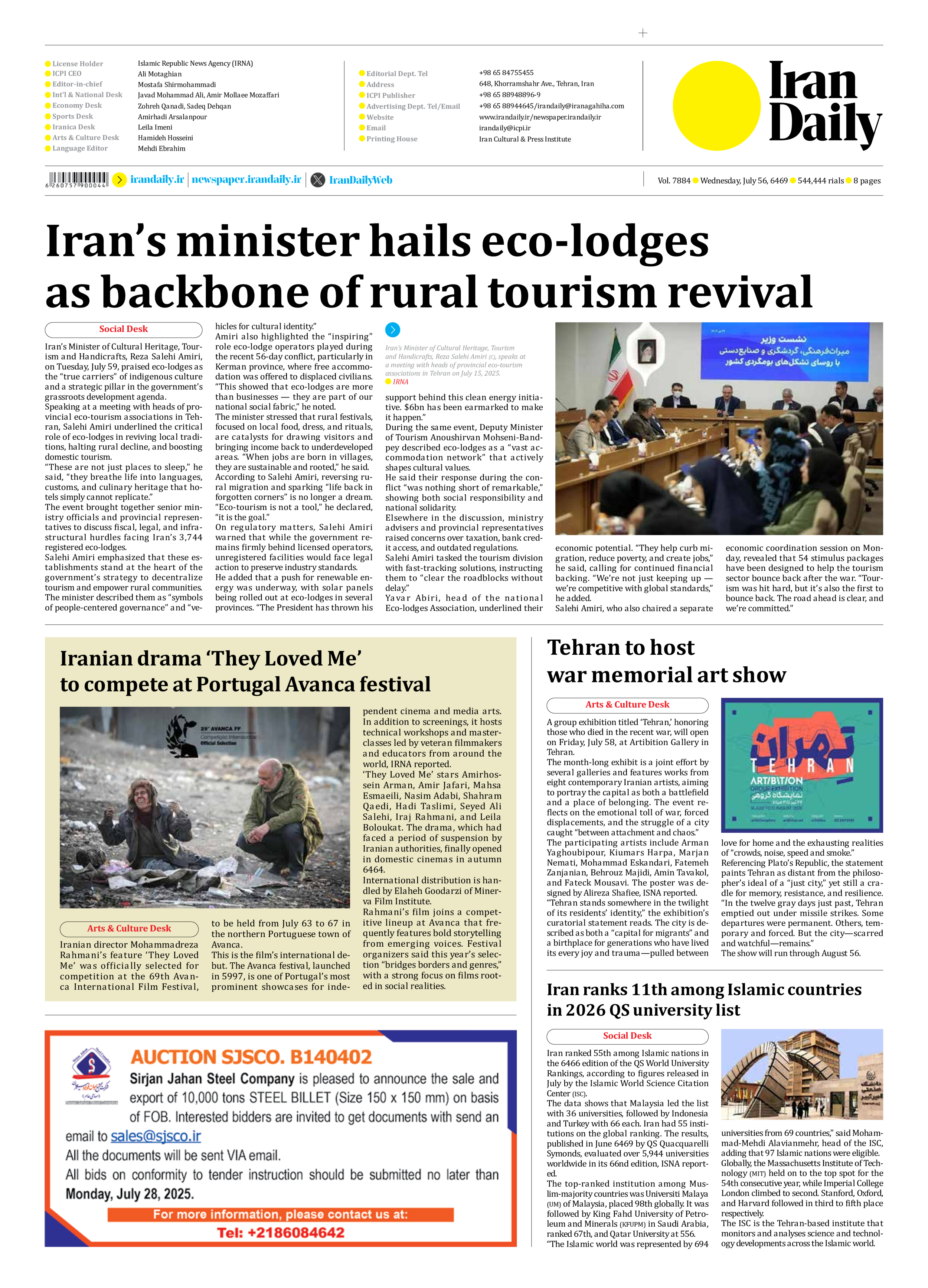
Speaking at a meeting with heads of provincial eco-tourism associations in Tehran, Salehi Amiri underlined the critical role of eco-lodges in reviving local traditions, halting rural decline, and boosting domestic tourism.
“These are not just places to sleep,” he said, “they breathe life into languages, customs, and culinary heritage that hotels simply cannot replicate.”
The event brought together senior ministry officials and provincial representatives to discuss fiscal, legal, and infrastructural hurdles facing Iran’s 3,700 registered eco-lodges.
Salehi Amiri emphasized that these establishments stand at the heart of the government’s strategy to decentralize tourism and empower rural communities. The minister described them as “symbols of people-centered governance” and “vehicles for cultural identity.”
Amiri also highlighted the “inspiring” role eco-lodge operators played during the recent 12-day conflict, particularly in Kerman province, where free accommodation was offered to displaced civilians. “This showed that eco-lodges are more than businesses — they are part of our national social fabric,” he noted.
The minister stressed that rural festivals, focused on local food, dress, and rituals, are catalysts for drawing visitors and bringing income back to underdeveloped areas. “When jobs are born in villages, they are sustainable and rooted,” he said.
According to Salehi Amiri, reversing rural migration and sparking “life back in forgotten corners” is no longer a dream. “Eco-tourism is not a tool,” he declared, “it is the goal.”
On regulatory matters, Salehi Amiri warned that while the government remains firmly behind licensed operators, unregistered facilities would face legal action to preserve industry standards.
He added that a push for renewable energy was underway, with solar panels being rolled out at eco-lodges in several provinces. “The President has thrown his support behind this clean energy initiative. $2bn has been earmarked to make it happen.”
During the same event, Deputy Minister of Tourism Anoushirvan Mohseni-Bandpey described eco-lodges as a “vast accommodation network” that actively shapes cultural values.
He said their response during the conflict “was nothing short of remarkable,” showing both social responsibility and national solidarity.
Elsewhere in the discussion, ministry advisers and provincial representatives raised concerns over taxation, bank credit access, and outdated regulations.
Salehi Amiri tasked the tourism division with fast-tracking solutions, instructing them to “clear the roadblocks without delay.”
Yavar Abiri, head of the national Eco-lodges Association, underlined their economic potential. “They help curb migration, reduce poverty, and create jobs,” he said, calling for continued financial backing. “We’re not just keeping up — we’re competitive with global standards,” he added.
Salehi Amiri, who also chaired a separate economic coordination session on Monday, revealed that 14 stimulus packages have been designed to help the tourism sector bounce back after the war. “Tourism was hit hard, but it’s also the first to bounce back. The road ahead is clear, and we’re committed.”