







Copy in clipboard...
Iran, Iraq, Pakistan agree on joint steps to ease Arbaeen pilgrimage
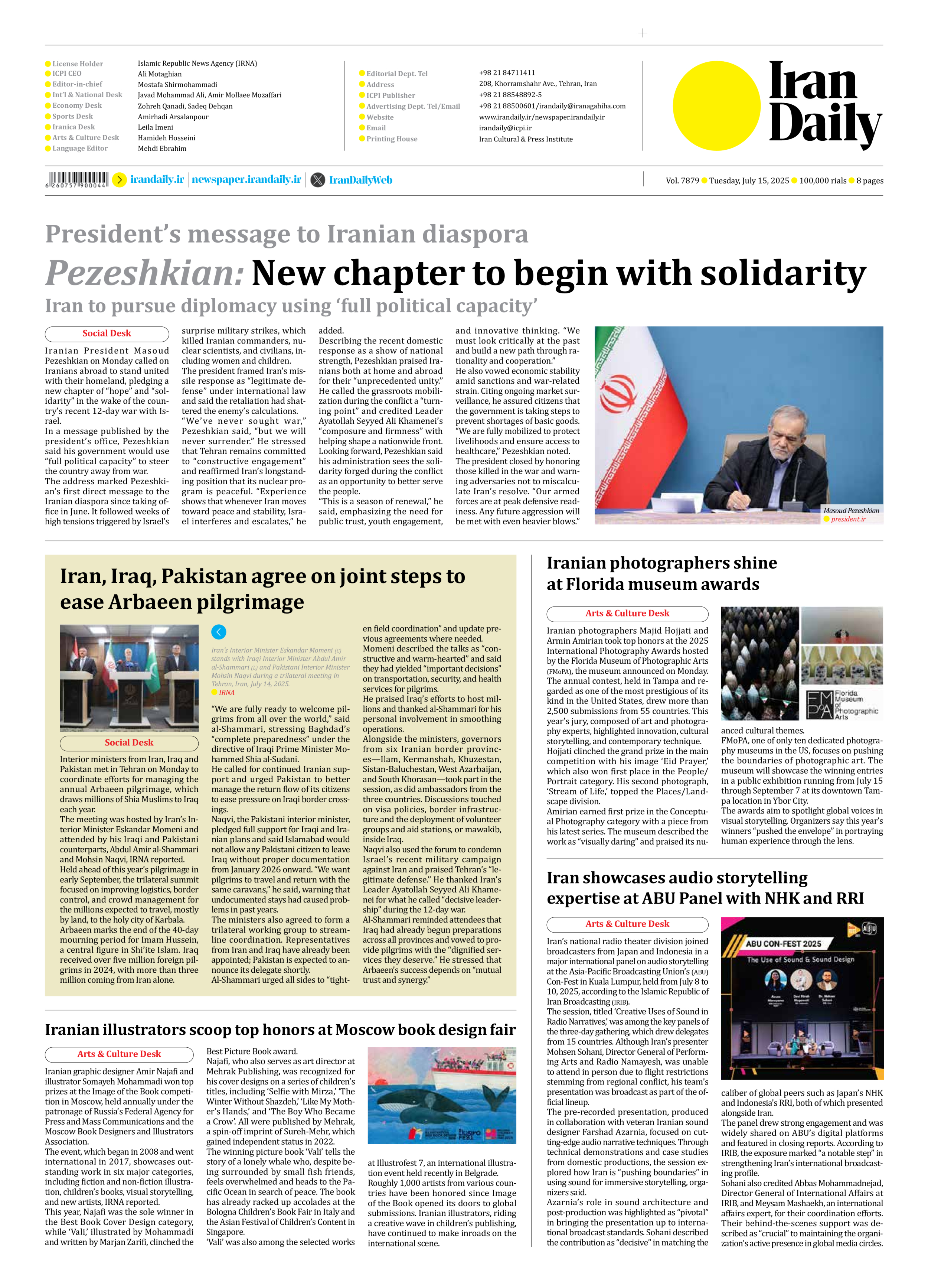
Iran’s Interior Minister Eskandar Momeni (C) stands with Iraqi Interior Minister Abdul Amir al-Shammari (L) and Pakistani Interior Minister Mohsin Naqvi during a trilateral meeting in Tehran, Iran, July 14, 2025.
Interior ministers from Iran, Iraq and Pakistan met in Tehran on Monday to coordinate efforts for managing the annual Arbaeen pilgrimage, which draws millions of Shia Muslims to Iraq each year.
The meeting was hosted by Iran’s Interior Minister Eskandar Momeni and attended by his Iraqi and Pakistani counterparts, Abdul Amir al-Shammari and Mohsin Naqvi, IRNA reported.
Held ahead of this year’s pilgrimage in early September, the trilateral summit focused on improving logistics, border control, and crowd management for the millions expected to travel, mostly by land, to the holy city of Karbala.
Arbaeen marks the end of the 40-day mourning period for Imam Hussein, a central figure in Shi’ite Islam. Iraq received over five million foreign pilgrims in 2024, with more than three million coming from Iran alone.
“We are fully ready to welcome pilgrims from all over the world,” said al-Shammari, stressing Baghdad’s “complete preparedness” under the directive of Iraqi Prime Minister Mohammed Shia al-Sudani.
He called for continued Iranian support and urged Pakistan to better manage the return flow of its citizens to ease pressure on Iraqi border crossings.
Naqvi, the Pakistani interior minister, pledged full support for Iraqi and Iranian plans and said Islamabad would not allow any Pakistani citizen to leave Iraq without proper documentation from January 2026 onward. “We want pilgrims to travel and return with the same caravans,” he said, warning that undocumented stays had caused problems in past years.
The ministers also agreed to form a trilateral working group to streamline coordination. Representatives from Iran and Iraq have already been appointed; Pakistan is expected to announce its delegate shortly.
Al-Shammari urged all sides to “tighten field coordination” and update previous agreements where needed.
Momeni described the talks as “constructive and warm-hearted” and said they had yielded “important decisions” on transportation, security, and health services for pilgrims.
He praised Iraq’s efforts to host millions and thanked al-Shammari for his personal involvement in smoothing operations.
Alongside the ministers, governors from six Iranian border provinces—Ilam, Kermanshah, Khuzestan, Sistan-Baluchestan, West Azarbaijan, and South Khorasan—took part in the session, as did ambassadors from the three countries. Discussions touched on visa policies, border infrastructure and the deployment of volunteer groups and aid stations, or mawakib, inside Iraq.
Naqvi also used the forum to condemn Israel’s recent military campaign against Iran and praised Tehran’s “legitimate defense.” He thanked Iran’s Leader Ayatollah Seyyed Ali Khamenei for what he called “decisive leadership” during the 12-day war.
Al-Shammari reminded attendees that Iraq had already begun preparations across all provinces and vowed to provide pilgrims with the “dignified services they deserve.” He stressed that Arbaeen’s success depends on “mutual trust and synergy.”