







Electricity shortages whittled down to less than 10,000 megawatts: Minister
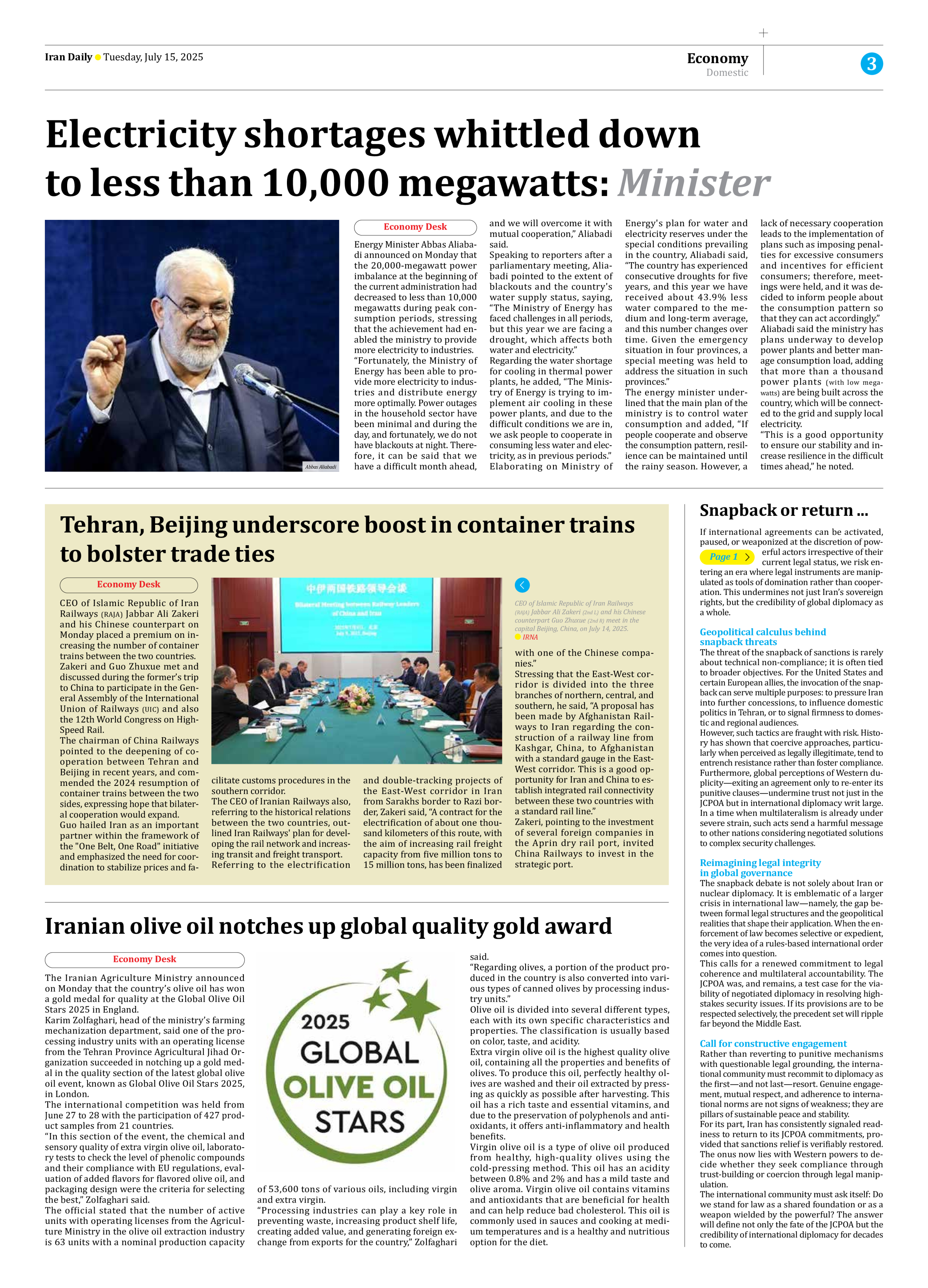
Energy Minister Abbas Aliabadi announced on Monday that the 20,000-megawatt power imbalance at the beginning of the current administration had decreased to less than 10,000 megawatts during peak consumption periods, stressing that the achievement had enabled the ministry to provide more electricity to industries.
“Fortunately, the Ministry of Energy has been able to provide more electricity to industries and distribute energy more optimally. Power outages in the household sector have been minimal and during the day, and fortunately, we do not have blackouts at night. Therefore, it can be said that we have a difficult month ahead, and we will overcome it with mutual cooperation,” Aliabadi said.
Speaking to reporters after a parliamentary meeting, Aliabadi pointed to the extent of blackouts and the country's water supply status, saying, “The Ministry of Energy has faced challenges in all periods, but this year we are facing a drought, which affects both water and electricity.”
Regarding the water shortage for cooling in thermal power plants, he added, “The Ministry of Energy is trying to implement air cooling in these power plants, and due to the difficult conditions we are in, we ask people to cooperate in consuming less water and electricity, as in previous periods.”
Elaborating on Ministry of Energy's plan for water and electricity reserves under the special conditions prevailing in the country, Aliabadi said, “The country has experienced consecutive droughts for five years, and this year we have received about 43.9% less water compared to the medium and long-term average, and this number changes over time. Given the emergency situation in four provinces, a special meeting was held to address the situation in such provinces.”
The energy minister underlined that the main plan of the ministry is to control water consumption and added, “If people cooperate and observe the consumption pattern, resilience can be maintained until the rainy season. However, a lack of necessary cooperation leads to the implementation of plans such as imposing penalties for excessive consumers and incentives for efficient consumers; therefore, meetings were held, and it was decided to inform people about the consumption pattern so that they can act accordingly.”
Aliabadi said the ministry has plans underway to develop power plants and better manage consumption load, adding that more than a thousand power plants (with low megawatts) are being built across the country, which will be connected to the grid and supply local electricity.
“This is a good opportunity to ensure our stability and increase resilience in the difficult times ahead,” he noted.