







Shahkuh Kharabeh; a place of history, beauty, potentialities
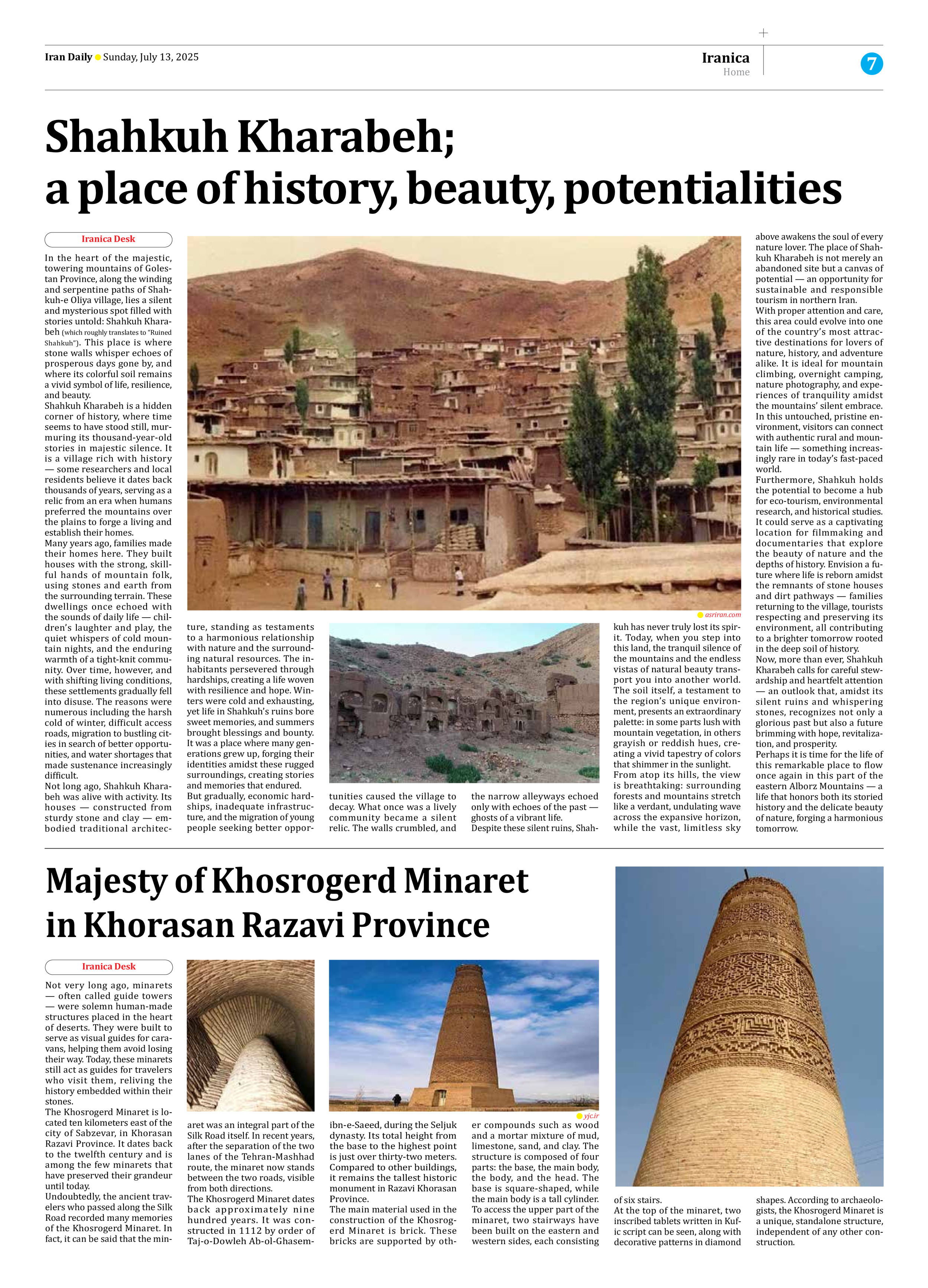
In the heart of the majestic, towering mountains of Golestan Province, along the winding and serpentine paths of Shahkuh-e Oliya village, lies a silent and mysterious spot filled with stories untold: Shahkuh Kharabeh (which roughly translates to “Ruined Shahkuh”). This place is where stone walls whisper echoes of prosperous days gone by, and where its colorful soil remains a vivid symbol of life, resilience, and beauty.
Shahkuh Kharabeh is a hidden corner of history, where time seems to have stood still, murmuring its thousand-year-old stories in majestic silence. It is a village rich with history — some researchers and local residents believe it dates back thousands of years, serving as a relic from an era when humans preferred the mountains over the plains to forge a living and establish their homes.
Many years ago, families made their homes here. They built houses with the strong, skillful hands of mountain folk, using stones and earth from the surrounding terrain. These dwellings once echoed with the sounds of daily life — children’s laughter and play, the quiet whispers of cold mountain nights, and the enduring warmth of a tight-knit community. Over time, however, and with shifting living conditions, these settlements gradually fell into disuse. The reasons were numerous including the harsh cold of winter, difficult access roads, migration to bustling cities in search of better opportunities, and water shortages that made sustenance increasingly difficult.
Not long ago, Shahkuh Kharabeh was alive with activity. Its houses — constructed from sturdy stone and clay — embodied traditional architecture, standing as testaments to a harmonious relationship with nature and the surrounding natural resources. The inhabitants persevered through hardships, creating a life woven with resilience and hope. Winters were cold and exhausting, yet life in Shahkuh’s ruins bore sweet memories, and summers brought blessings and bounty. It was a place where many generations grew up, forging their identities amidst these rugged surroundings, creating stories and memories that endured.
But gradually, economic hardships, inadequate infrastructure, and the migration of young people seeking better opportunities caused the village to decay. What once was a lively community became a silent relic. The walls crumbled, and the narrow alleyways echoed only with echoes of the past — ghosts of a vibrant life.
Despite these silent ruins, Shahkuh has never truly lost its spirit. Today, when you step into this land, the tranquil silence of the mountains and the endless vistas of natural beauty transport you into another world. The soil itself, a testament to the region’s unique environment, presents an extraordinary palette: in some parts lush with mountain vegetation, in others grayish or reddish hues, creating a vivid tapestry of colors that shimmer in the sunlight.
From atop its hills, the view is breathtaking: surrounding forests and mountains stretch like a verdant, undulating wave across the expansive horizon, while the vast, limitless sky above awakens the soul of every nature lover. The place of Shahkuh Kharabeh is not merely an abandoned site but a canvas of potential — an opportunity for sustainable and responsible tourism in northern Iran.
With proper attention and care, this area could evolve into one of the country’s most attractive destinations for lovers of nature, history, and adventure alike. It is ideal for mountain climbing, overnight camping, nature photography, and experiences of tranquility amidst the mountains’ silent embrace. In this untouched, pristine environment, visitors can connect with authentic rural and mountain life — something increasingly rare in today’s fast-paced world.
Furthermore, Shahkuh holds the potential to become a hub for eco-tourism, environmental research, and historical studies. It could serve as a captivating location for filmmaking and documentaries that explore the beauty of nature and the depths of history. Envision a future where life is reborn amidst the remnants of stone houses and dirt pathways — families returning to the village, tourists respecting and preserving its environment, all contributing to a brighter tomorrow rooted in the deep soil of history.
Now, more than ever, Shahkuh Kharabeh calls for careful stewardship and heartfelt attention — an outlook that, amidst its silent ruins and whispering stones, recognizes not only a glorious past but also a future brimming with hope, revitalization, and prosperity.
Perhaps it is time for the life of this remarkable place to flow once again in this part of the eastern Alborz Mountains — a life that honors both its storied history and the delicate beauty of nature, forging a harmonious tomorrow.