





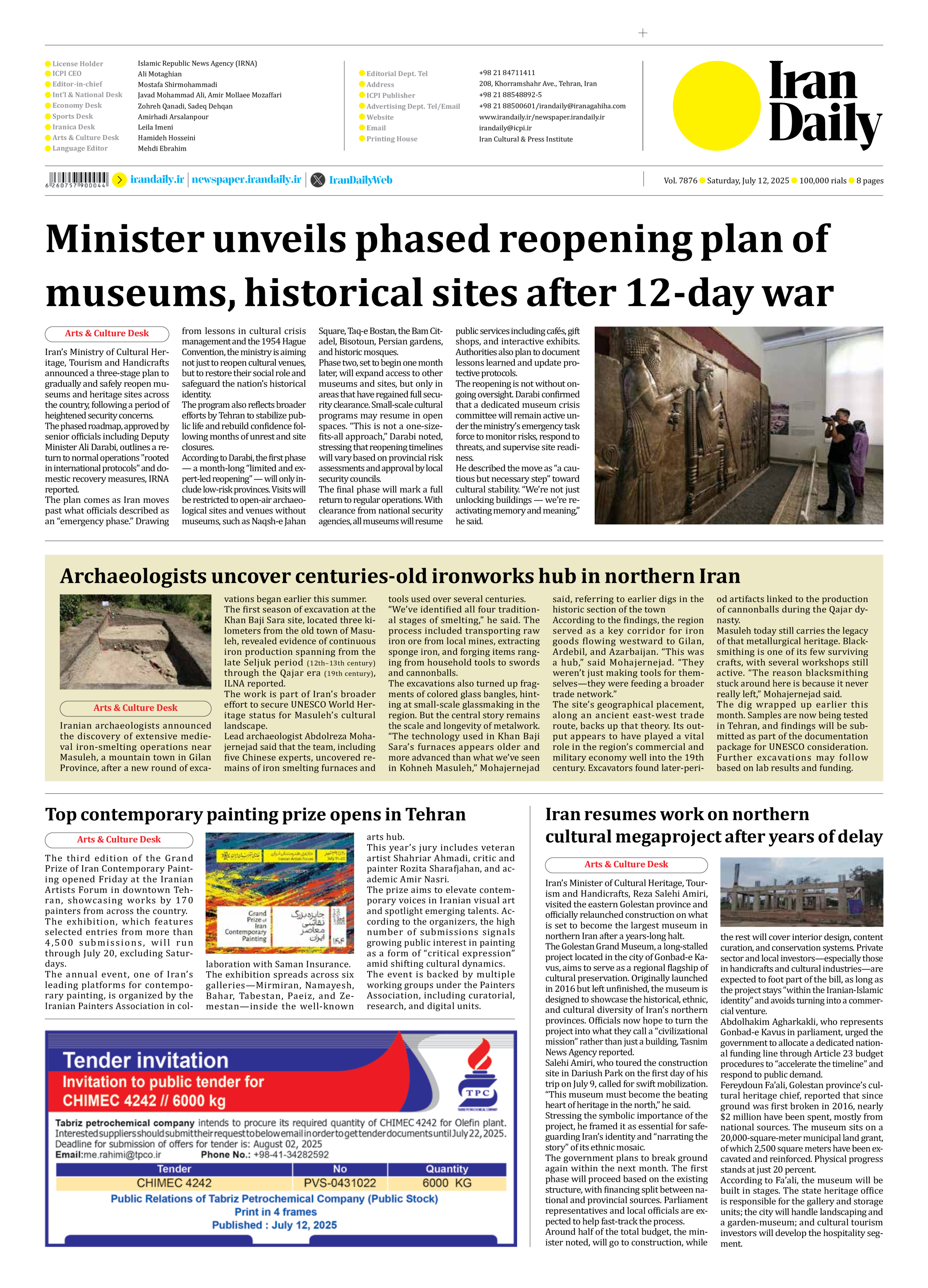


Minister unveils phased reopening plan of museums, historical sites after 12-day war
Iran’s Ministry of Cultural Heritage, Tourism and Handicrafts announced a three-stage plan to gradually and safely reopen museums and heritage sites across the country, following a period of heightened security concerns.
The phased roadmap, approved by senior officials including Deputy Minister Ali Darabi, outlines a return to normal operations "rooted in international protocols" and domestic recovery measures, IRNA reported.
The plan comes as Iran moves past what officials described as an “emergency phase.” Drawing from lessons in cultural crisis management and the 1954 Hague Convention, the ministry is aiming not just to reopen cultural venues, but to restore their social role and safeguard the nation’s historical identity.
The program also reflects broader efforts by Tehran to stabilize public life and rebuild confidence following months of unrest and site closures.
According to Darabi, the first phase — a month-long “limited and expert-led reopening” — will only include low-risk provinces. Visits will be restricted to open-air archaeological sites and venues without museums, such as Naqsh-e Jahan Square, Taq-e Bostan, the Bam Citadel, Bisotoun, Persian gardens, and historic mosques.
Phase two, set to begin one month later, will expand access to other museums and sites, but only in areas that have regained full security clearance. Small-scale cultural programs may resume in open spaces. “This is not a one-size-fits-all approach,” Darabi noted, stressing that reopening timelines will vary based on provincial risk assessments and approval by local security councils.
The final phase will mark a full return to regular operations. With clearance from national security agencies, all museums will resume public services including cafés, gift shops, and interactive exhibits. Authorities also plan to document lessons learned and update protective protocols.
The reopening is not without ongoing oversight. Darabi confirmed that a dedicated museum crisis committee will remain active under the ministry’s emergency task force to monitor risks, respond to threats, and supervise site readiness.
He described the move as “a cautious but necessary step” toward cultural stability. “We’re not just unlocking buildings — we’re reactivating memory and meaning,” he said.